
Ministry of Environment Releases Latest National Greenhouse Gas Inventory Taiwan Achieves a 6.59% Reduction in Net Emissions in 2024 Compared to the Base Year
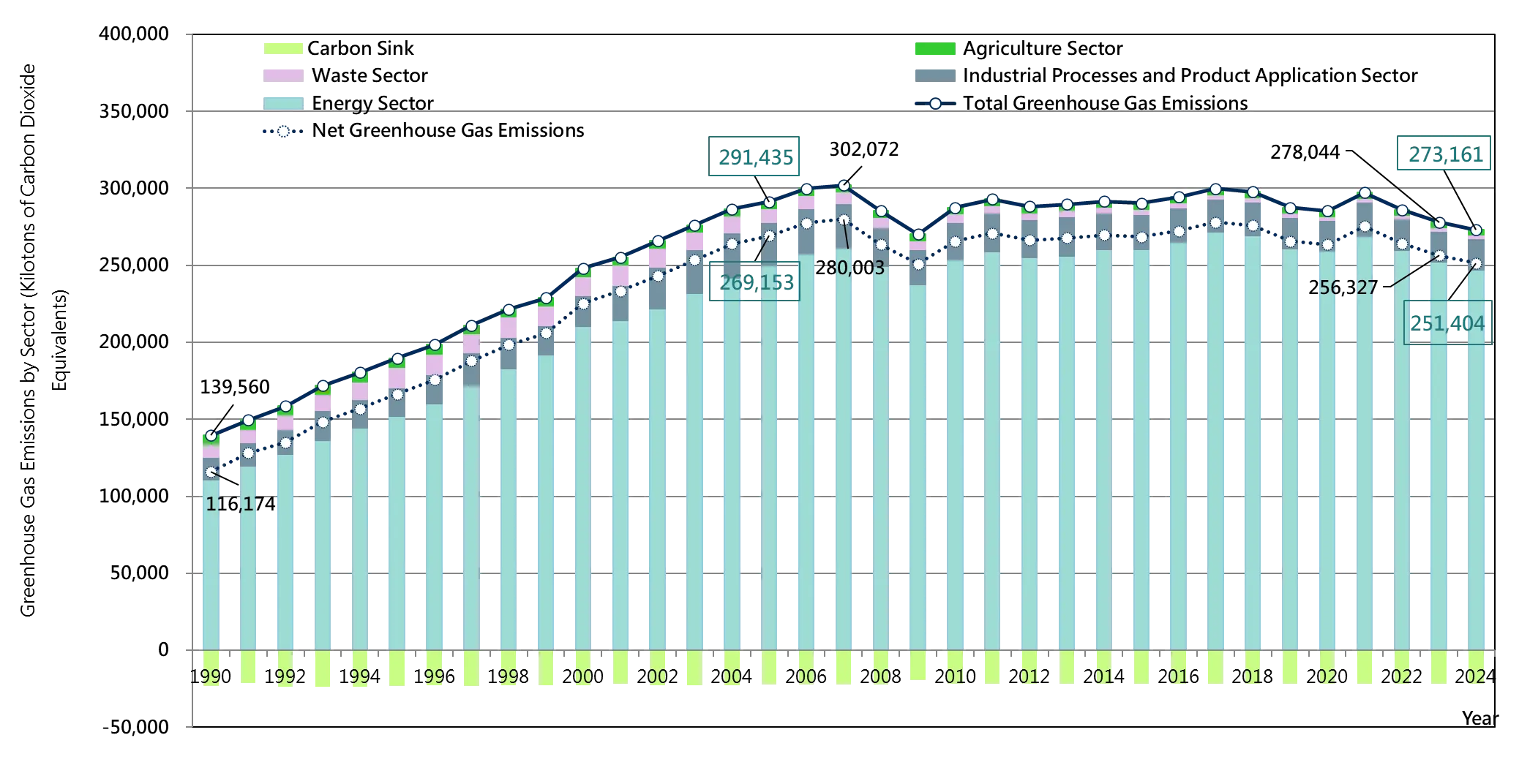
The Ministry of Environment (MOENV) today released the National Greenhouse Gas Inventory (2026 Edition), which reports Taiwan's national greenhouse gas emissions for 2024, consistent with the international practice of publishing data for the year two years prior. The latest data showed that Taiwan's net greenhouse gas emissions in 2024, after accounting for carbon sinks, totaled 251.404 million metric tons of carbon dioxide equivalent (CO₂e), down 6.59% from the 2005 base year and 1.92% from 2023. This marked the third consecutive annual decline. Against a backdrop of rising global emissions, Taiwan's emissions continued to fall as the nation advanced toward its periodic regulatory targets for greenhouse gas emissions.
The MOENV explained that, according to information published on the official website of the United Nations Framework Convention on Climate Change (UNFCCC), 41 Parties have published their latest national greenhouse gas inventories this year. Although Taiwan is not a Party to the Convention, it continues to prepare and publish an annual inventory report in accordance with the Intergovernmental Panel on Climate Change (IPCC) Guidelines for National Greenhouse Gas Inventories and the reporting requirements of the Paris Agreement's Enhanced Transparency Framework (ETF). Taiwan's inventory data have also been incorporated into analyses by international research institutions, including Potsdam Institute for Climate Impact Research (PIK). The latest inventory highlights three key results in emissions reduction and economic restructuring:
- Taiwan's emissions decline outpaces the global trend: According to United Nations Environment Programme (UNEP) report, global greenhouse gas emissions rose 2.3% in 2024. By contrast, Taiwan's total and net emissions both fell year on year, by 1.76% and 1.92%, respectively. These results indicate that the emissions reduction measures implemented in recent years are beginning to deliver measurable results.
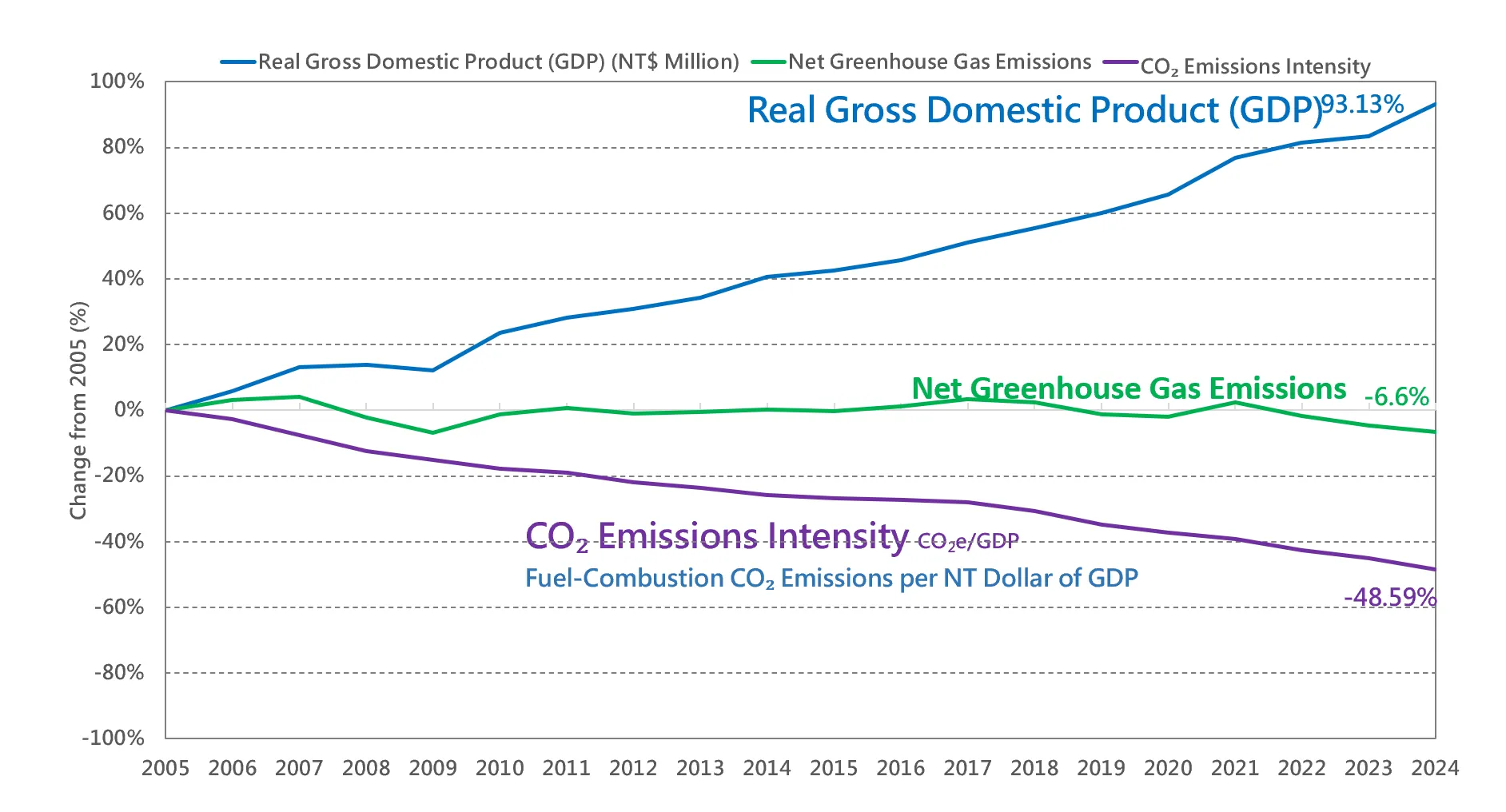
- Economic growth continues to decouple from carbon emissions: Between 2005 and 2024, Taiwan's real GDP increased by 93.13%, while its carbon dioxide emissions intensity decreased by 48.59%. This shows that the relationship between economic growth and carbon emissions has continued to weaken. According to the Global Carbon Project's Global Carbon Budget 2025, only 35 economies worldwide—including Taiwan—have demonstrated a decoupling of economic growth from carbon emissions. This progress reflects the effects of Taiwan's energy transition, industrial energy-efficiency improvements, and low-carbon development measures.
- All inventory sectors record emissions below base-year levels for the first time: More than 90% of Taiwan's greenhouse gas emissions come from the energy sector, which includes fuel combustion in energy industries; manufacturing industries and construction; transport; commercial, institutional, and residential buildings; and agriculture, forestry, fishing, and animal husbandry. Energy-sector emissions in 2024 were 1.07% below their 2005 level, marking the first time since the Greenhouse Gas Reduction and Management Act was promulgated in 2015 (now amended and renamed the Climate Change Response Act) that energy-sector emissions fell below the base-year level. Manufacturing industries and construction recorded the largest decline, indicating that improvements in industrial energy efficiency and energy transition measures are increasingly reflected in emissions data.
The MOENV stated that this year's inventory presents 2005 and 2024 emissions data in the common reporting tables (CRT) for the first time, consistent with the reporting format under the Paris Agreement's Enhanced Transparency Framework. This further aligns Taiwan's greenhouse gas reporting with international practice and strengthens its emissions statistics. The National Greenhouse Gas Inventory Report (2026 Edition) and the CRT are available on the Climate Info Hub (https://gov.tw/9EA), which also provides an interactive data visualization tool for viewing and downloading the data. The MOENV emphasized that comprehensive, reliable emissions data are the foundation of effective climate policy. Looking ahead, Taiwan has announced its 2035 Nationally Determined Contribution (NDC 3.0) in the spirit of the Paris Agreement and will continue to strengthen cooperation between the central and local governments as it steadily advances toward its net-zero transition goals.
- Data Source: Climate Change Administration
- Publish Date:2026-06-03
- Update Date: 2026-08-25