Rain Garden: A Key Component of Sponge City Development

Rain gardens are an innovative approach combining natural ecology with urban design. Their core concept involves guiding, infiltrating, and storing rainwater to reduce urban flooding and improve the efficiency of water resource utilization. Typically situated in public spaces, residential communities, or schools, rain gardens utilize plants, soil, and landscape design to absorb rainwater, mimicking the natural water cycle. This creates green spaces that offer ecological, aesthetic, and functional benefits.
This concept aligns closely with the international initiative known as the "sponge city," which emphasizes cities’ ability to absorb, store, purify, and release rainwater, much like a sponge, so that they don’t have to rely so much on impermeable surfaces and rather use nature-based solutions to address climate change challenges. By installing rain gardens, not only can we enhance urban resilience, we can also reduce pollution caused by surface runoff, elevate the ecological value of urban spaces, and create more livable environments for residents.
The beauty of rain gardens lies not only in their functionality but also in their embodiment of respect for and coexistence with nature. Everyone can participate — whether by creating a small rain garden in their own backyard or joining community rain garden initiatives — and add greenery and hope to our cities. This change is accessible to all, representing the potential for small individual actions to collectively form a transformative movement.
Let us take action together by building rain gardens and welcoming a more sustainable future. This is not only an opportunity to transform our environment but also a promise to leave a greener world for future generations. We invite you to join this "green revolution" and become a creator of rain gardens, starting today, so that our cities can truly become "sponge cities"!

Highlights from the Taiwan-US Campus Rain Garden Promotion Project

Through a collaboration between Taiwan’s Water Resources Agency and Rutgers University, this project promotes rain gardens as tools for climate adaptation and hands-on learning. Students from seven schools in Taiwan and the U.S. participated in the design and construction, fostering international exchange in climate education. These school-based rain gardens not only enhance local resilience but also serve as sustainable, self-developed teaching tools.
See more>multimediaRain garden site cross-sectional diagram

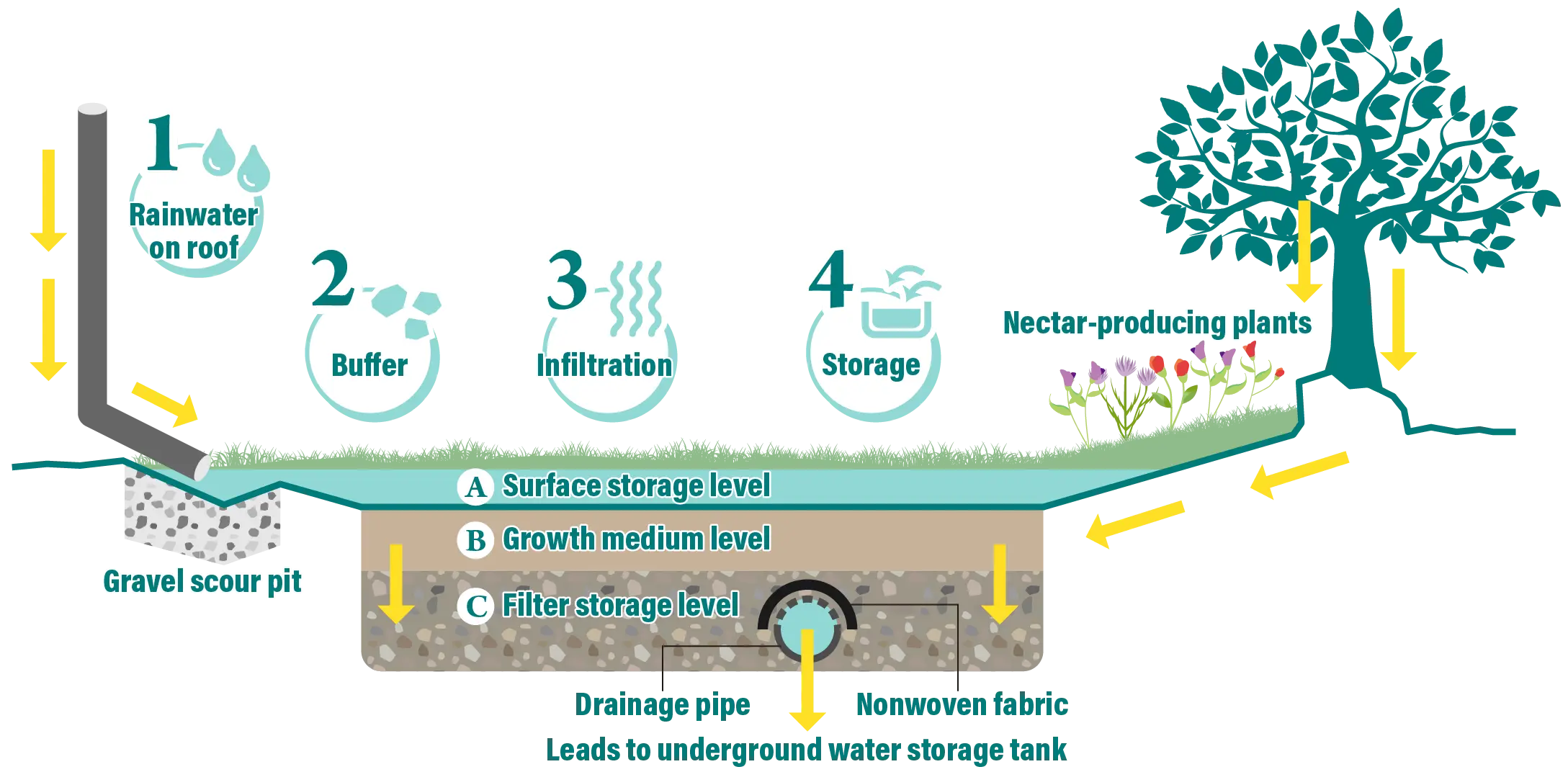
The essence of rain garden design lies in effective rainwater management, integrating terrain and plant arrangements to achieve water collection, infiltration, and storage. The cross-sectional diagram illustrates the layered structure of a rain garden, including surface vegetation, permeable soil layers, and an underlying drainage system. This multi-layered design mimics natural ecosystems, effectively reducing surface runoff, lowering urban flood risks. Meanwhile, it also purifies rainwater, providing ecological benefits to the surrounding area. The diagram visually presents the processes of rainwater inflow, infiltration, and storage, offering a clear understanding of how rain gardens work. Whether in schools, communities, or public spaces, rain gardens can be adapted to local conditions and integrated with local features, creating spaces that blend functionality with landscape aesthetics.
Demonstration site transformation

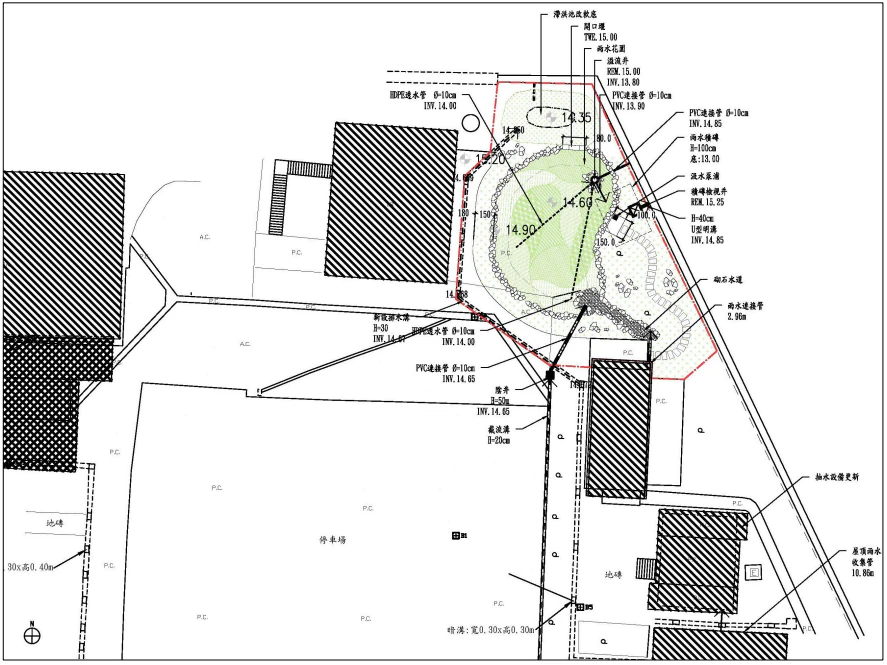
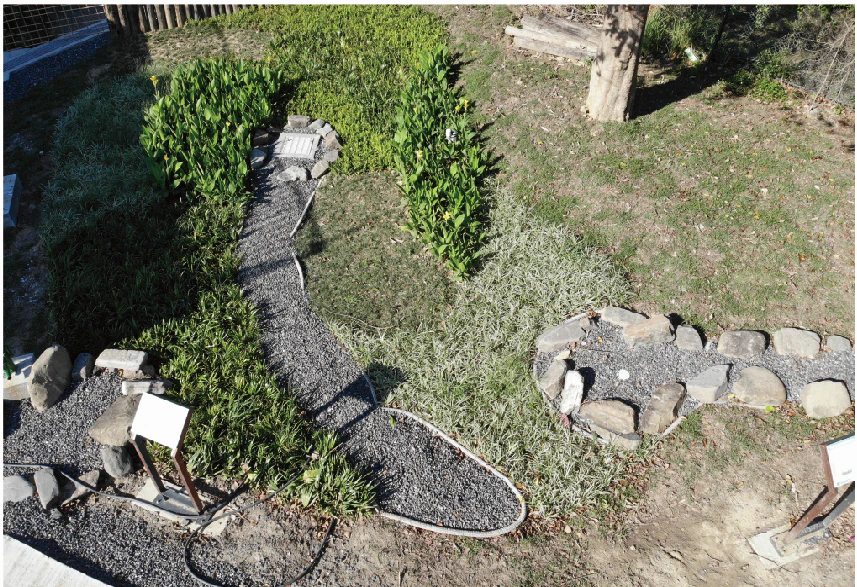
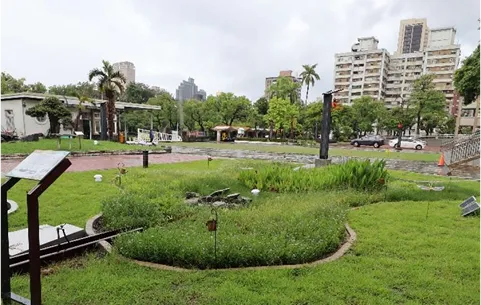
By comparing "before" site plans with the "after" on-site photos, we can clearly observe the transformative power of rain gardens. Previously, these locations may have had poor drainage, hardened surfaces, or limited greenery. Through the rain garden designs, the spaces have not only regained their ecological function but have also improved in visual appeal and usability.
Shinjie Elementary School, Taoyuan City
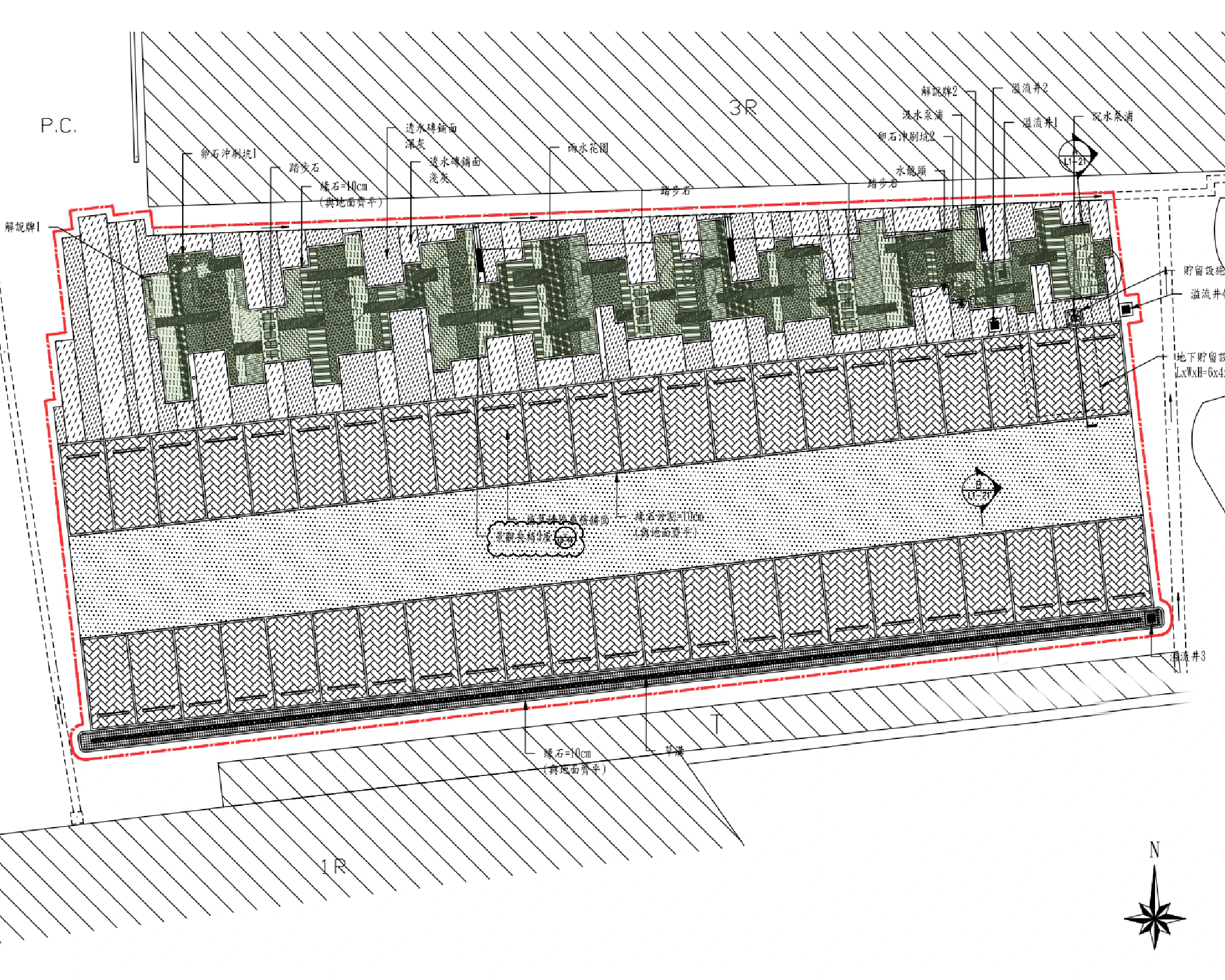
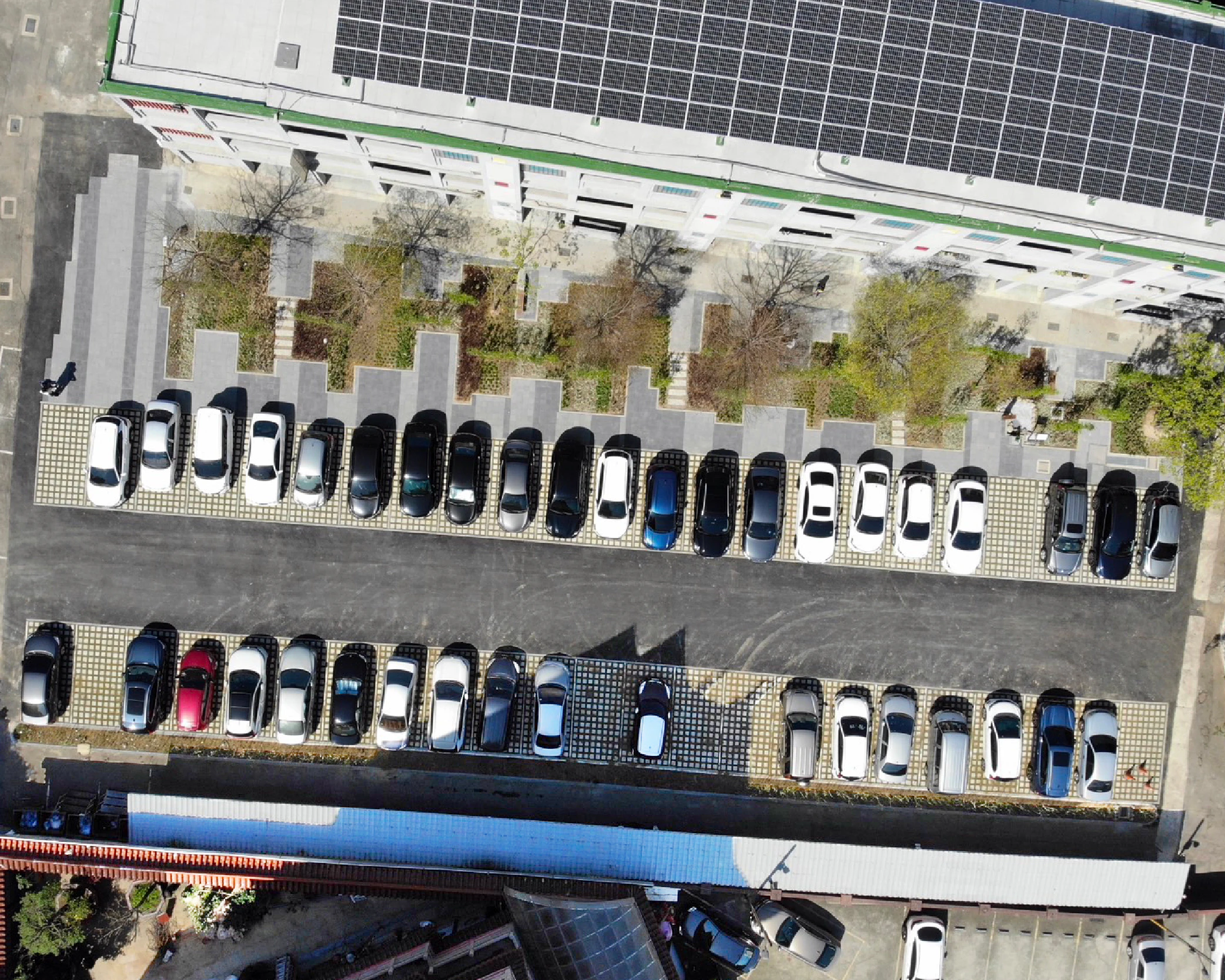
Jhong Fu Elementary School, Taoyuan City
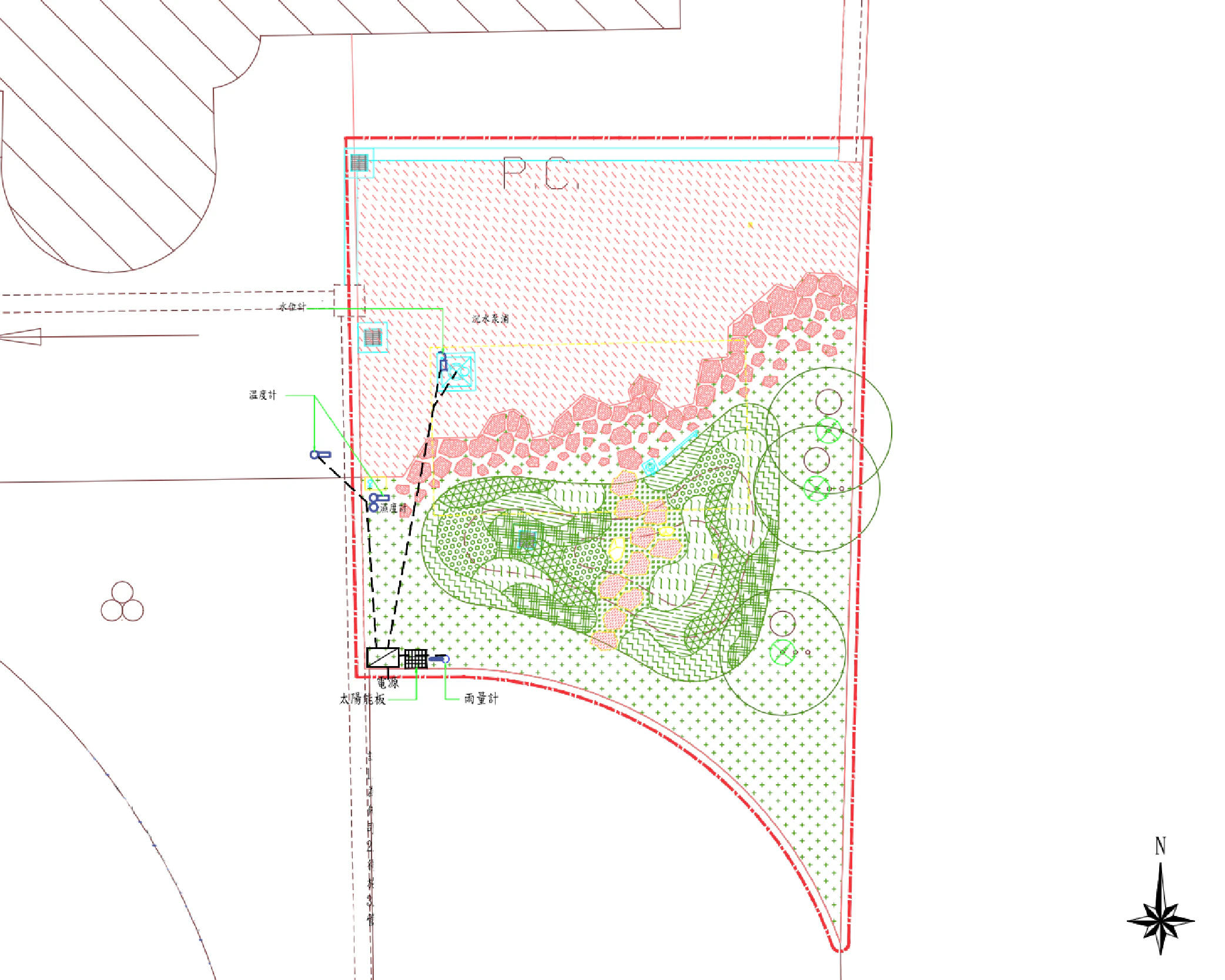
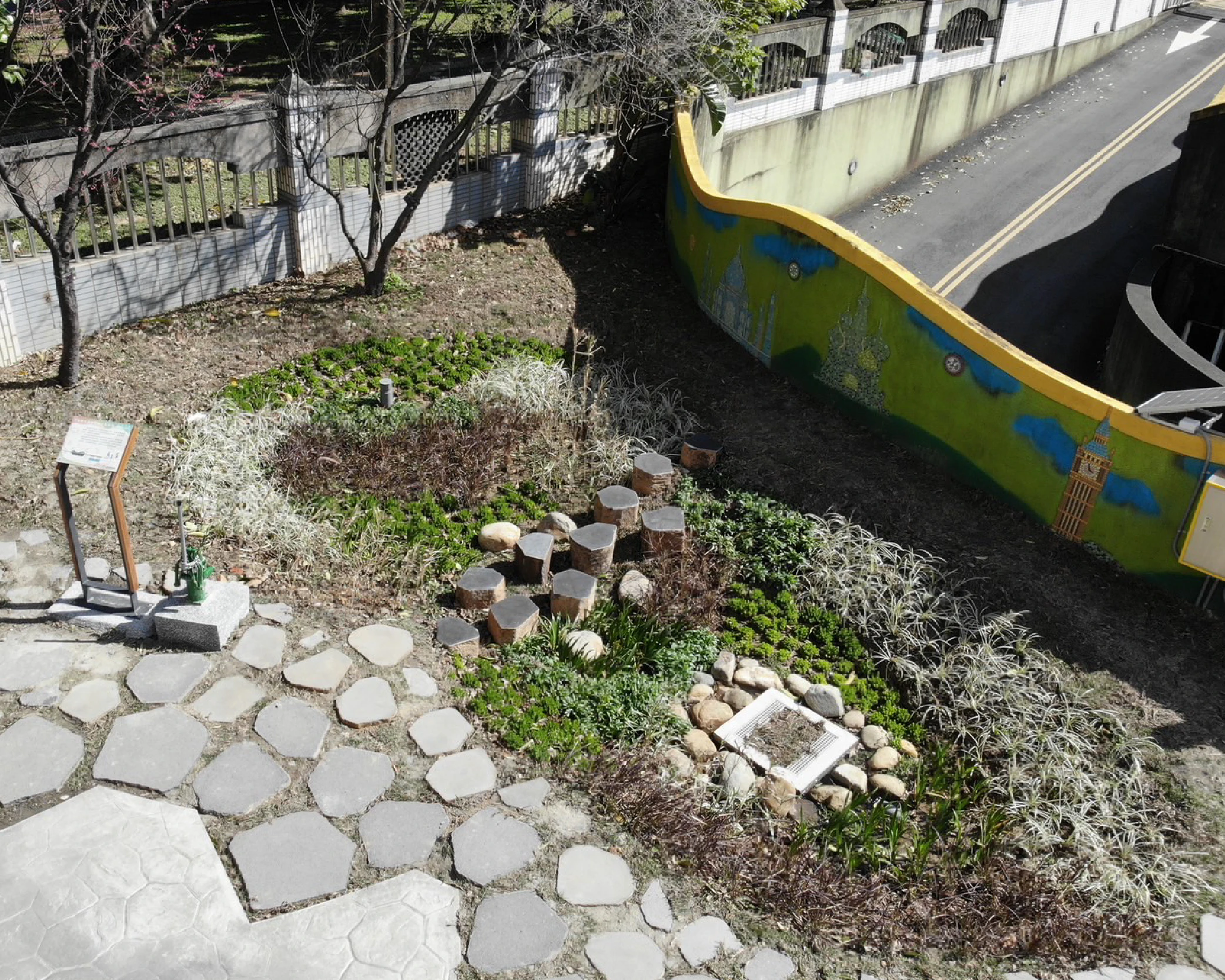
National Environmental Research Academy, Taoyuan City
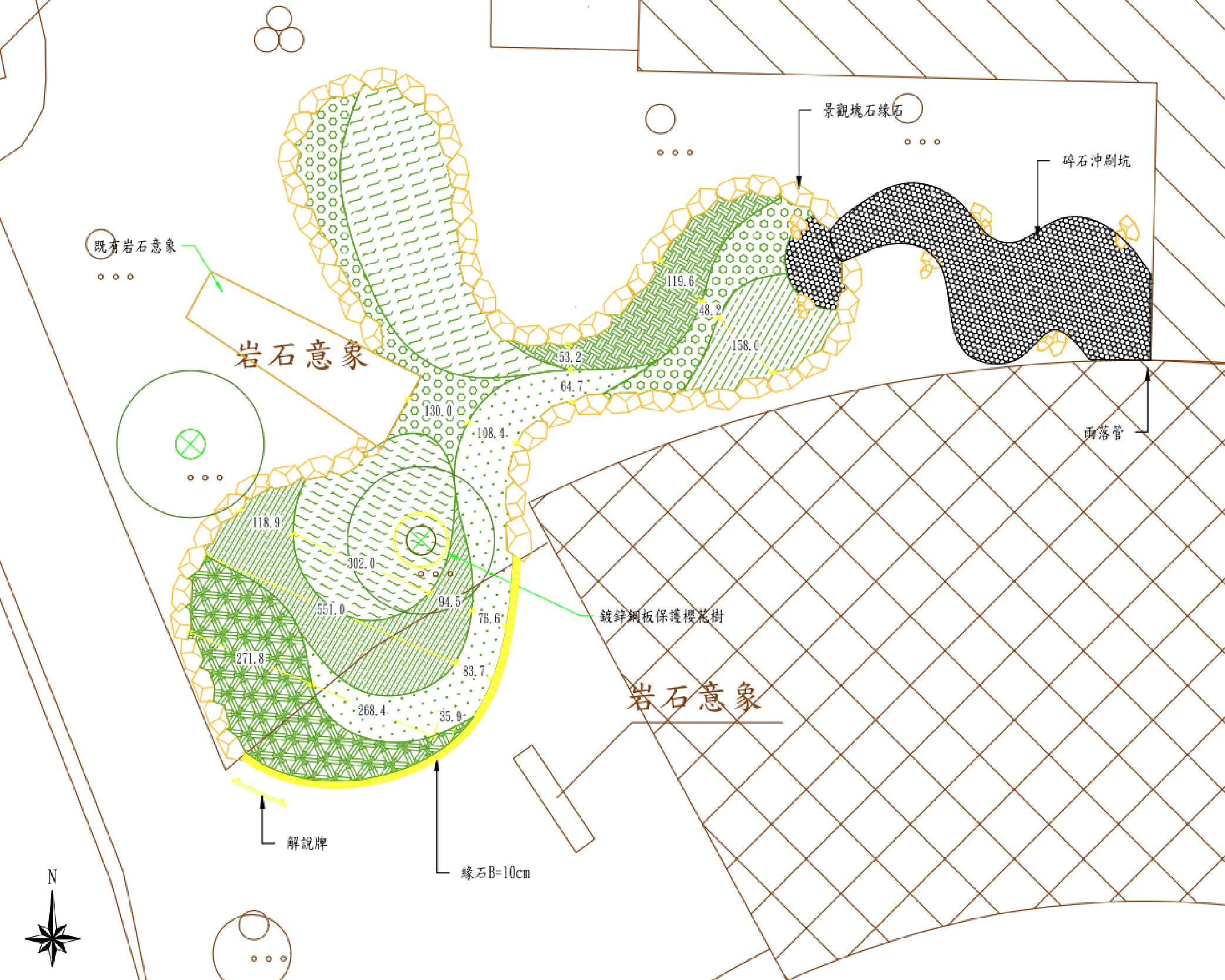
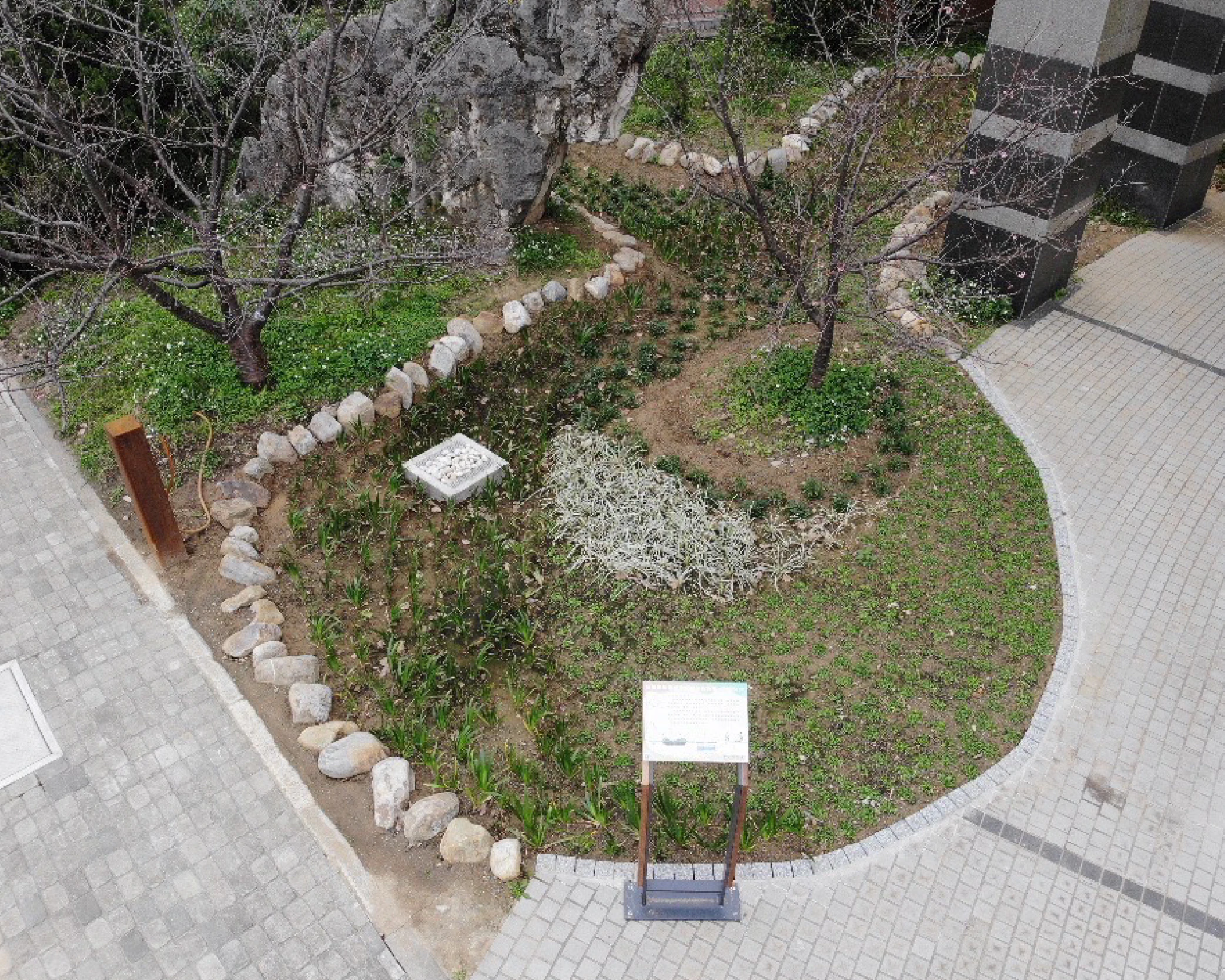
Beiping Waldorf Experimental School, Hsinchu County
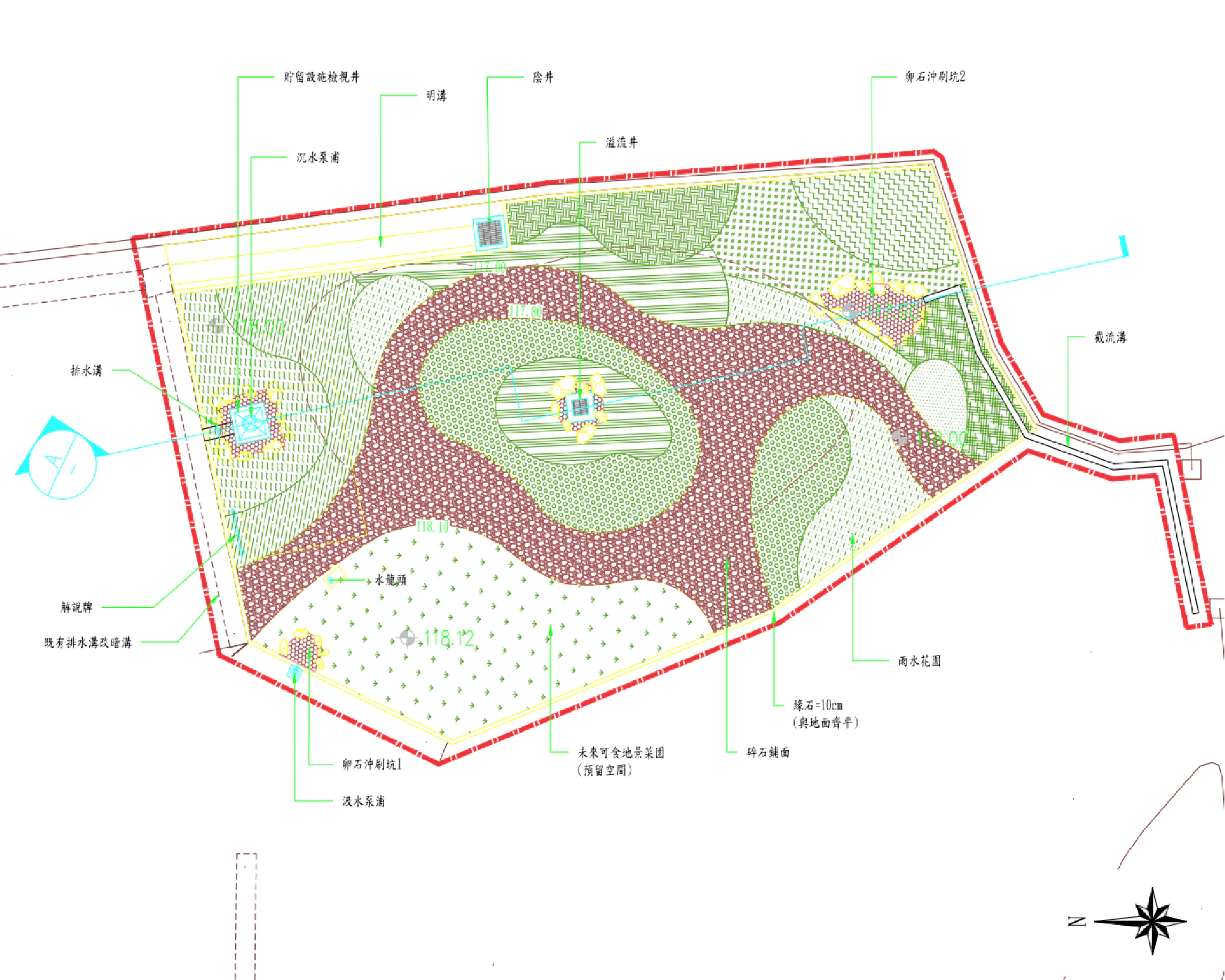
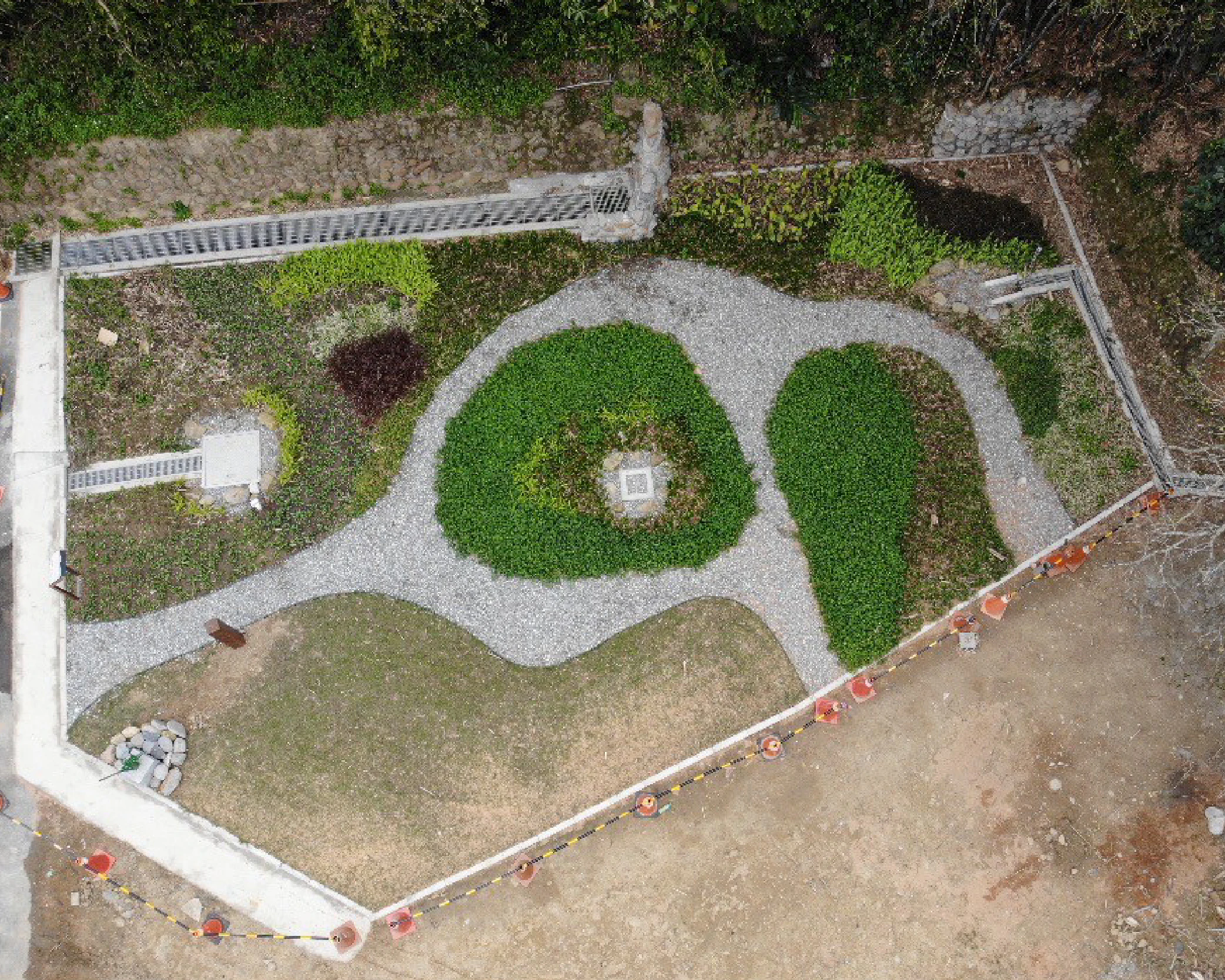
Yipin Park, Hsinchu City
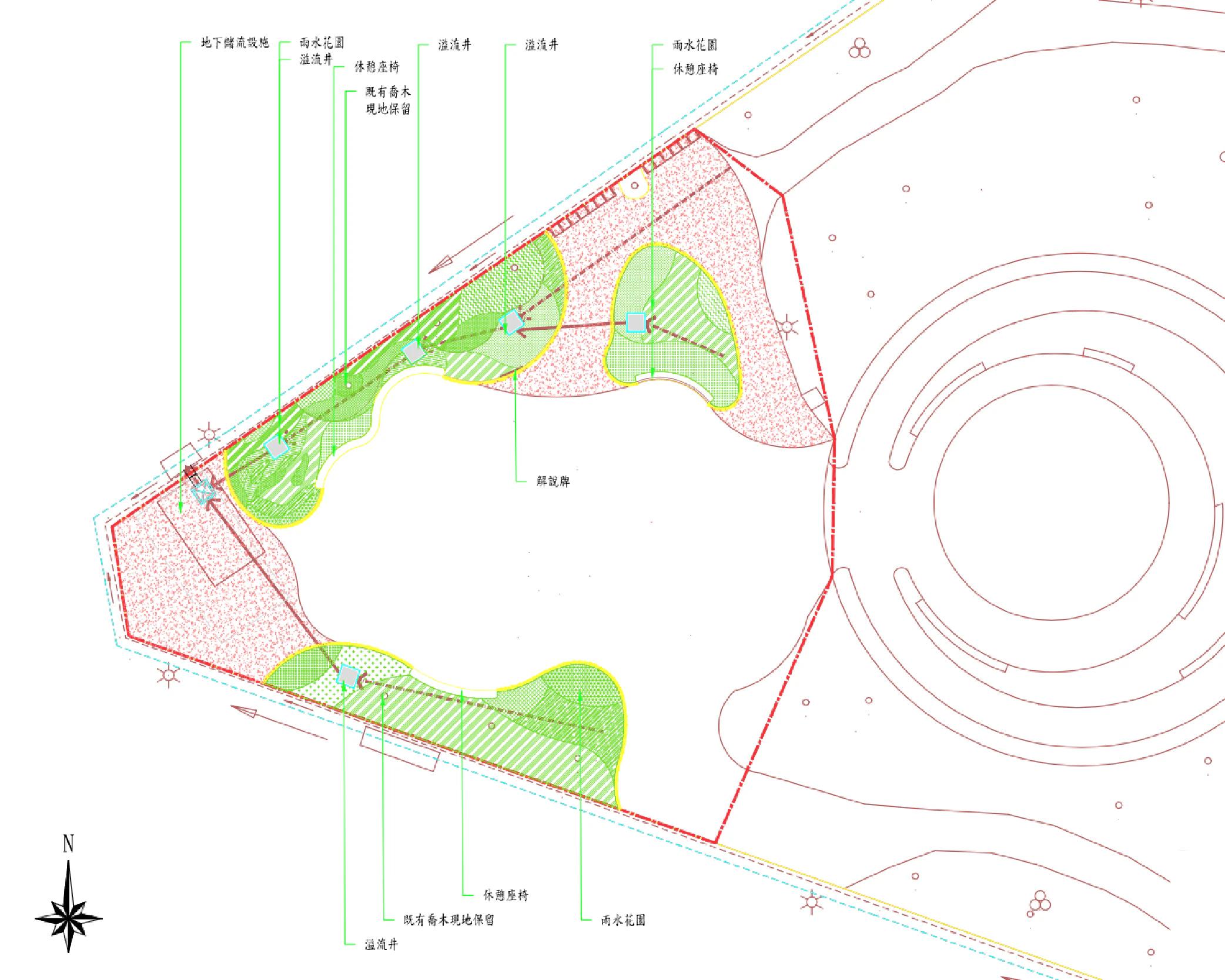
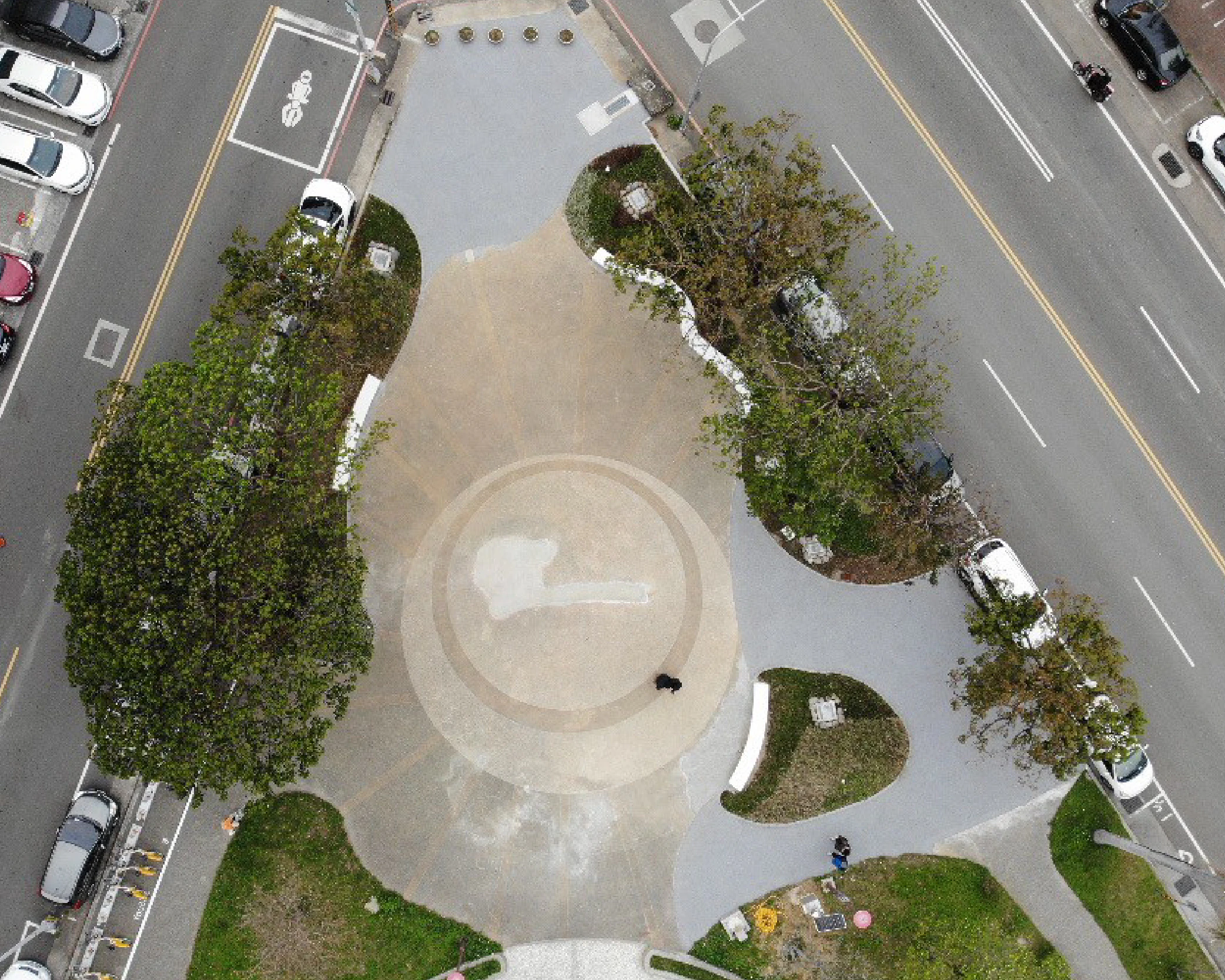
Xie Zi Pu Park, Hsinchu City
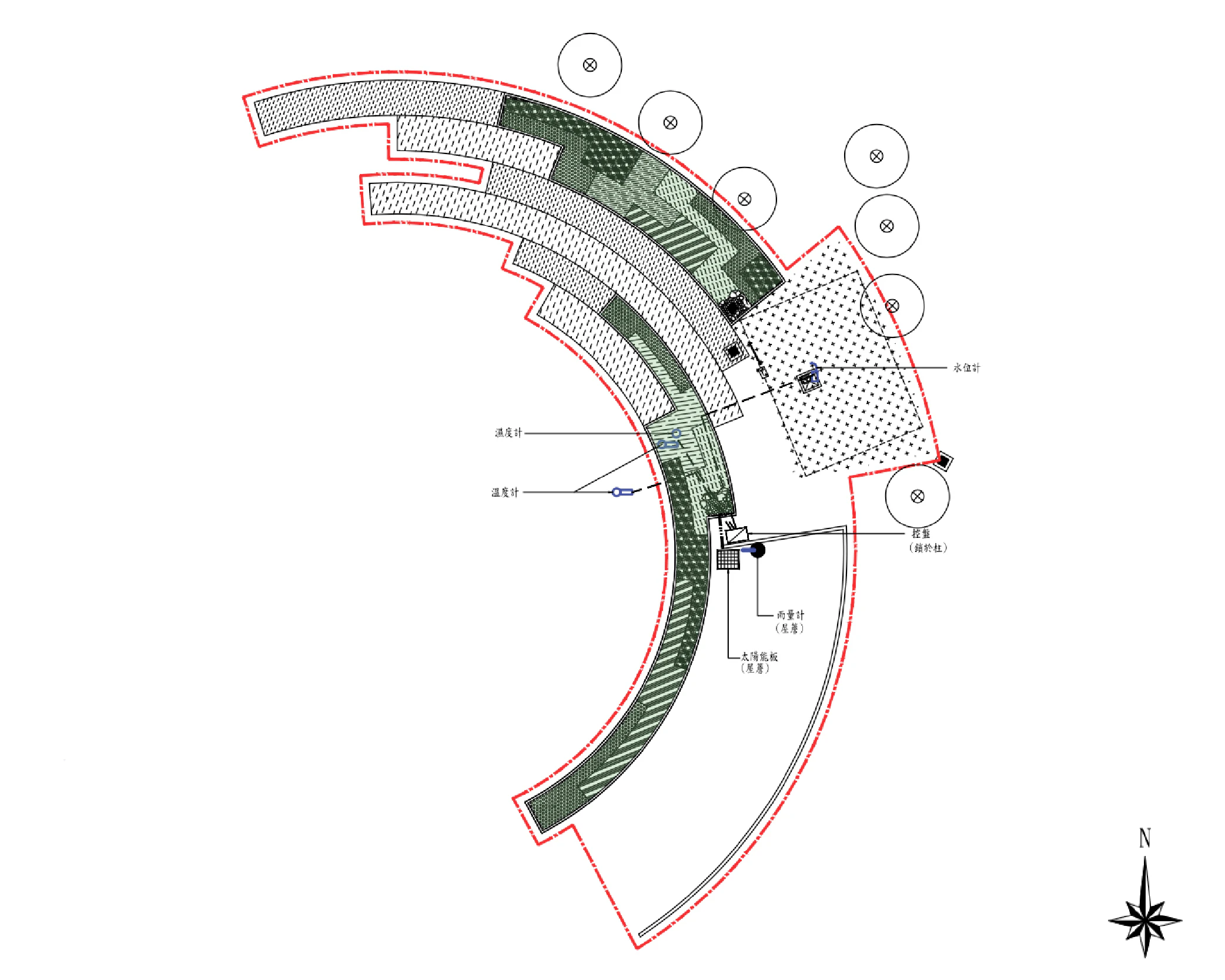
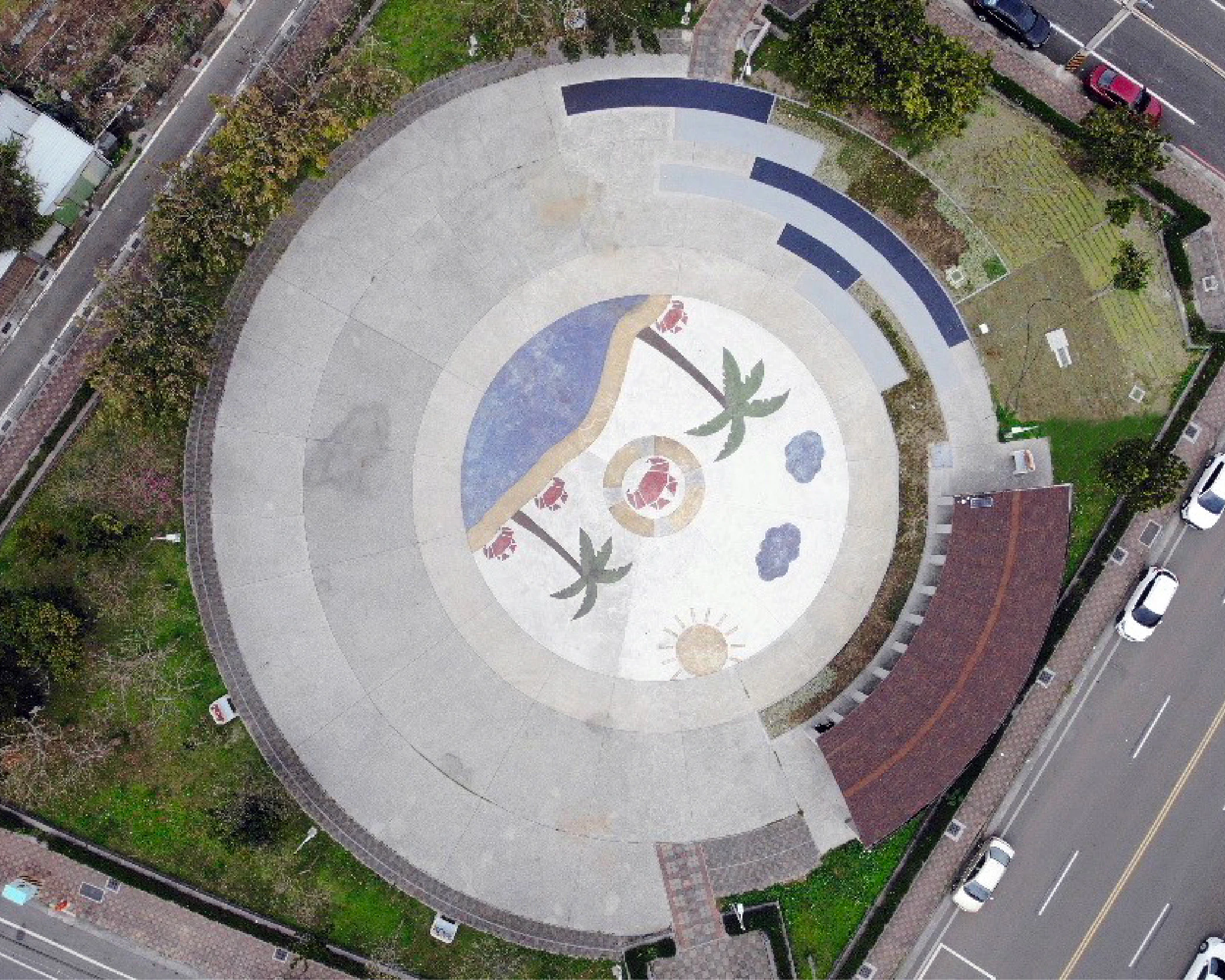
Kangle Park, Hsinchu City
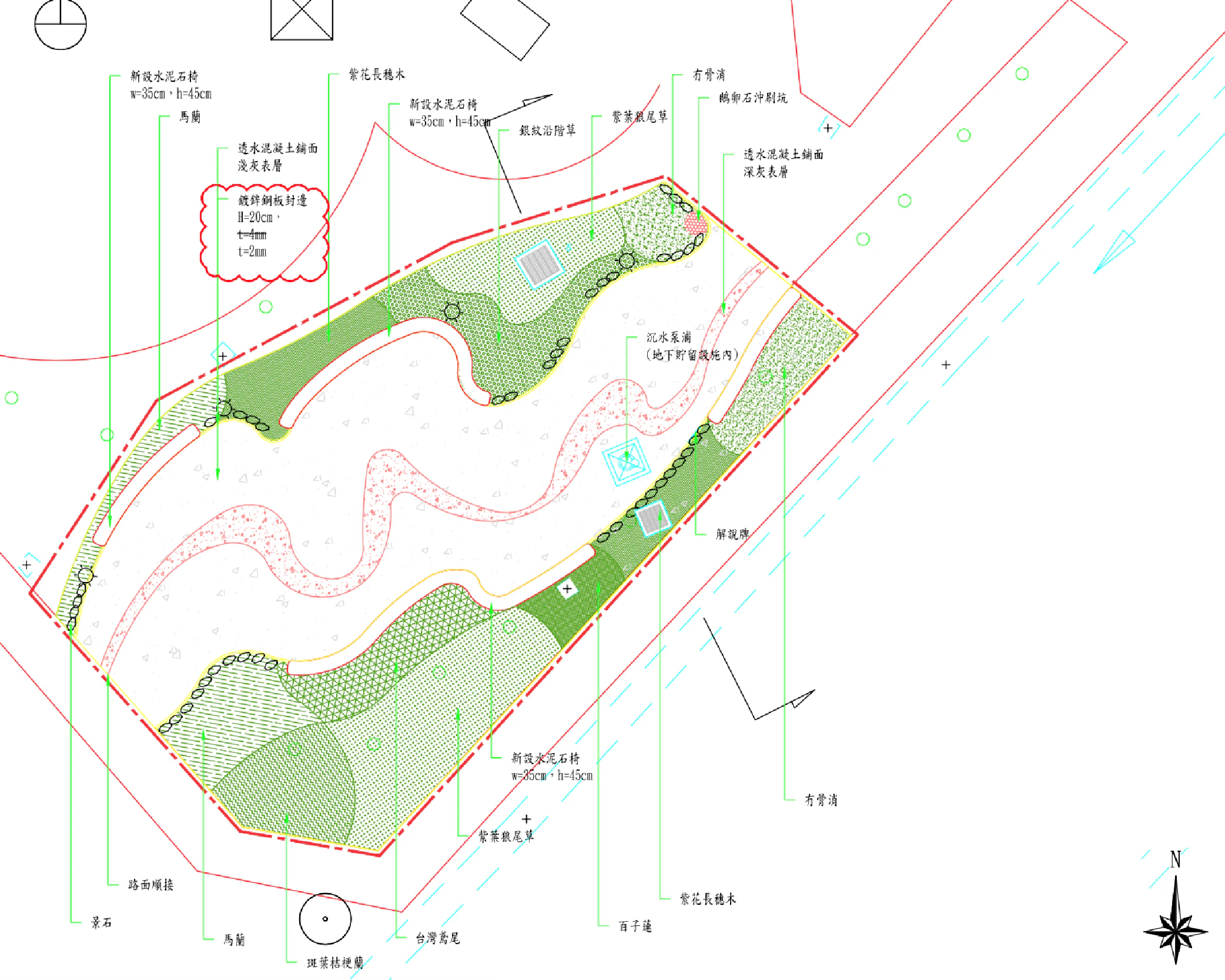
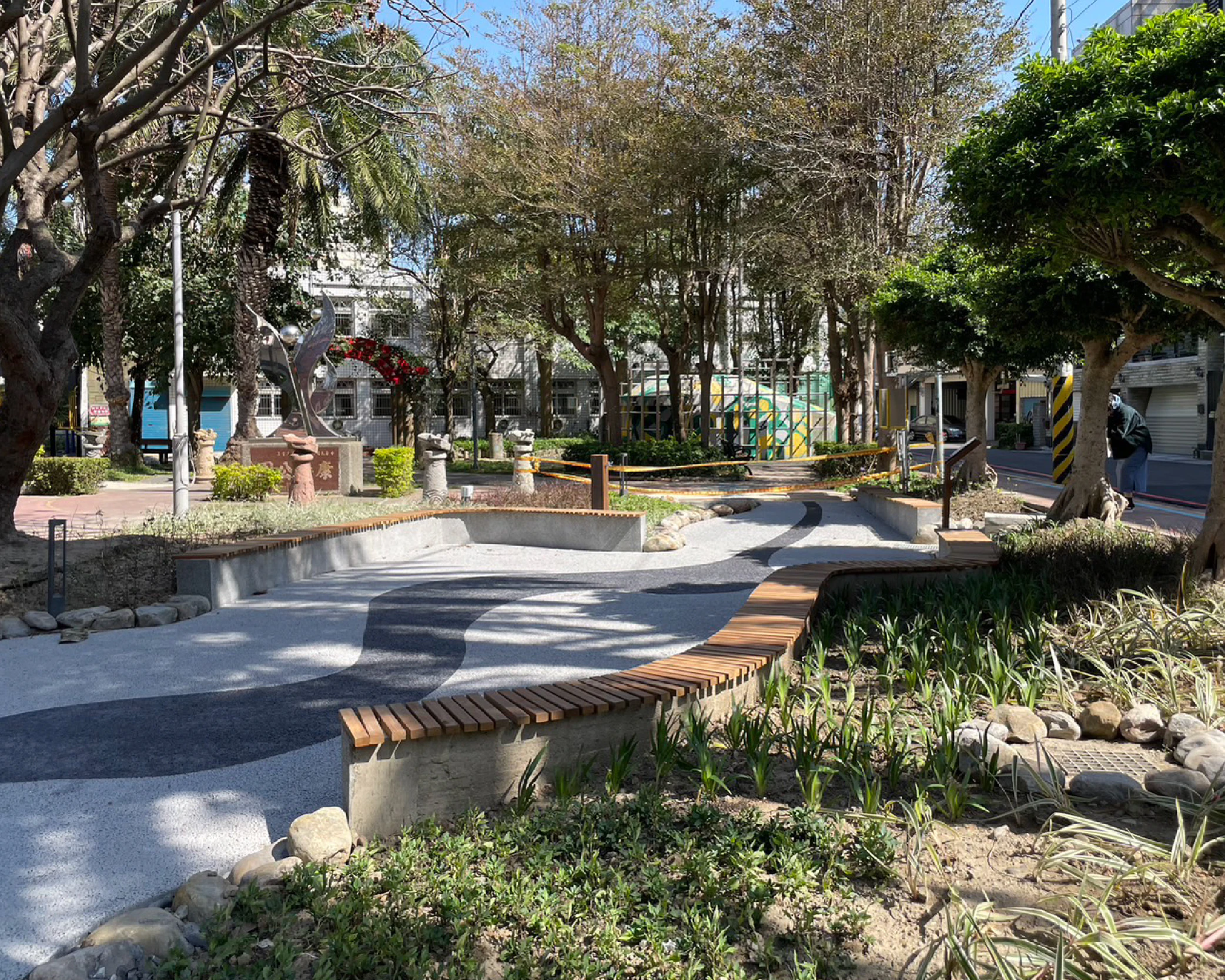
Nan-Liao Primary School, Hsinchu City
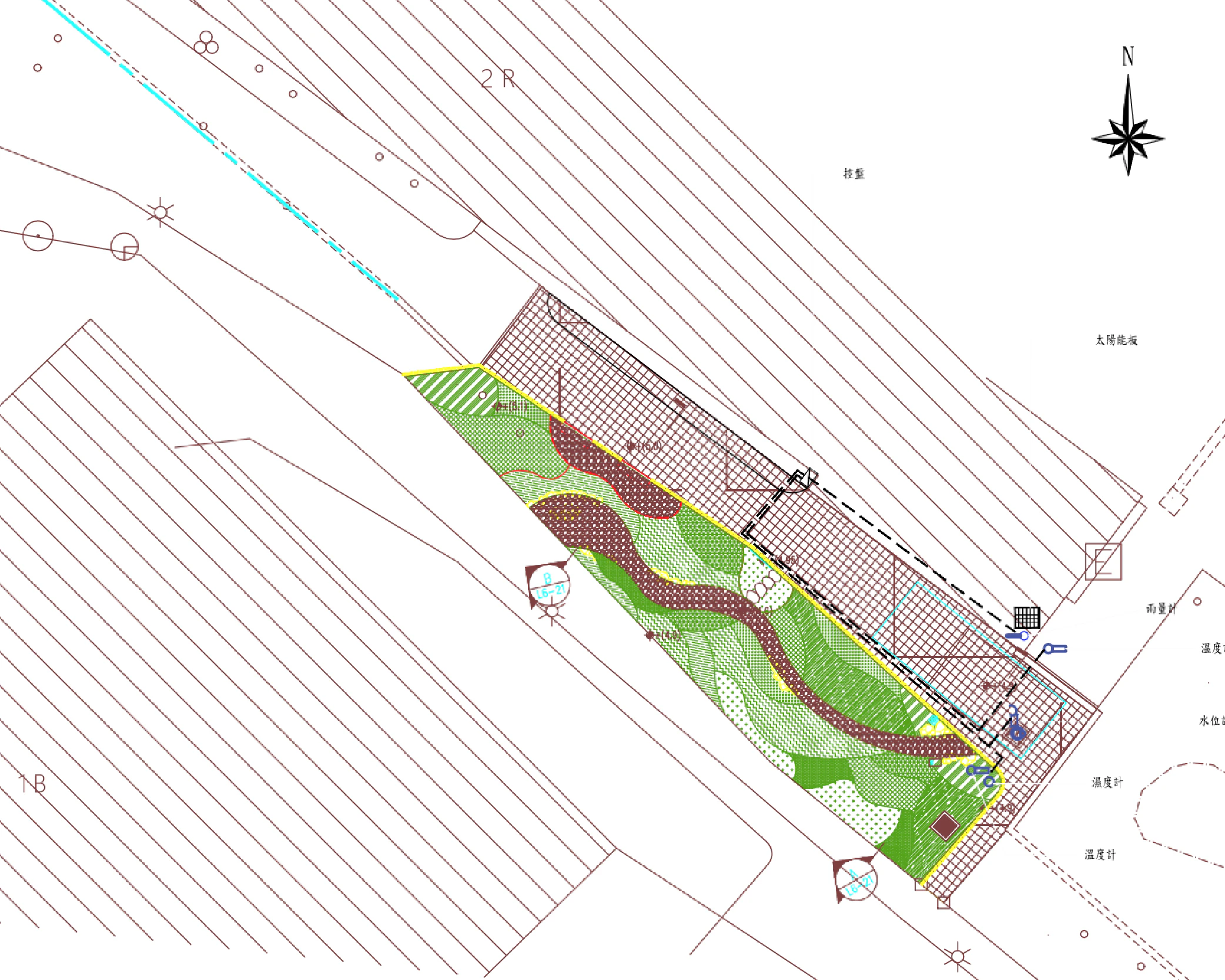
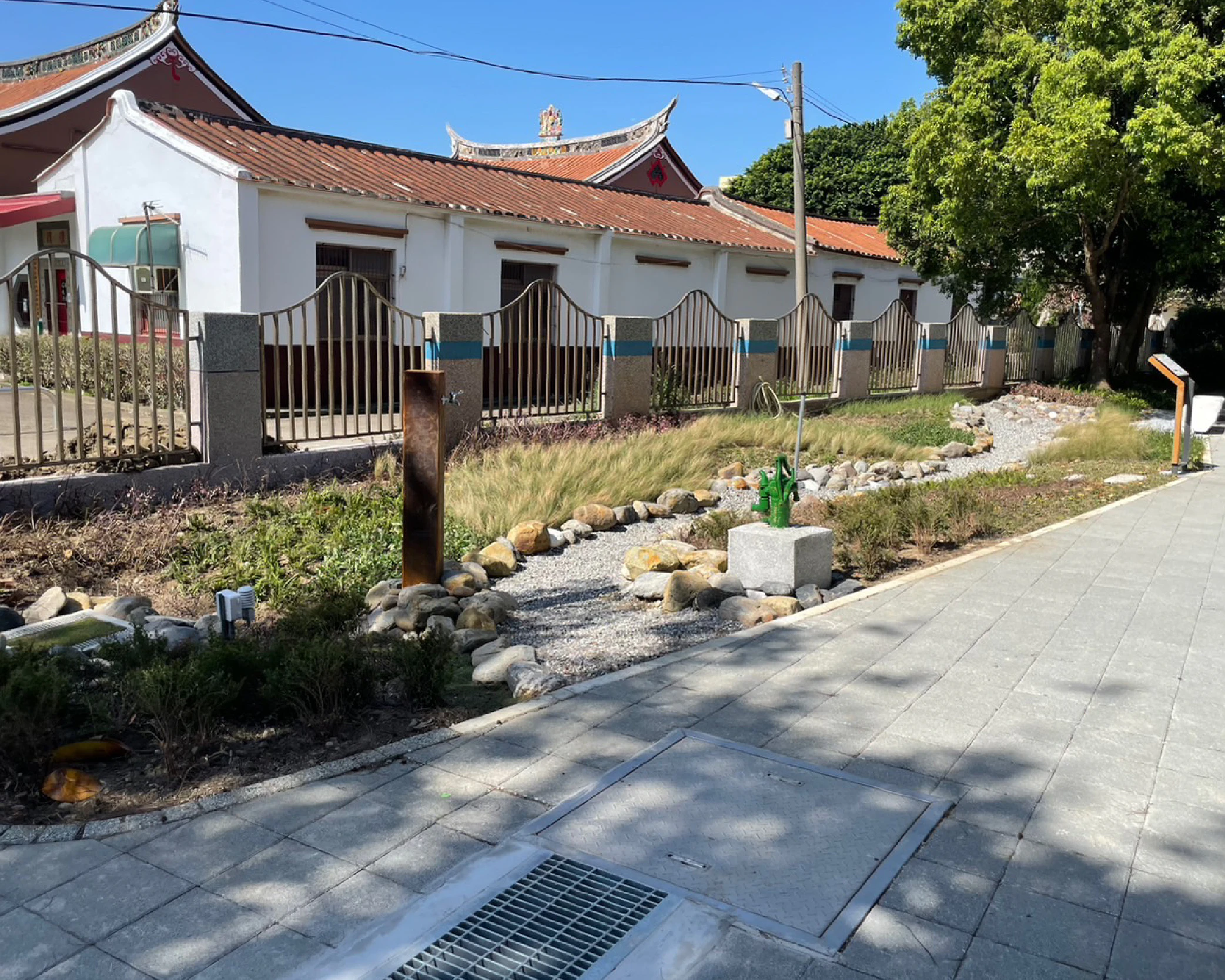
Dazhi Elementary School, Taichung City
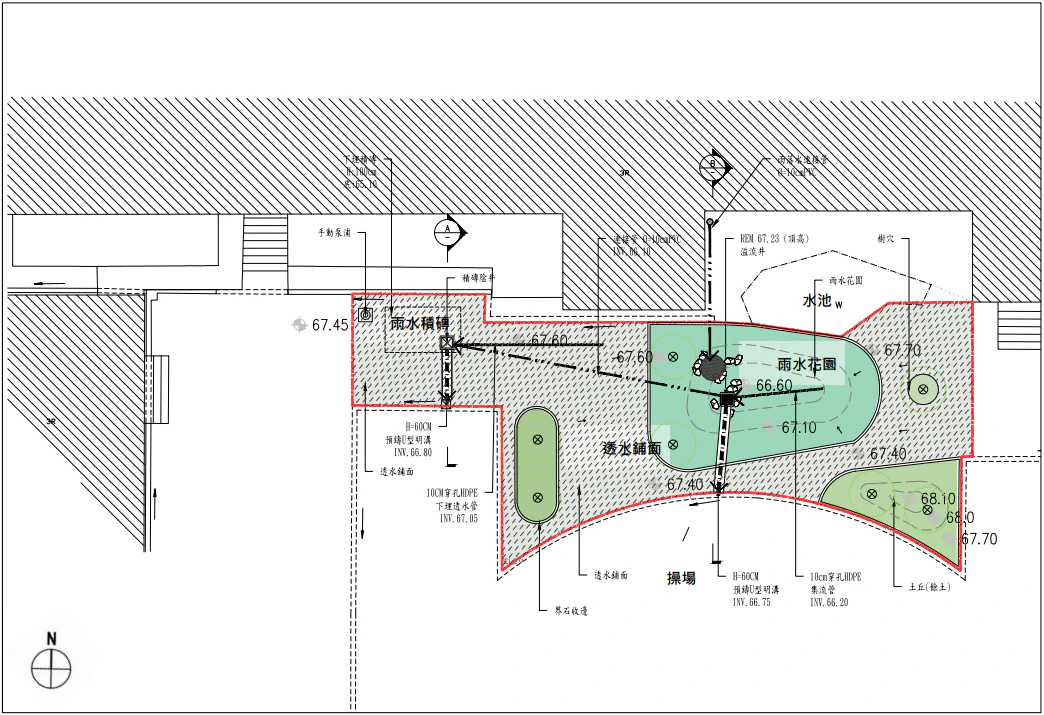
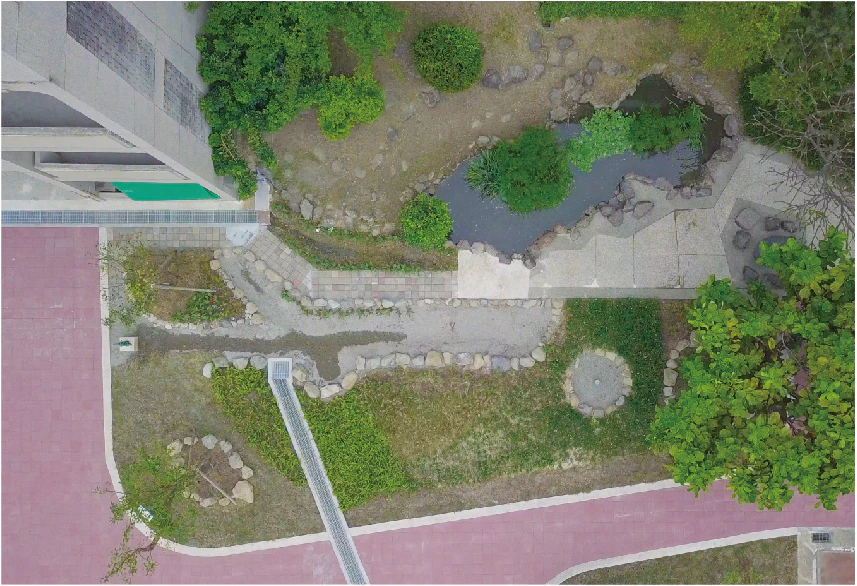
Wurih Junior High School, Taichung City
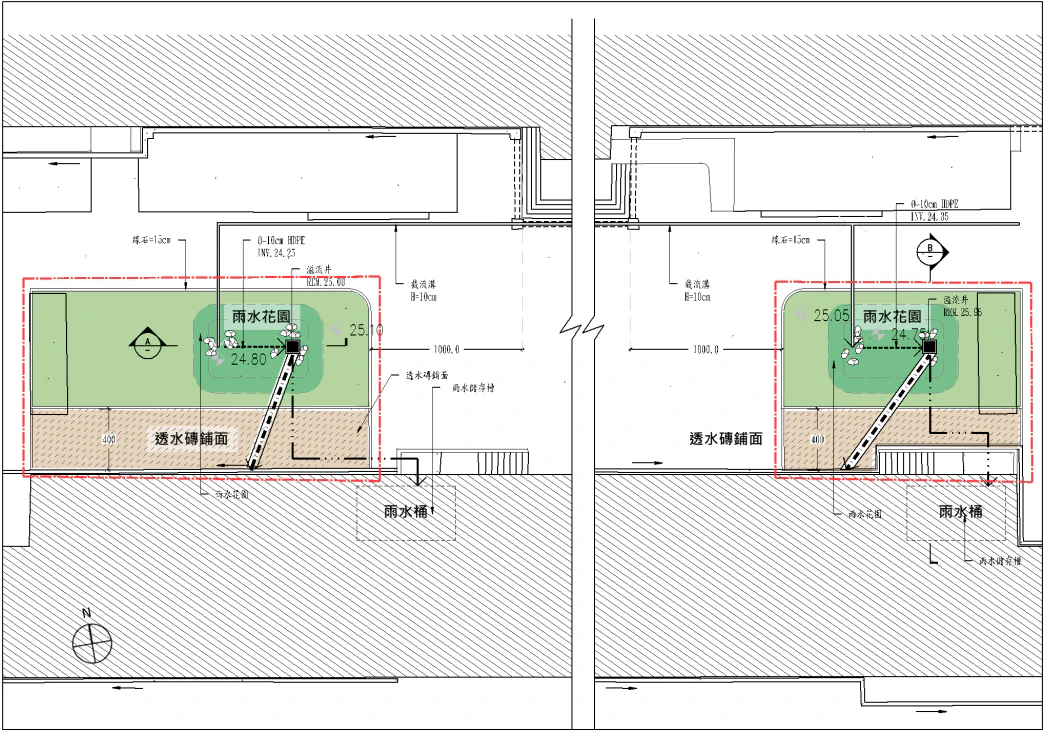
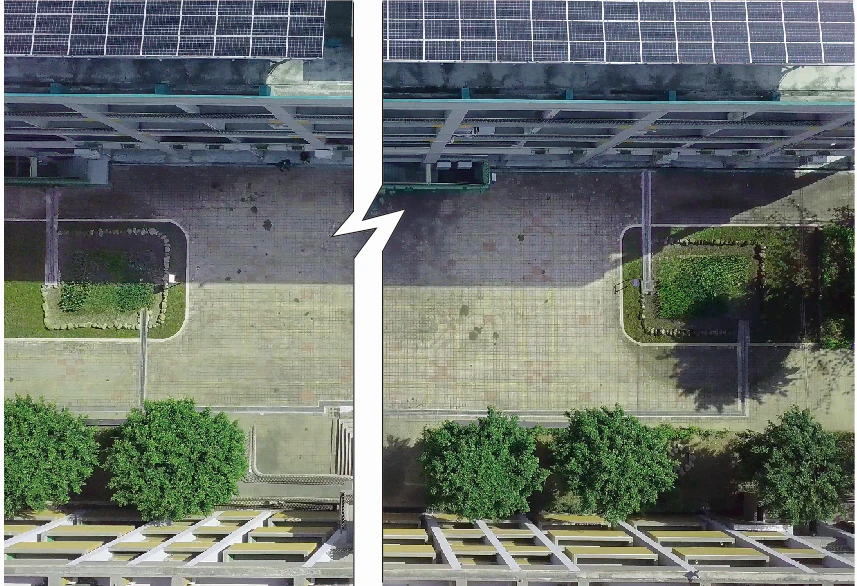
Chung-Wen Elementary School, Chiayi City
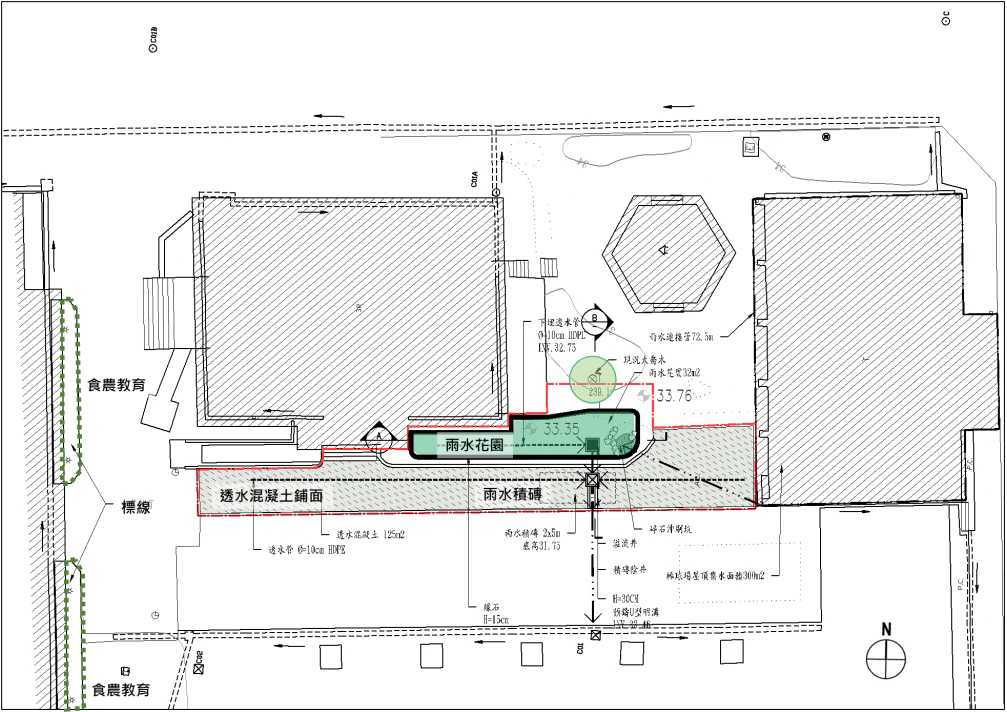
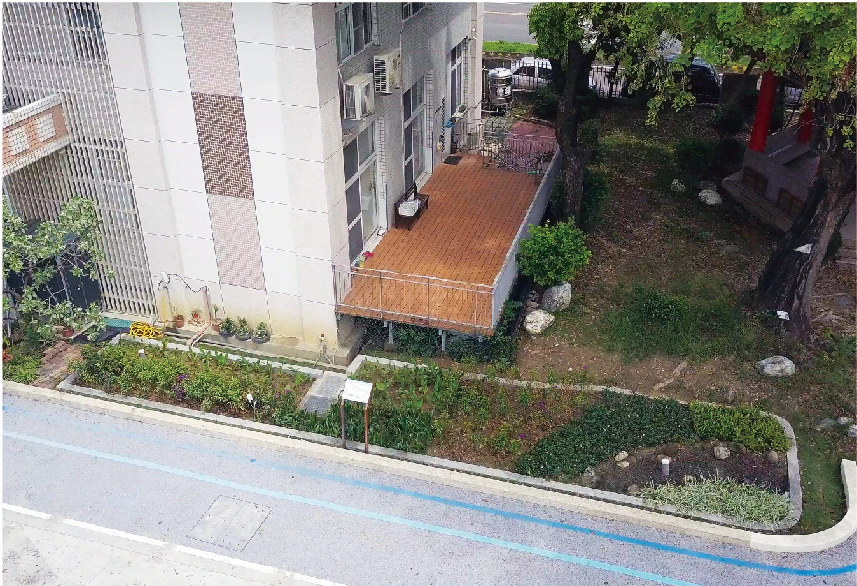
Guinan Elementary School, Tainan City
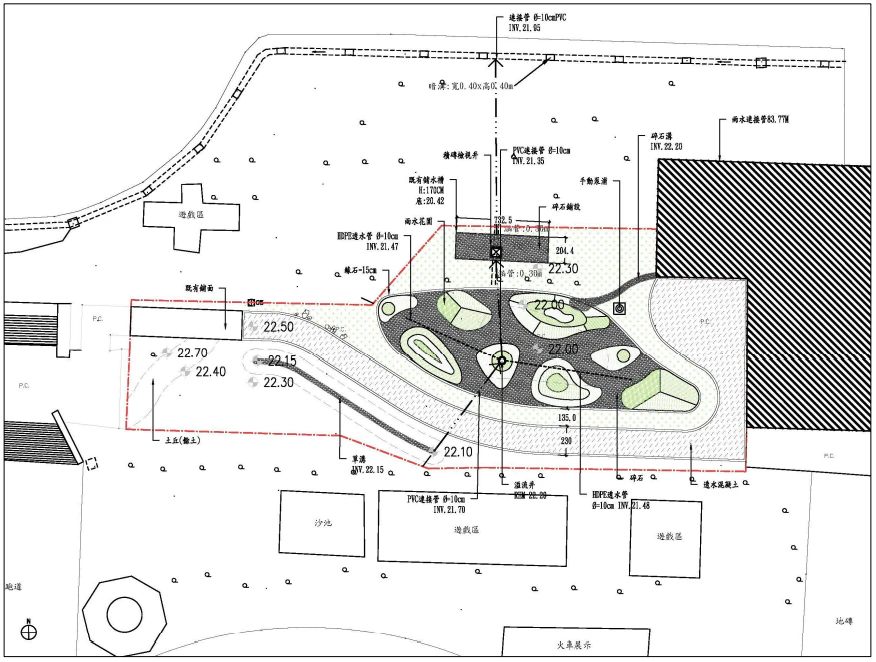
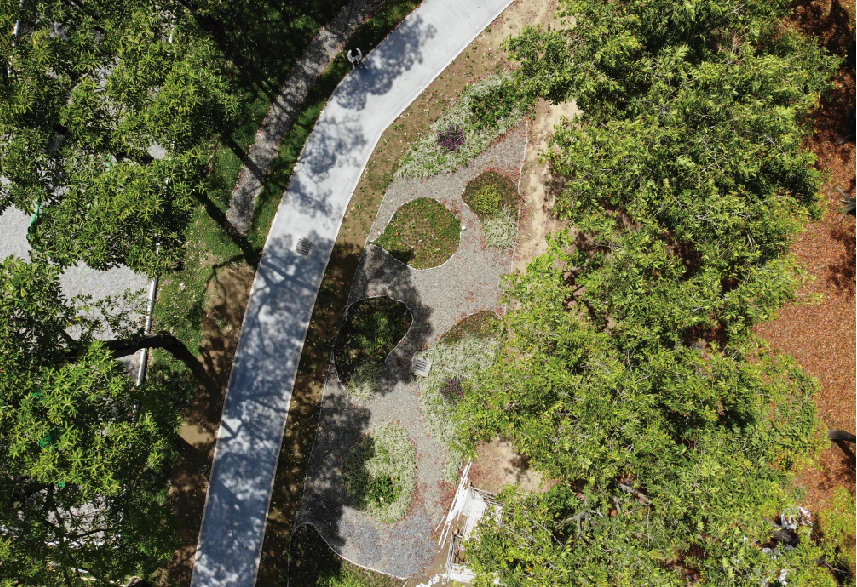
Ta-Tung Elementary School, Kaohsiung City
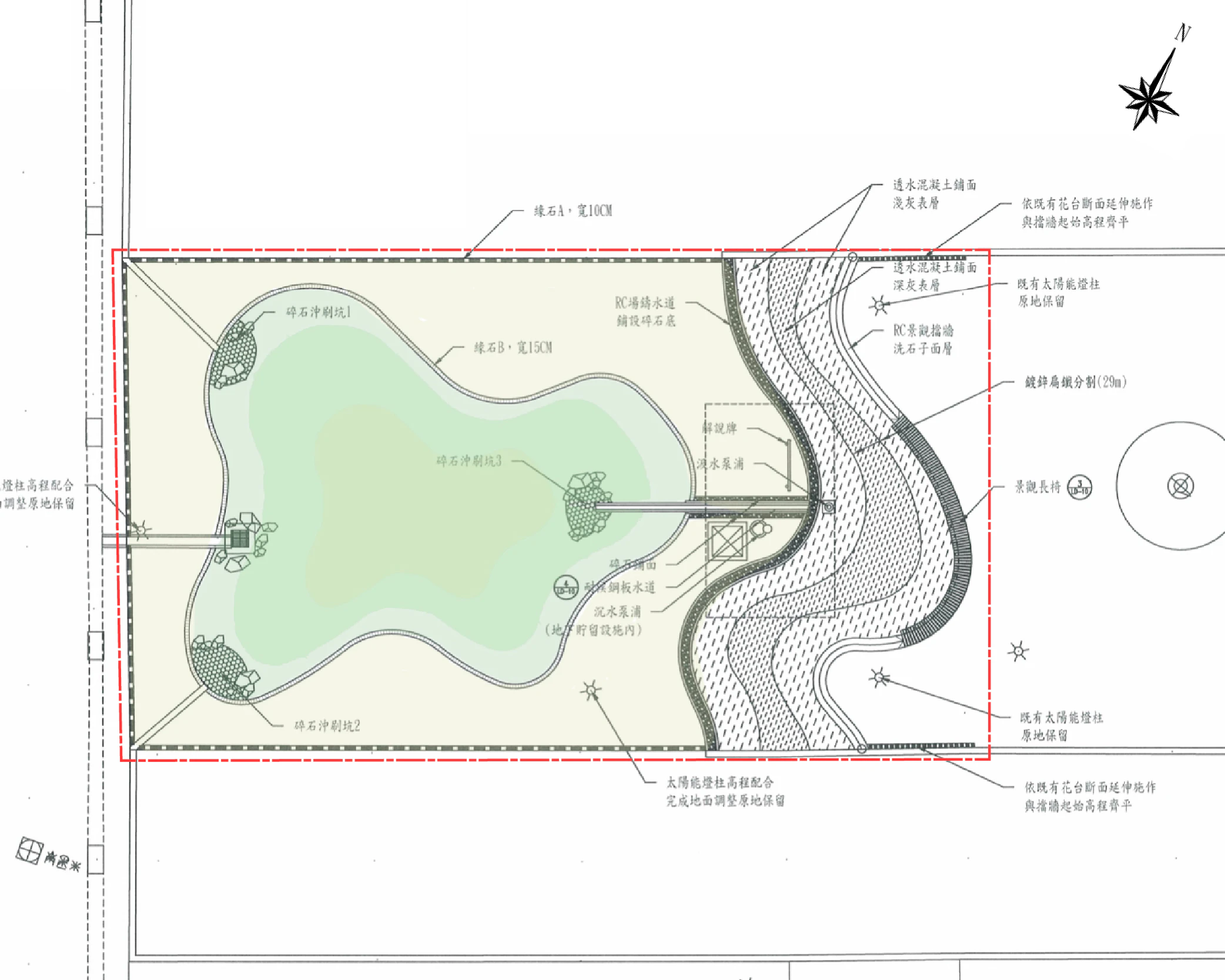
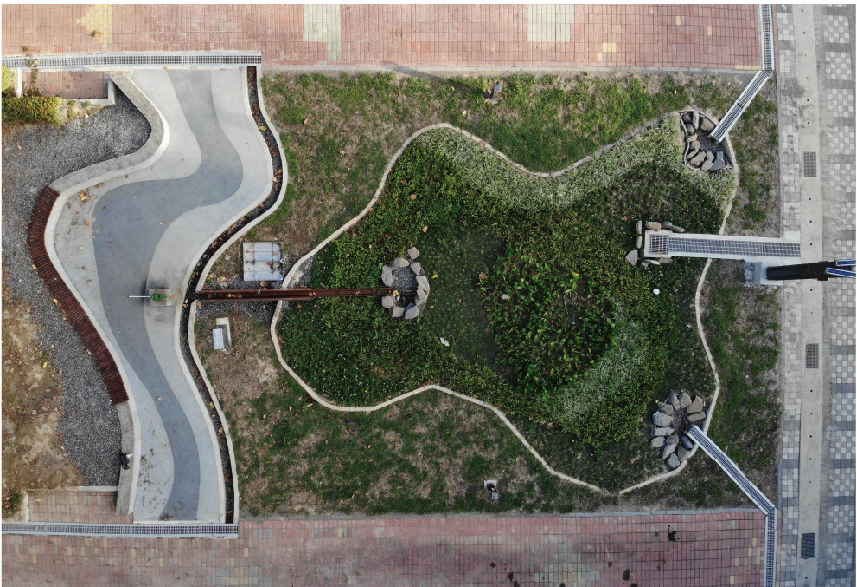
Chung-Cheng Elementary School, Kaohsiung City