
National Environmental Research Academy

A site transformation project with beginnings in drainage issues
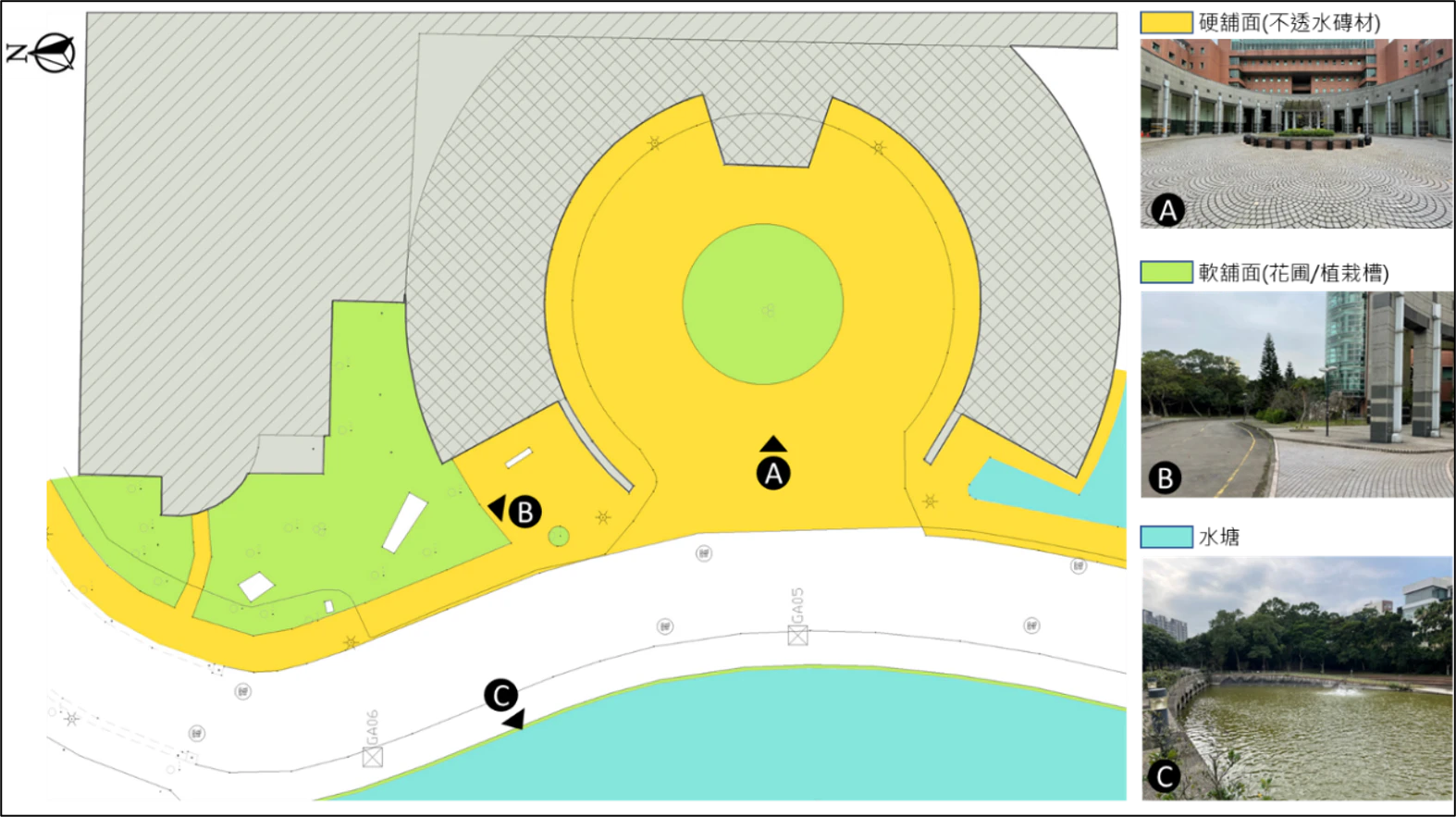
The National Environmental Research Academy is located near the Zhongli and Neili freeway interchanges, surrounded by a highly developed area with densely packed buildings and a high proportion of impervious surfaces. The terrain is also relatively low, resulting in rapid accumulation of surface runoff after heavy rainfall. The plaza at the academy's entrance has a paving surface that is nearly level with the adjacent road, which often leads to water accumulating. Rainwater cannot effectively enter the roadside ditches, resulting in flooding and drainage bottlenecks.
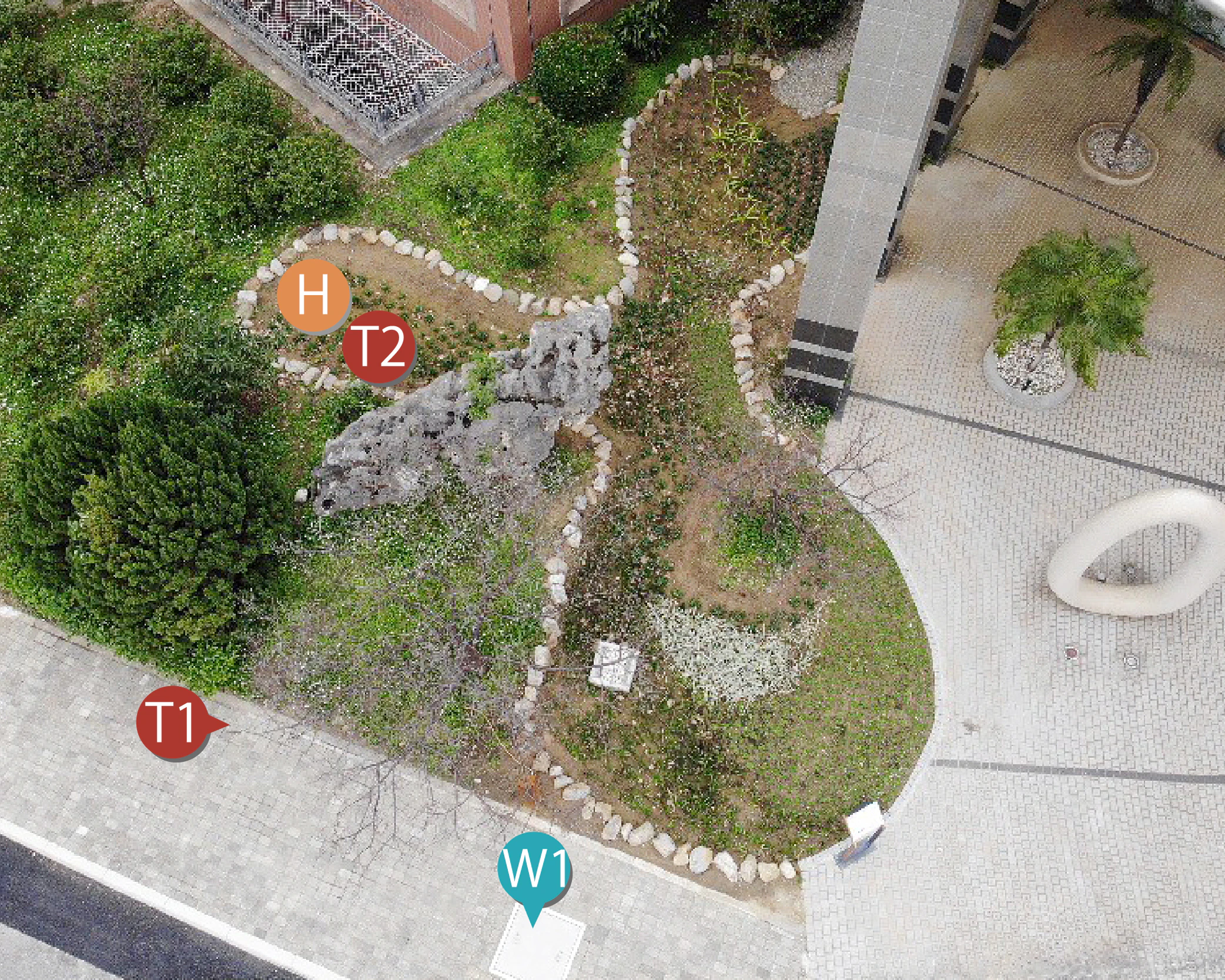
Investigations show that there are three main catchment areas on site, covering the circular plaza, building rooftops, and surrounding walkways, with a total catchment area of 1,441 square meters. The site originally lacked an effective rainwater regulation mechanism; there were no permeable pavement, flood detention infrastructure, or flow guidance design. To resolve these problems and simultaneously provide new ecological and educational functions, the Ministry of Environment promoted the construction of a rain garden, attempting to transform runoff into a resource through low impact development techniques, thereby changing the overall drainage logic.
Let the landscape breathe: garden system integration and waterway design
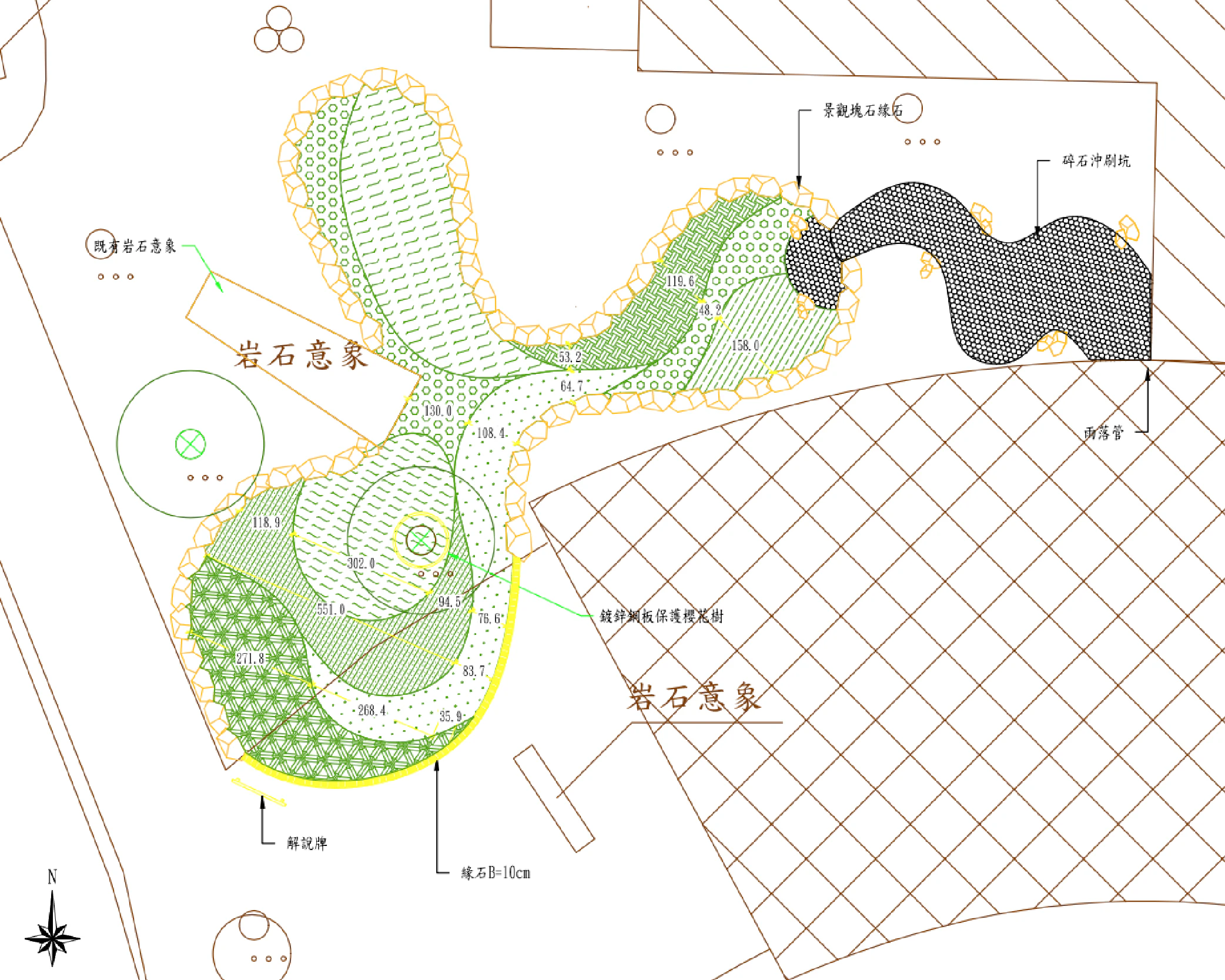
The essence of this renovation project was to transform the original "quick-drain" pavement into a rain garden system that can absorb, retain, filter, and reuse water. Starting with the pavement structure, parts of the impermeable surface were removed and replaced with permeable bricks. The originally flat and uniform circular plaza became the main construction area. Slope directions were adjusted according to the terrain so that surface rainwater can be guided to slowly seep underground. An 18-cubic-meter underground storage tank was added, along with drainage channels and gravel layers for detention and infiltration. Rainwater downspouts from the academy's third floor were also incorporated into the catchment system, allowing rooftop rainwater to flow into underground facilities for reuse.
In addition to the physical design, the area includes informational explanatory signage and interactive facilities like water tapsfaucets, enabling visitors to understand how the system operates and to observe the flow and reuse of rainwater on site.
Spatial transformation and release of teaching potential
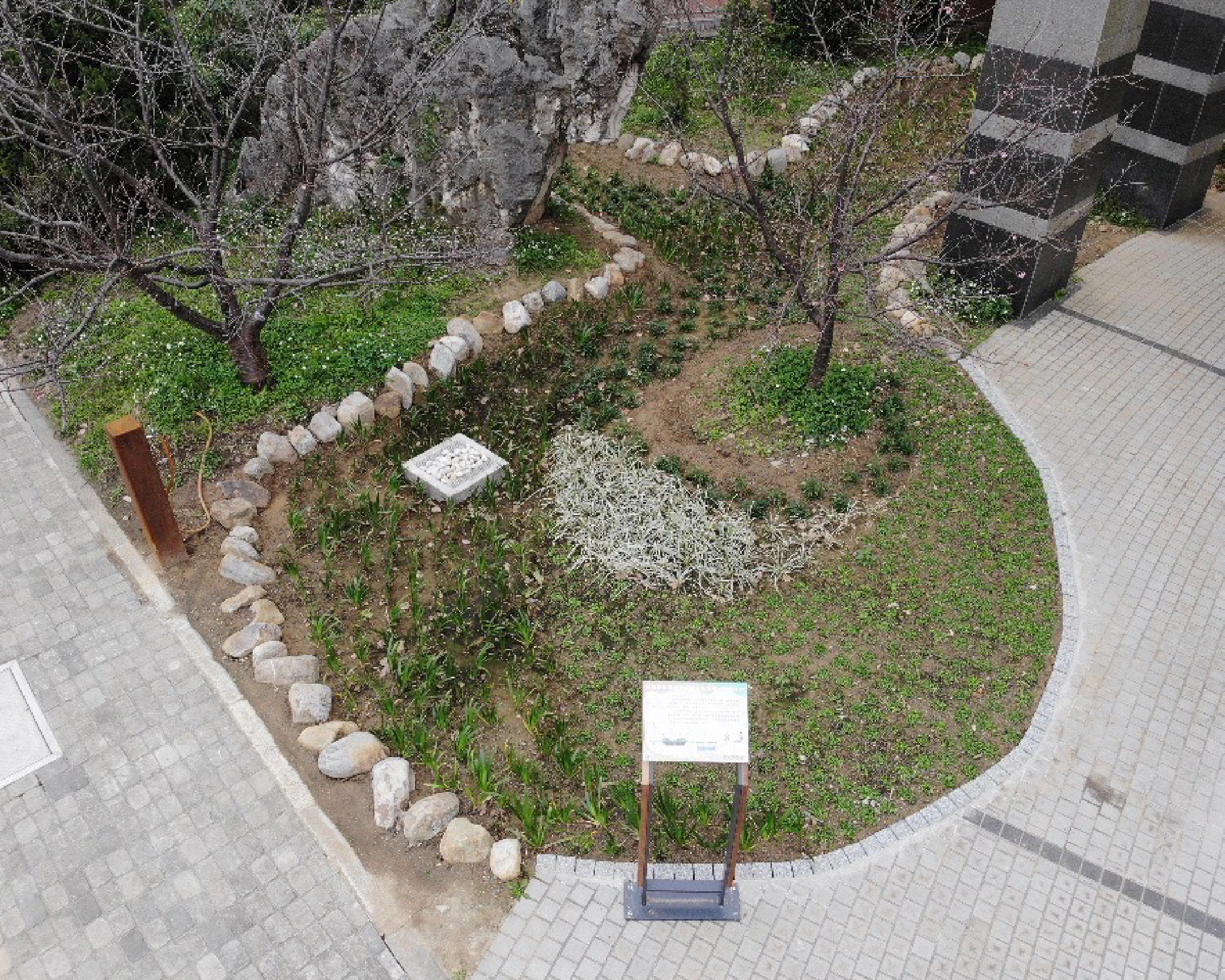
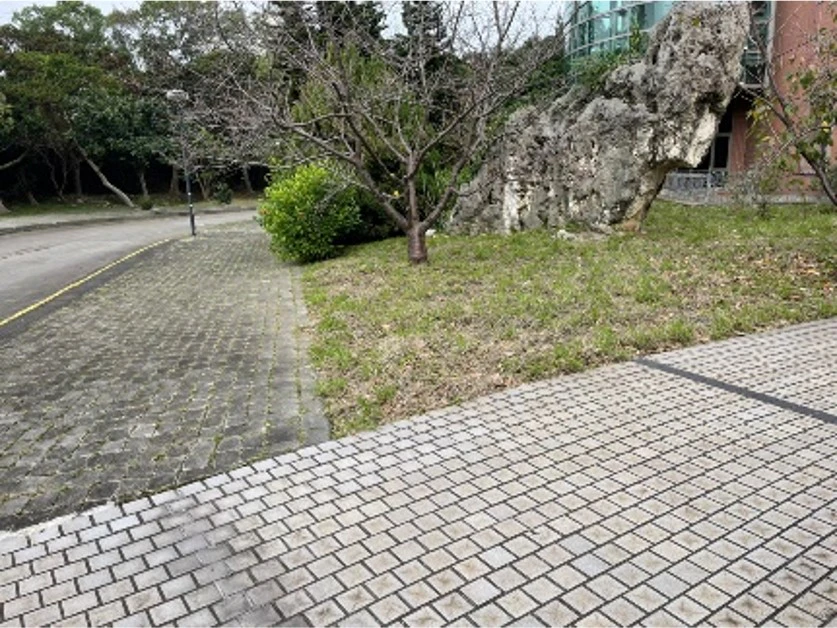
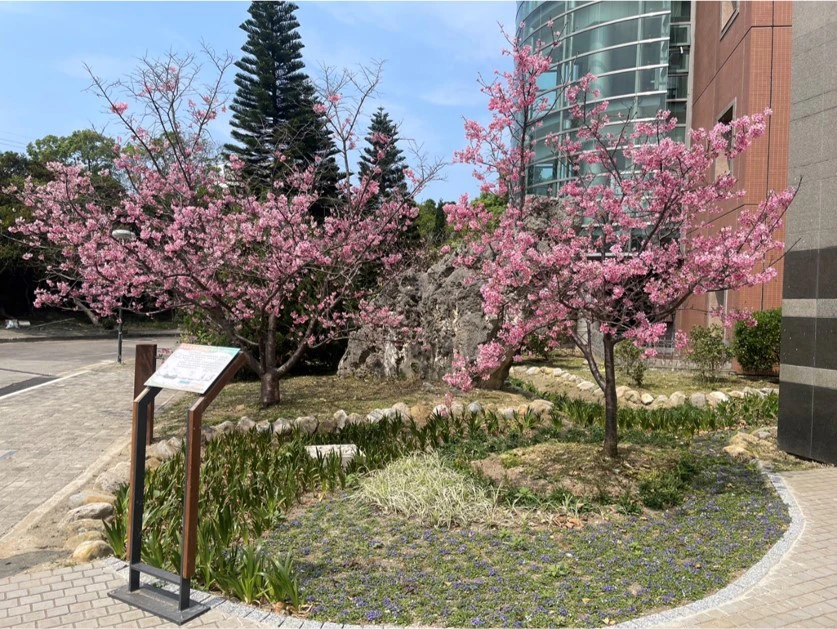
The flowerbed, originally used for training and as a hard-surfaced walkway, was transformed into an open outdoor learning space. Existing trees and terrain were preserved, and different microclimate zones were created according to the characteristics of the vegetation, giving the space depth and ecological functionality.
Plants were mainly selected from native or well-adapted species such as spider lily, Indian aster, common reed, Aztec grass, and shepherd's needles. These diverse plantings not only attract butterflies and birds but also reduce maintenance needs and difficulty. Through color coordination and staggered planting heights, a Japanese-style garden atmosphere simulating a natural ecosystem was created. In the future, this garden can be integrated with the academy’s courses, guided tours, or educational activities for hands-on experiences or demonstrations, turning a previously single-function space into a sustainable facility with teaching potential.
Renovation results and improved spatial quality
After completion of the rain garden, water accumulation around the academy has significantly improved. Areas that previously flooded have become recessed planting zones with infiltration capacity. Even during heavy rainfall, water pressure and drainage burdens are effectively relieved.
Walkways and the plaza were resurfaced with permeable materials, with slopes guiding rainwater into storage tanks before it seeps into the ground via gravel layers. This approach not only preserves the original landscape but also enhances cooling and comfort in the space. The garden's visual design adds aesthetic value to the building. During cherry blossom season in spring, low-growing plants and natural paving create a bright, elegant, and open view, bringing more greenery and vitality to both office and educational spaces.
Environmental Monitoring Data
Last updated 2024-12-16 13:59:25

Last updated 2024-12-16 13:59:25
-
 Environmental Humidity
58.4 %
-
 Rainfall
0.0 mm
-
 General Pavement
Temperature18.1 °C
-
 Permeable Pavement
Temperature17.1 °C
-
 Environmental Temperature
18.1 °C
-
 Underground Water Storage TankWater Depth0.69MStorage16.61884M³Flow0.00000CMS