
Ta-Tung Elementary School, Kaohsiung City

Rain garden builds an on-campus natural circulation system
Ta-Tung Elementary School is located in Xinxing District, Kaohsiung City, a densely populated and highly developed urban area. Campus covers approximately 2.7 hectares and, although the student population is only around 220, it serves as an important educational hub in the region. The open campus extends east to west with high accessibility, acting as an important, everyday passageway for local residents. However, due to the large paved area and low permeability surfaces, the main entrance plaza and nearby zones become flood-prone areas during heavy rain.
The Rainy-day dilemma of water that won't drain
For years, the plaza and drainage ditch area to the right of the school entrance experienced frequent flooding on rainy days. The large impervious surfaces between the gate and teaching buildings prevented rainwater infiltration, relying solely on side ditches to drain surface runoff. In times of intense rainfall, the drainage capacity was insufficient, resulting in flooding in the plaza. The three flower beds in the southeast corner of campus, intended to aid drainage and provide greenery, failed to absorb rainwater due to their elevated positions in relation to the paved surfaces and poor soil permeability. Instead, they increased runoff. The paths between the flower beds also lacked drainage design, causing rainwater to overflow and exacerbate the flooding. Furthermore, the surface elevation at the site did not follow the natural slope, leading to waterflow stagnation within. According to flood potential maps from the Water Resources Agency, areas areas surrounding Ta-Tung Elementary School such as Xinsheng 2nd Street are classified as high-risk, with flooding depths between 50 to 100cm. These factors combined highlighted the urgent need for flood regulation and rainwater reuse facilities.
Turning floods into a landscape for learning
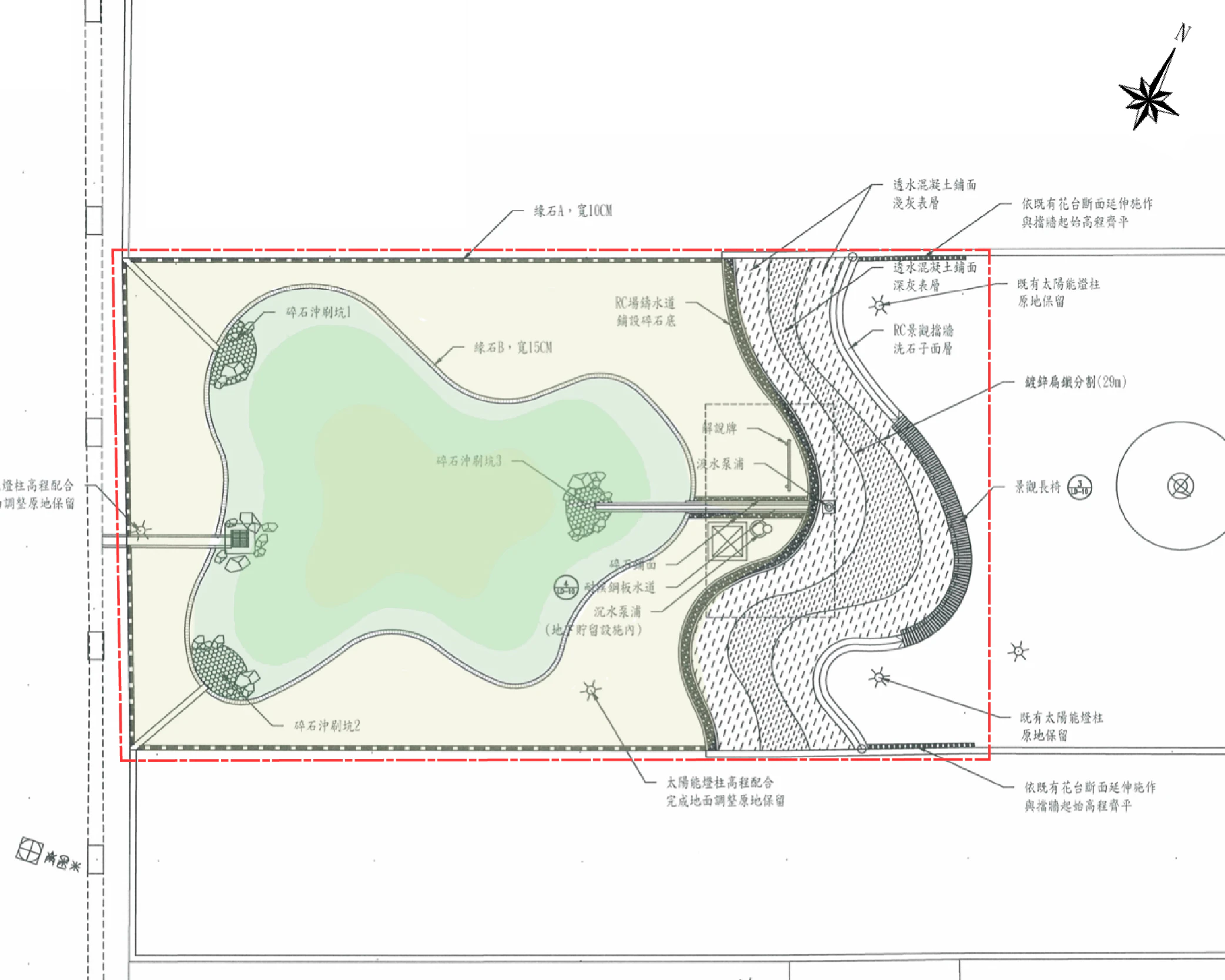
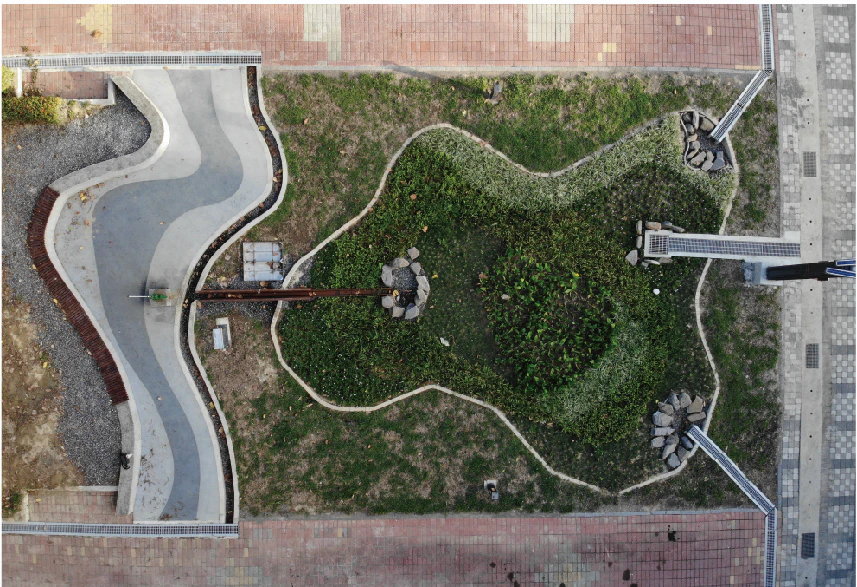
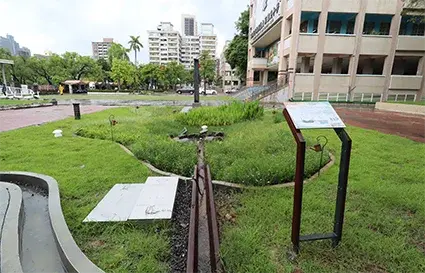
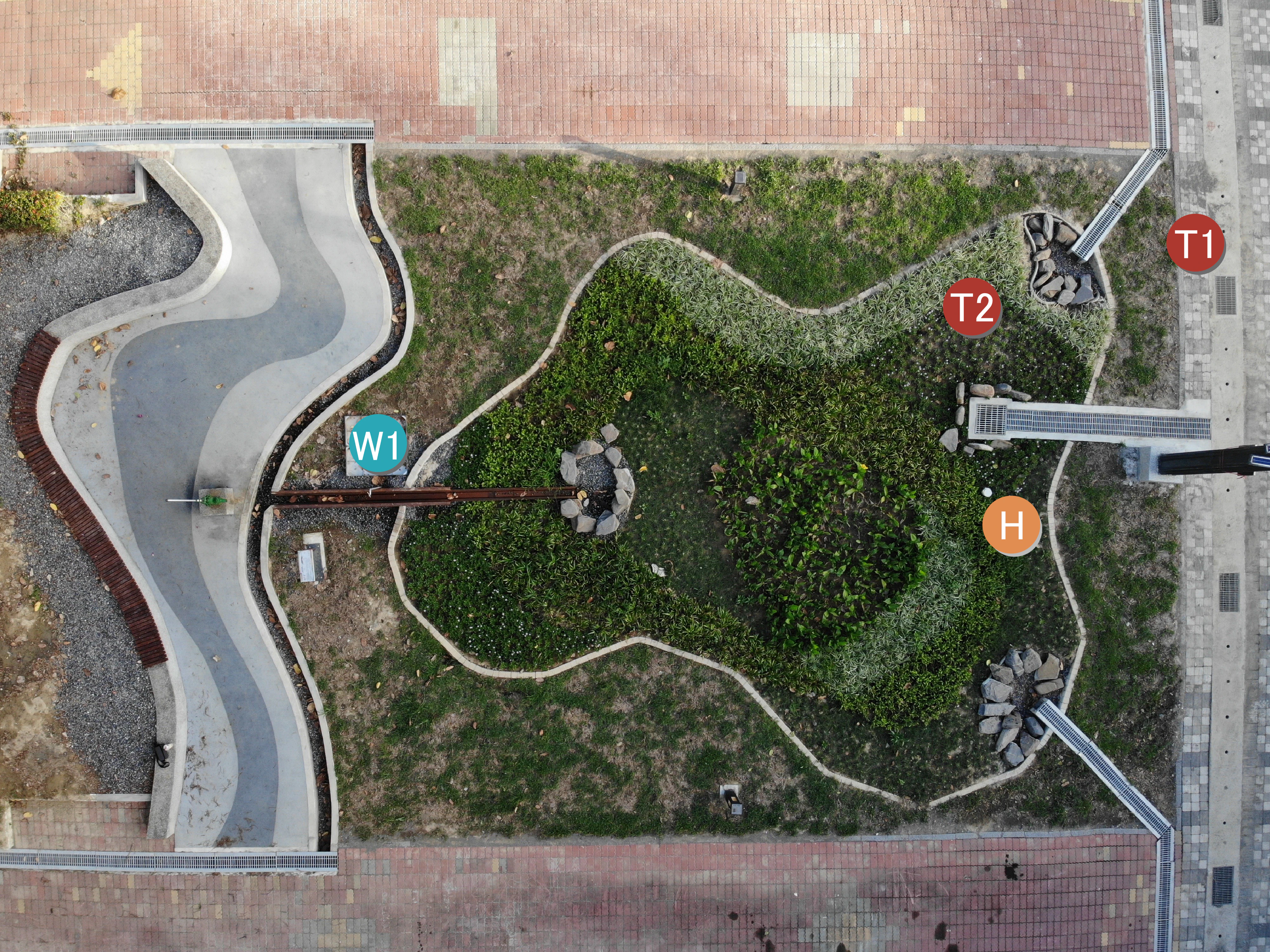
To address this issue, Ta-Tung Elementary School launched a rain garden project aimed at solving flooding, enhancing rainwater infiltration, and improving the teaching environment. The design focused on the plaza, the area most frequently affected by water accumulation. The terrain was adjusted by converting some elevated flower beds into sunken green spaces that effectively receive rainwater. These recessed zones function as temporary detention ponds during rainfall, capturing surface runoff and preventing overflow into key passageways.
Rain garden systems were installed in these green areas to allow natural infiltration of rainwater underground. Excess rainwater is directed through drainage pipes into newly installed underground storage facilities, then slowly released into existing side ditches after rainfall, alleviating drainage pressure. Existing hard pavement in the plaza was replaced with permeable surfaces. Combined with decorative landscape walls and water channels, the design not only improved aesthetics but also provides students with opportunities to observe waterflow and learn about rainwater pathways. The overall design adopts a streamlined form to simulate the movement of rainwater. A water pump was added to let students experience extracting recycled water, deepening their understanding of the water cycle and sustainable use.
Transformation after completion: campus' new look
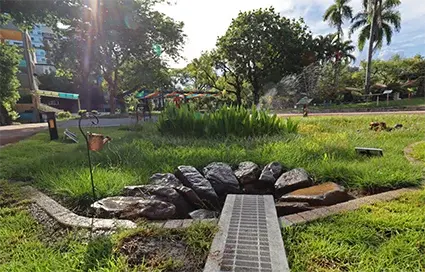
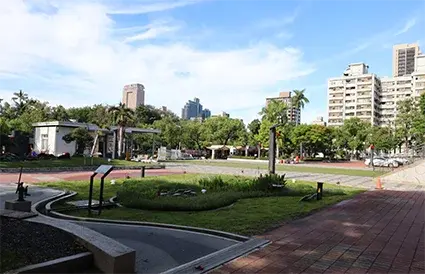
After completion, the rain garden at Ta-Tung Elementary School showed remarkable results. The plaza no longer floods, resolving a long-standing issue with rainy-day access. The combination of permeable pavement and sunken green spaces effectively intercepts, infiltrates, and stores rainwater, significantly reducing the burden on the drainage system. The flower beds were reorganized and redesigned, becoming more vibrant and engaging.
More importantly, the rain garden has gone beyond being a constructed facility and become part of the school's educational resource. Students can observe and engage in hands-on experiences to understand the interactions between nature and the environment, nurturing a deeper understanding of water resource management and sustainability. The garden, once just a functional response to flooding, has become an ecological corner where children can explore the water cycle and connect with the rhythms of nature.
Environmental Monitoring Data
Last updated 2024-12-16 13:59:25

Last updated 2024-12-16 13:59:25
-
 Environmental Humidity
58.4 %
-
 Rainfall
0.0 mm
-
 General Pavement
Temperature18.1 °C
-
 Permeable Pavement
Temperature17.1 °C
-
 Environmental Temperature
18.1 °C
-
 Underground Water Storage Tank Water DepthMStorageM³
 -
 Depth of outflow waterWater Depth0.69MFlow16.61884M³