
Gueinan Elementary School, Tainan City


Elementary school corner transformed into a rain garden maze
Gueinan Elementary School is located in a highly developed area in Gueiren District, Tainan City, surrounded by dense residential buildings. The campus area is approximately 2.97 hectares, with about 546 students. In the past, the low-lying area on the north side of campus connecting to the track and field often suffered from flooding during heavy rain due to low terrain, impervious paving, poor infiltration, and inadequate drainage systems.
Water depths reached over 20cm. Although HDPE permeable pipes were installed in 2014, they lacked cleaning openings and the compacted ground made infiltration difficult, limiting the system's effectiveness and leaving the issue of flooding unsolved. This renovation transformed campus into a "Maze Rain Garden" that integrates play, learning, and water management — an environmentally friendly rainwater circulation space with educational value.
A new rainwater management concept: a maze garden that collects and reuse water
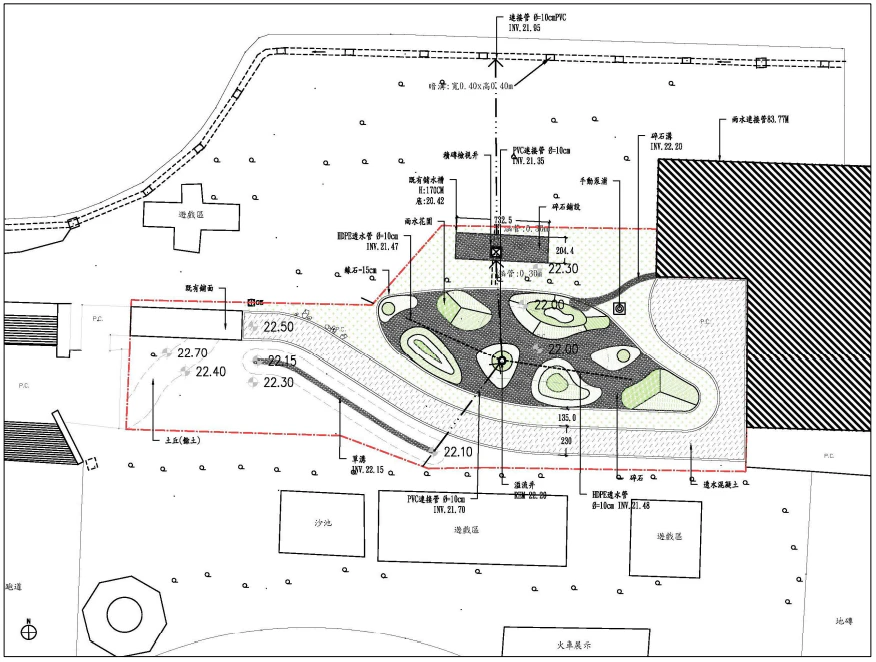
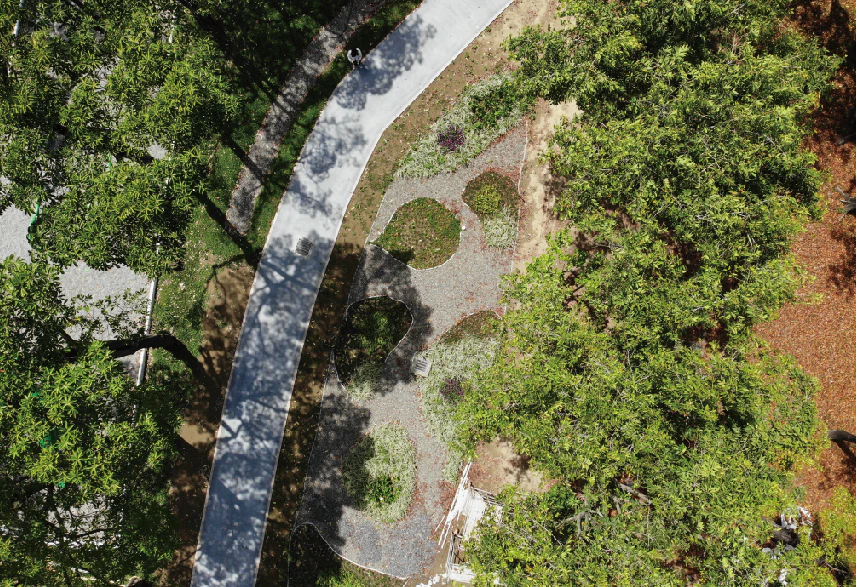
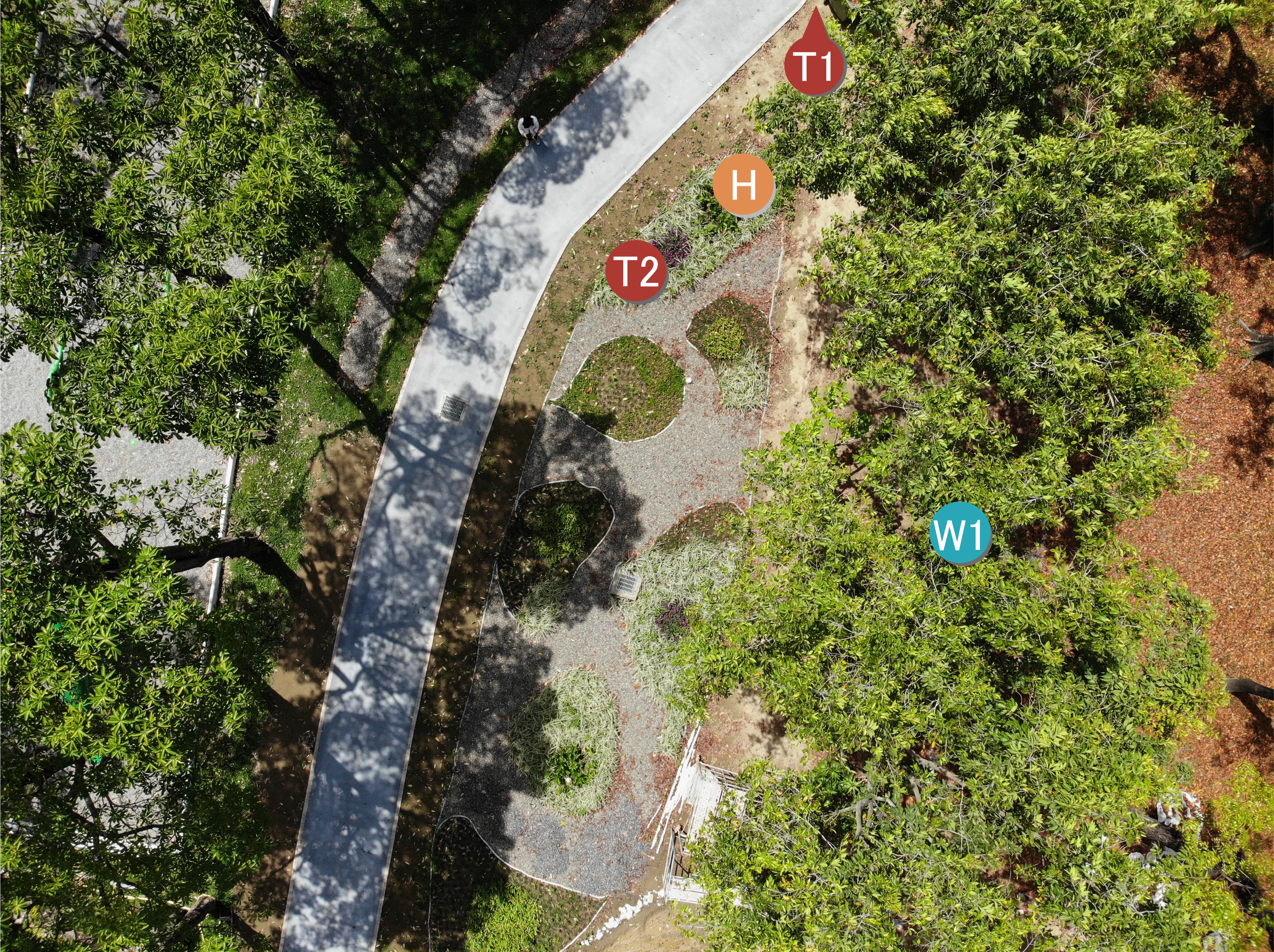
To suit the site characteristics and student activity needs, the project adopted a maze garden as the main design theme, creating a multifunctional space integrating greenery, recreation, and environmental education. Main pathways are defined with permeable pavement, combined with a grass-lined swale on the south side to effectively channel runoff from the play area into the garden. Inside the garden, eight multi-layered planting zones are arranged with gravel paving and maze pathways, offering fun and exploration for children. Water is retained, allowed to infiltrate, and stored in these areas, then directed via pipes to the school's existing underground water storage facility. When full, excess water is discharged into the side ditch, forming a complete water management chain.
Additionally, a hand pump was installed in the garden to allow reuse of the collected water for irrigation or demonstration purposes, enhancing its educational function. An accessible ramp was added on the west side to connect the entire route, improving campus accessibility and friendliness.
Green maze, ecological education, spatial regeneration
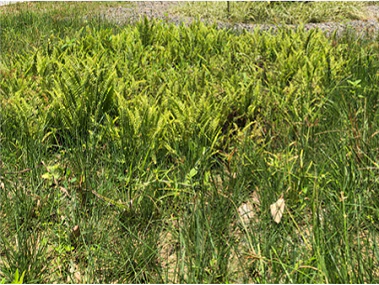
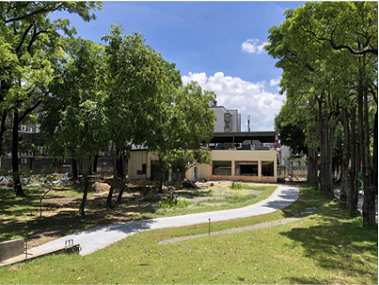
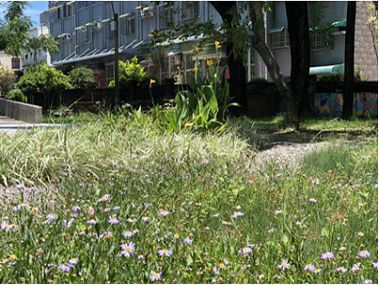
Previously dry and barren land was transformed into a lush teaching space through the project. Existing trees were preserved as visual anchors to enhance spatial layering. Integrated design of permeable pavement, grass-lined swales, and planting improved drainage, mitigated the heat island effect, and provided rich landscaping and teaching resources. The overall rain garden not only resolved flooding issues but also introduced the concept of rainwater reuse. Through observation, hands-on interaction, and experience, students learn how rainwater becomes a usable resource. The maze layout adds playfulness, naturally embedding environmental education into school life.
Project outcomes
Post-rain flooding has been significantly reduced, and surface runoff can now be directed into infiltration and storage facilities, easing the load on the existing side ditch. The new permeable paving and planting design transformed a once dull landscape into a lively and engaging space. The addition of an accessible ramp and manual pump provides students with more interactive experiences. Overall, the space is now safer and serves as a demonstration zone combining education, ecology, and aesthetics.
Environmental Monitoring Data
Last updated 2024-12-16 13:59:25

Last updated 2024-12-16 13:59:25
-
 Environmental Humidity
58.4 %
-
 Rainfall
0.0 mm
-
 General Pavement
Temperature18.1 °C
-
 Permeable Pavement
Temperature17.1 °C
-
 Environmental Temperature
18.1 °C
-
 Underground Water Storage TankWater Depth0.69MStorage16.61884M³Flow0.00000CMS