
Shinjie Elementary School, Taoyuan City


Elementary school students can also show concern for global environmental issues
Textbooks and teaching materials for most subjects at the elementary school level focus on environmental issues occurring in Taiwan. However, "global warming causing extreme weather" is a worldwide climate issue. Shinjie Elementary School used its multifunctional smart rain garden as a teaching venue and designed the "Shinjie Water Garden" teaching material and aid module, integrating it with textbook materials for relevant subject areas. This deepens and broadens the learning experience, enabling elementary school students, young citizens of the Earth, to start by becoming aware of the water resource environment on campus. They learn to face the Earth's warnings about floods and droughts and reality of climate change. The goal is to cultivate knowledge, attitudes, and skills related to proactively protect environments humans need to live in, as well as the relevant issues of water retention, purification, and conservation, and to put environmental actions such as disaster prevention, avoidance, and mitigation, into practice.
Teaching aid aligned with curriculum requirements at various levels; enriching the school-based environmental education curriculum with Shinjie Water Garden
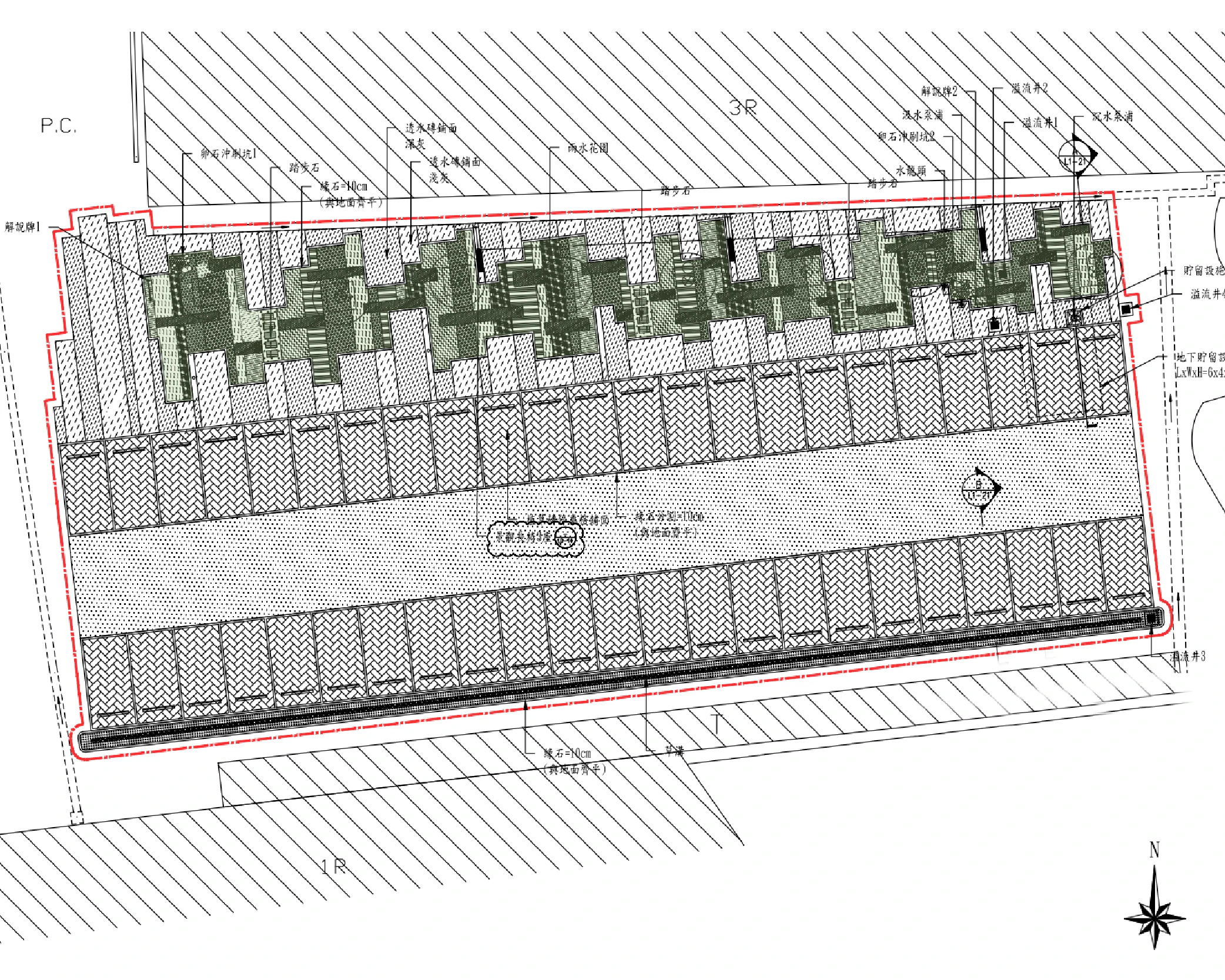
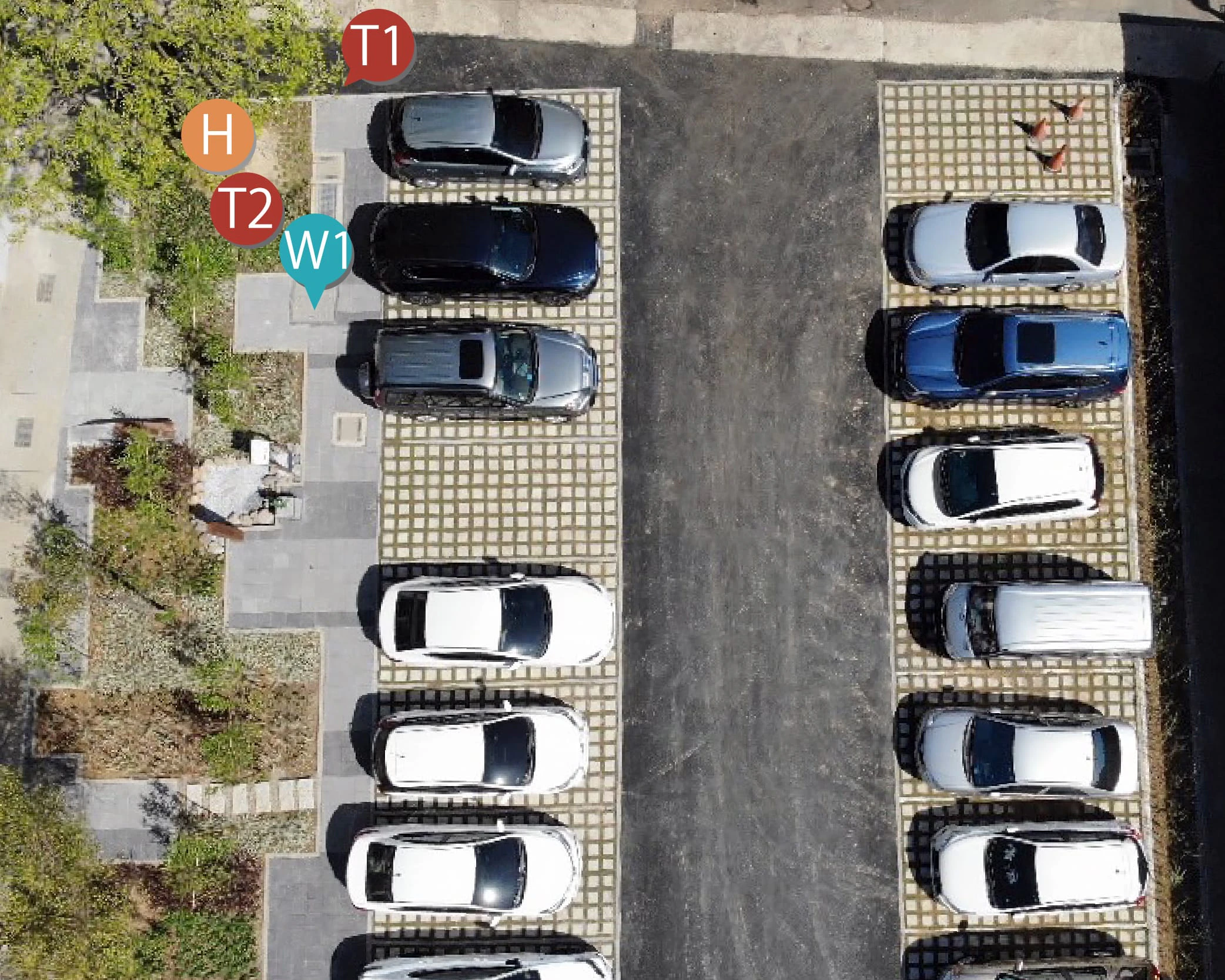
The multifunctional smart rain garden, newly built in 2023, is an underground water circulation ecosystem located at the plaza in front of Ren-Ai Building, the first building seen upon entering the school. Developed with low-impact techniques, it gathers rainwater from the school’s parking lot via drainage channels, allowing surface rainwater flow that was originally quickly discharged outside the foundation to be filtered through the rain garden and collected. This not only regulates regional microclimates but also reduces the chance of surface flooding. Furthermore, the installation of rainwater retaining bricks and pumps allows rainwater to be used for plant irrigation. The school’s faculty, student body, and the local community share this new facility that has multiple functions including water storage, cooling, biodiversity, landscape enhancement, and environmental education. Through two bulletin boards and explanatory signs about plants, users can learn independently about the rain garden's water cycle and native grass species. The garden is thus both aesthetically pleasing and biologically diverse.
Implementation Method
- Developed with low-impact techniques, it gathers rainwater from the school’s parking lot via drainage channels, allowing surface rainwater flow that was originally quickly discharged outside the foundation to be filtered through the rain garden and collected. This not only regulates regional microclimates but also reduces the chance of surface flooding. Furthermore, the installation of rainwater retaining bricks and pumps allows rainwater to be used for plant irrigation. The multifunctional smart rain garden, newly built in 2023, is an underground water circulation ecosystem located at the plaza in front of Ren-Ai Building, the first building seen upon entering the school. The school’s faculty, student body, and the local community share this new facility that has multiple functions including water storage, cooling, biodiversity, landscape enhancement, and environmental education. Through two bulletin boards and explanatory signs about plants, users can learn independently about the rain garden's water cycle and native grass species. The garden is thus both aesthetically pleasing and biologically diverse.
- In addition, an IoT real-time monitoring system was installed at the site, with solar panels providing power to the monitoring devices. This setup supplies actual data for evaluating system performance and gives the rain garden multi-faceted significance encompassing water conservation, energy conservation, water retention, cooling, ecological landscaping, and environmental education.
Implementation Outcomes
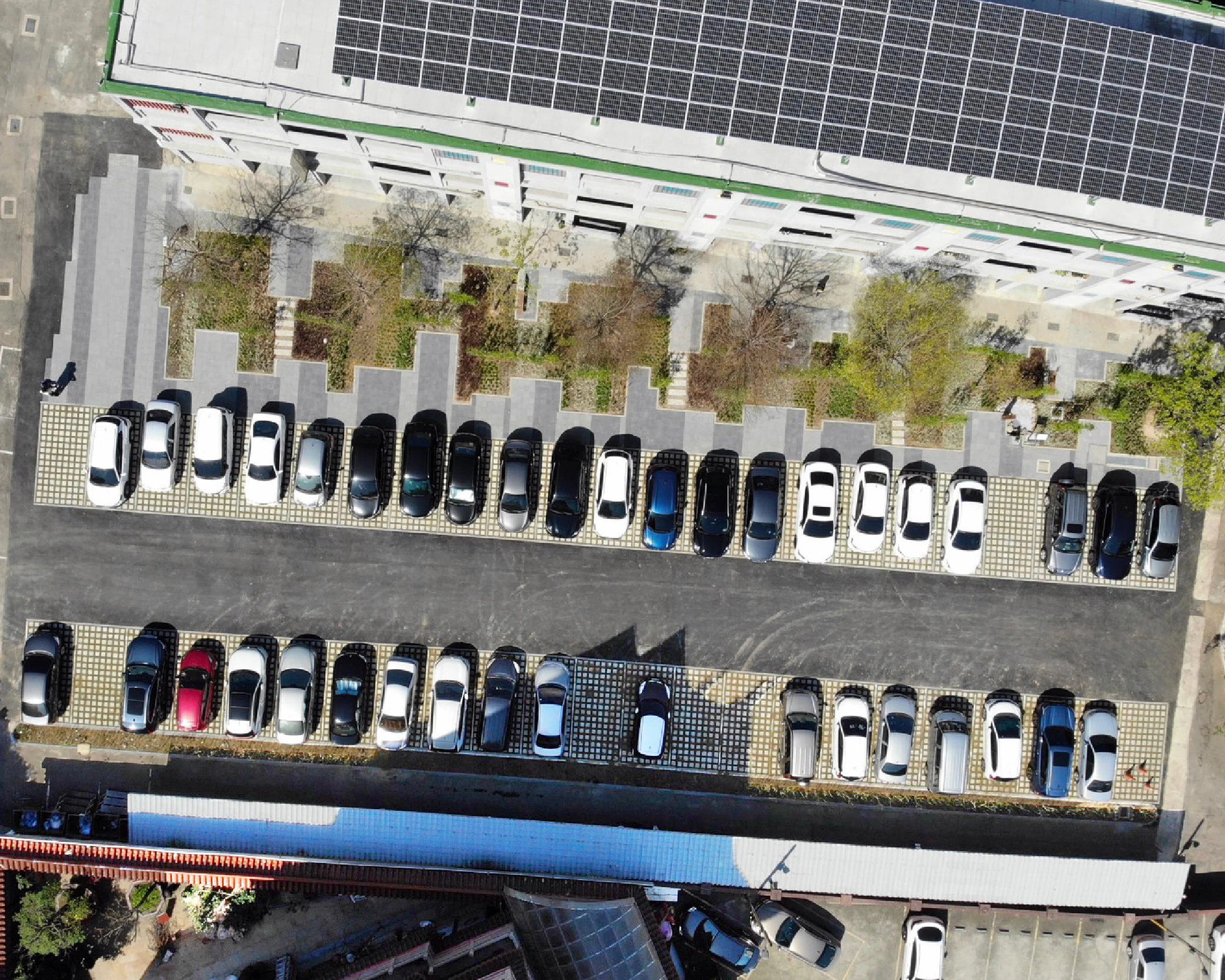
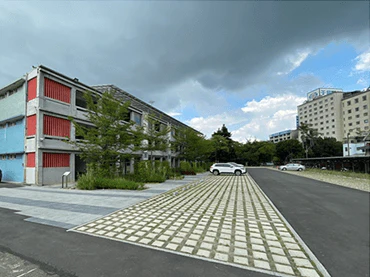
Previously, Shinjie Elementary School's parking lot had a high ratio of impervious, hard pavement, which raised the ambient temperature. Tree roots were covered by asphalt, leading to the surface lifting and cracking and posing tripping hazards for students. Lower-grade students and teachers also reported that the noise and glare from cars passing through the parking lot disrupted classes.
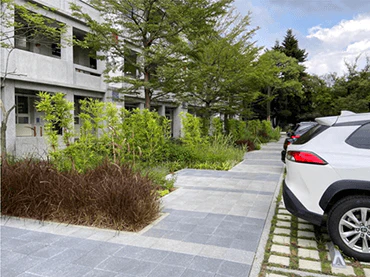
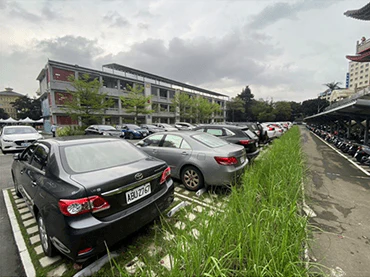
To address these issues, the original impervious hard pavement was replaced with permeable pavement wherever possible, balancing recreational space with water permeability needs. The asphalt around trees was removed to release space for root growth, which became the main area for the rain garden. Plants were strategically selected and arranged — taller and denser vegetation was interlaced — to enhance greenery while reducing light and noise interference, thereby creating a campus environment that saves water and energy, retains water, and stays cool.
Environmental Monitoring Data
Last updated 2024-12-16 13:59:25

Last updated 2024-12-16 13:59:25
-
 Environmental Humidity
58.4 %
-
 Rainfall
0.0 mm
-
 General Pavement
Temperature18.1 °C
-
 Permeable Pavement
Temperature17.1 °C
-
 Environmental Temperature
18.1 °C
-
 Underground Water Storage TankWater Depth0.69MStorage16.61884M³Flow0.00000CMS