
Chung-Cheng Elementary School, Kaohsiung City

When campus is no longer just a place that receives rainwater
Chung-Cheng Elementary School is located in Fengshan District, Kaohsiung City. The eastern side of campus borders Shengli Road, adjacent to farmland and residential areas. It sits within a newly developed area of Fengshan and serves as an important learning environment for local children. The campus area is about 4 hectares, with nearly 1,000 students. For years, the parking lot in front of the preschool had been problematic, frequently flooding during rainy days. The large area of impervious pavement offered no infiltration capacity, and the children's playground was also unable to absorb any of the runoff. A single afternoon thunderstorm could overwhelm the drainage system, resulting in flooding that jeopardized the safety of children and parents during pick-up and drop-off times.
Behind the flooding lies a dysfunctional drainage system
The problem lay not only in the impermeable pavement but, more importantly, in the inadequacies of the existing drainage design. Although the school's flooding issues and drainage facilities had previously been evaluated and improvement plans such as opening external drainage outlets and upgrading ditches were proposed, there was no funding to implement them. There is an existing detention pool adjacent to the site that should have served a regulatory function for rainwater. However, due to overgrown weeds and poor drainage, it had instead become another potential source of flooding. According to flood potential maps from the Water Resources Agency of the Ministry of Economic Affairs, both Chung-Cheng Elementary School and the surrounding area fall under a medium flood risk zone, with expected water depths of 0.3 to 0.5m– — highlighting the urgency for transformation.
A small corner sparks the imagination for water circulation
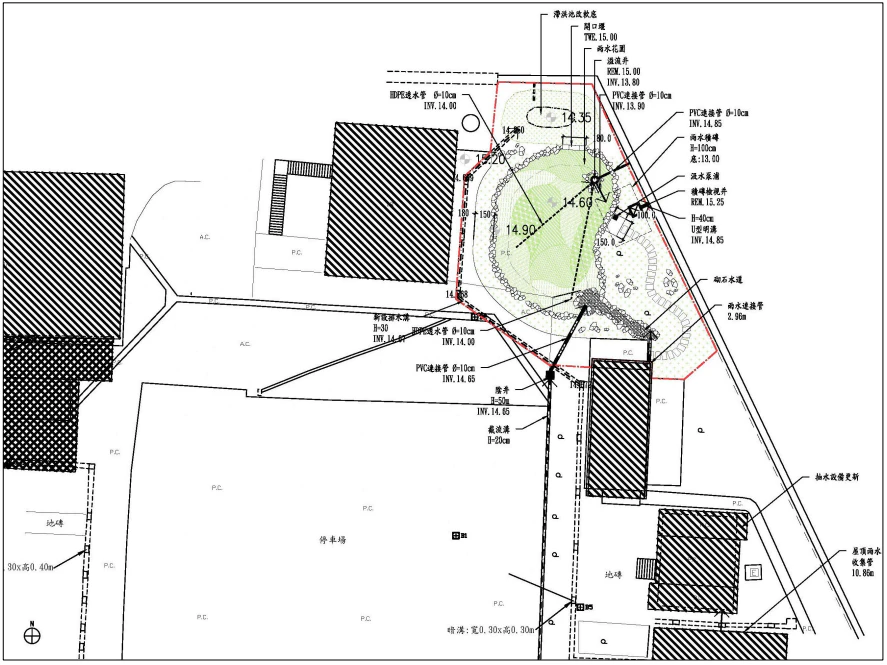
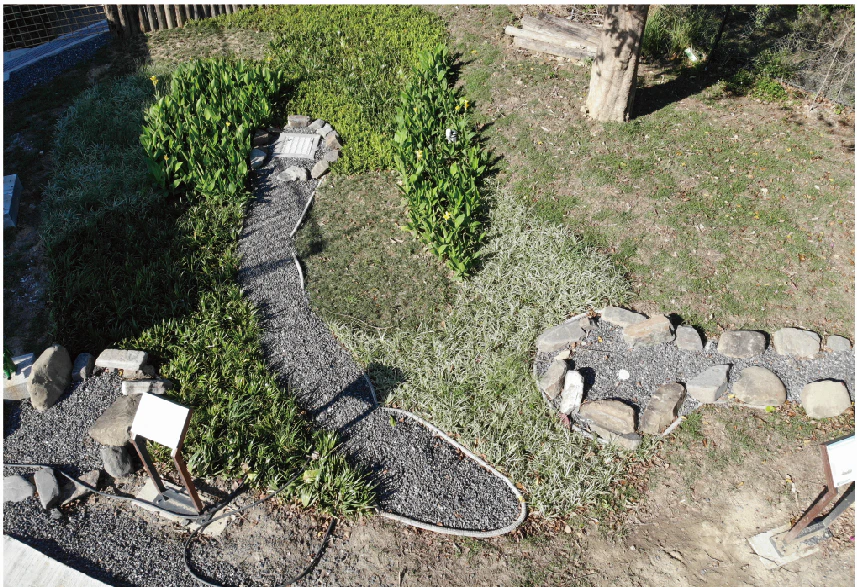
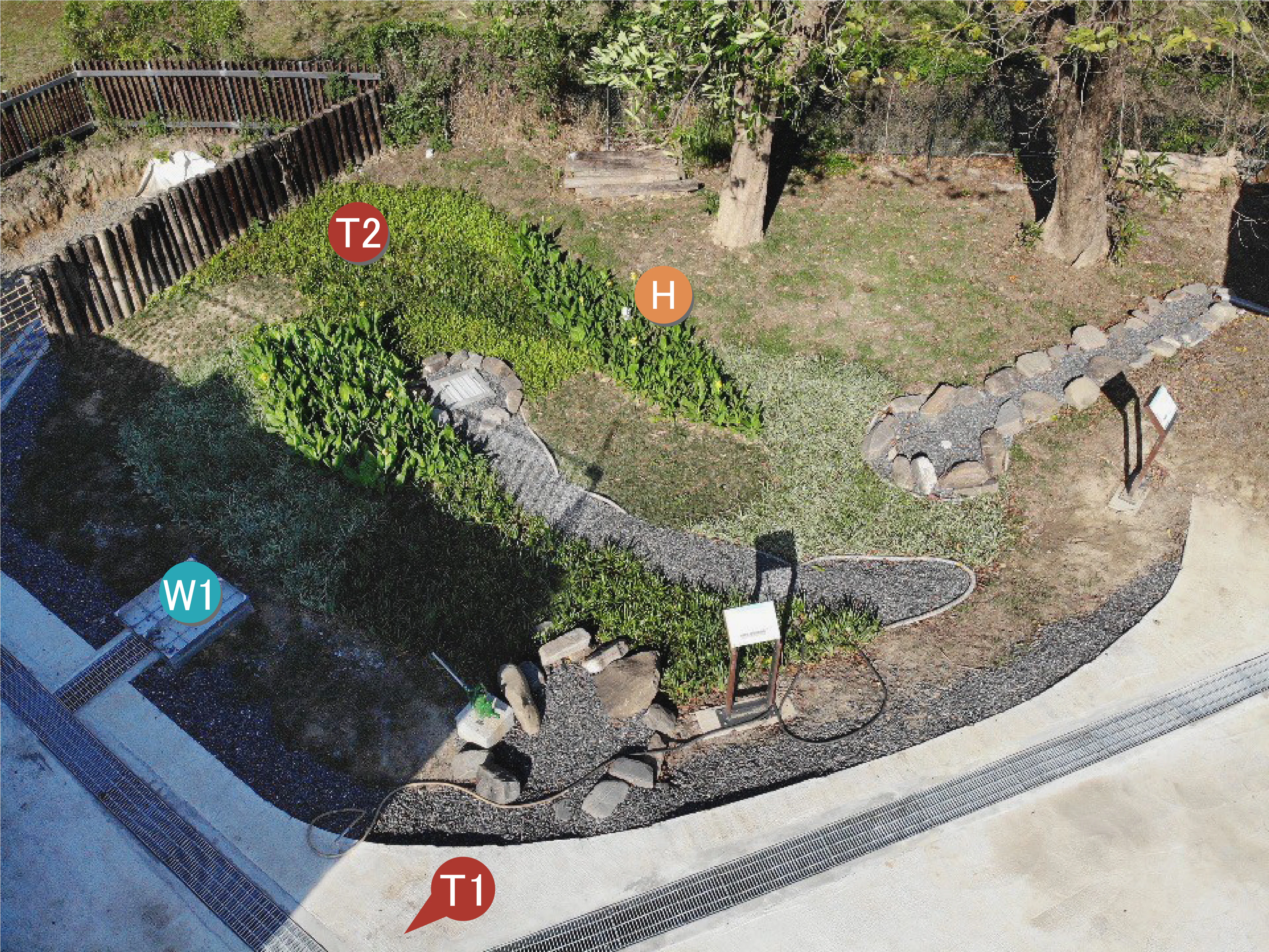
The northeastern corner of campus, situated at the edge of the parking lot, is a rarely trodden area and the starting point of this rain garden project. The design team utilized the natural terrain and existing traffic flow patterns to transform this previously underutilized space into a rain garden capable of capturing, infiltrating, and recycling rainwater. An interceptor channel was installed to collect runoff from the parking lot and pavilion roof, directing it into the rain garden and underground storage facilities. This not only alleviated the pressure on the existing drainage system but also established a circular water management system.
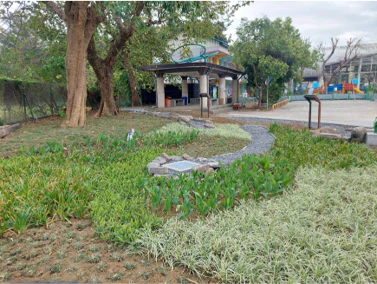
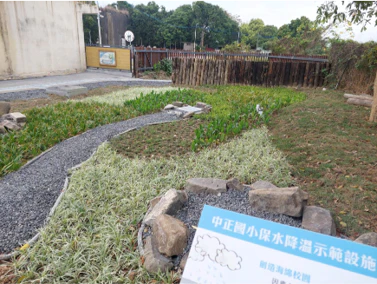
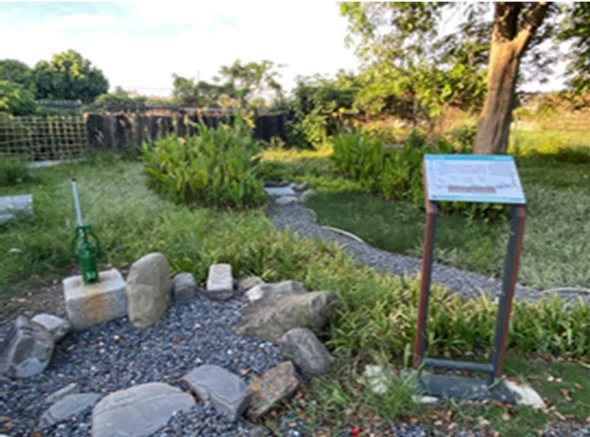
Within the rain garden, multi-layered planting enhances ecological diversity. The arrangement of vegetation allows rainwater to remain and be absorbed rather than flowing away quickly. A pathway was laid along the edge of the garden, connecting to a manual pump installed beside the pavilion, allowing children to experience how rainwater falling from the sky can become a usable resource.
From flooding to education: a natural campus transformation
After the transformation, Chung-Cheng Elementary School not only eliminated a flood-prone parking lot but also gained a space where students can learn and interact with nature. Water is no longer just a problem within school grounds — it has become part of the curriculum. Children learn to observe and understand the flow and cycle of water. In this seemingly inconspicuous little garden, they also experience the integration of campus aesthetics and climate resilience.
Environmental Monitoring Data
Last updated 2024-12-16 13:59:25

Last updated 2024-12-16 13:59:25
-
 Environmental Humidity
58.4 %
-
 Rainfall
0.0 mm
-
 General Pavement
Temperature18.1 °C
-
 Permeable Pavement
Temperature17.1 °C
-
 Environmental Temperature
18.1 °C
-
 Underground Water Storage TankWater DepthMFlowCMSUnderground StorageM³
 -
 Water depth in rain barrelWater Depth0.69MRain Storage0.01230M³