
Jhong Fu Elementary School, Taoyuan City


Transforming a flooded space into a green learning environment
Jhong FuElementary School is located next to Zhongli Industrial Park, surrounded by nearby communities and dense buildings. The campus lies in a low-lying area with insufficient slope for drainage. For years, during heavy rain, flooding often occurred at slopes near the tracks, the underground parking lot, and the plaza in front of the northern teaching area. This flooding caused surface glare, noise dispersion, and hindered passage, affecting the safety and learning environment for both teachers and students.
To solve these problems, the school introduced a rain garden system based on the concept of low impact development. Through environmental improvement works integrated with teaching, areas that had long suffered from flooding were transformed into multifunctional rain gardens with functions of water storage, purification, cooling, and education. This was not just a facility upgrade, but a transformational action toward campus sustainability as well.
Challenges Before the Renovation
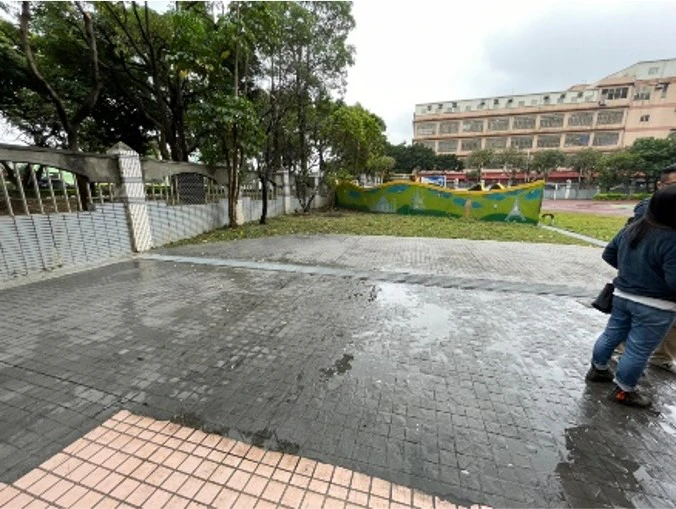
Before the rain garden was constructed, Jhong Fu Elementary School long suffered from poor drainage and disorganized traffic flow. The campus, located on low terrain, with the tendency for surface water flow to gather, saw many areas flooding whenever there was rain, forming deep pools exceeding 20 cm. This hampered student movement, created slippery surfaces, and damaged pavement, posing safety risks.
Most campus areas were covered with impervious hard surfaces, preventing rainwater infiltration. This not only hindered water regulation but also led to surface heat retention, exacerbating the heat island effect. Moreover, there was no clear separation between the plaza space and lanes in the parking lot, leading to vehicle and pedestrian intermixing. The lack of a safety buffer zone posed risks. The original drainage design focused solely on rapid runoff discharge, without any facilities for water retention or reuse, resulting in wasted rainwater and missed opportunities for environmental education and sustainable management.
Designed with the philosophy of providing a site-specific solution
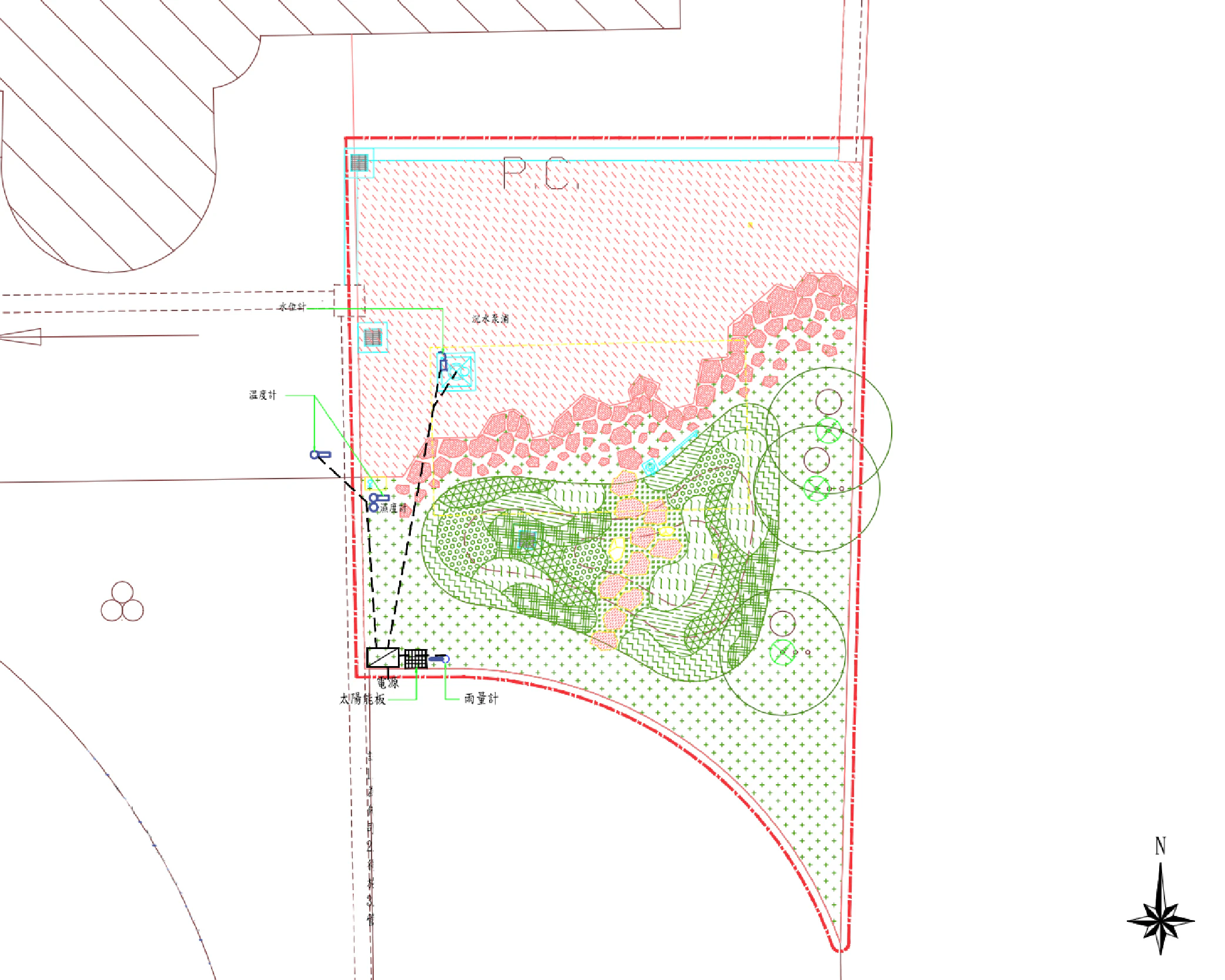
The rain garden was designed based on existing drainage issues and elevation differences within the campus. Pavement materials and water collection pathways were reconfigured, and the most flood-prone low-lying area was transformed into the campus’ "core rainwater processing zone." By adjusting the terrain and redirecting water flow, rainwater is no longer swiftly discharged off-site. Instead, it is guided into underground storage for the multiple purposes of temporary retention, infiltration, and reuse.
The system first gathers and stores water, then, through PVC pipes, it is directed to the discharge or reuse zone, balancing safety with flexible use. To help students understand the principles behind the design, hand pumps and faucets were installed, allowing them to operate the system manually and experience the journey of rainwater within the system.
Explanatory signage in the garden explains water flow and plant functions, enhancing the site's educational value in addition to its practical merits.
A transformation bringing spatial, ecological, and educational change
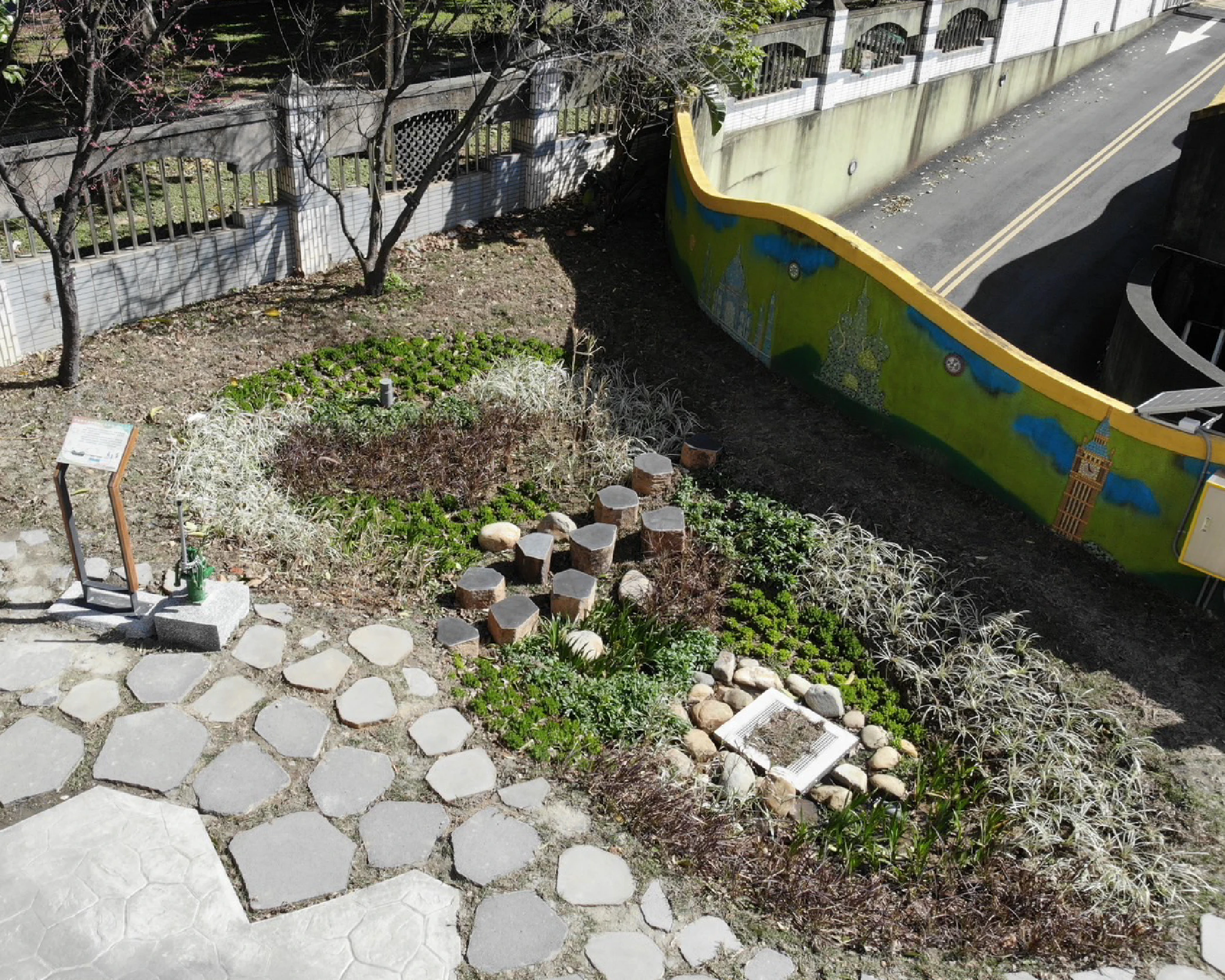
The completion of the rain garden fundamentally changed the campus. After the redesign, adjustment, and the construction of the underground system, the formerly flood-prone area was converted into a multifunctional zone that was permeable, water-retaining, and educational. Even under intense rainfall, the surface quickly drains, significantly reducing risks of flooding.
The entire area was repaved with permeable materials, with clear water flow guidance and discharge systems, improving drainage capacity and making campus pathways safer and more walkable. The garden includes hand pumps and faucets so students can experience firsthand how rainwater is collected, stored, and reused. Through this interactive setup, children participate daily and, with the help of explanatory signage, better understand the water cycle’s logic, transforming the space into an outdoor classroom that speaks.
Plant selection in the garden took into account campus’ light conditions and maintenance needs, thus shade-tolerant and low-maintenance native species and butterfly-attracting plants were planted. The space features layered, naturally colored greenery, including species such as purple loosestrife, nettleleaf velvetberry, centipedegrass, garden stonecrop, Aztec grass, wild cane, crimson fountaingrass, and Chinese silver grass. These plants were arranged in the garden based on function and aesthetic value.
They not only enhance the landscape but also serve as observation and care targets for students. With natural observation activities integrated into the curriculum, students record plant growth and climate data. Thus, the rain garden evolves from a simple facility into a vibrant learning hub. What was once an overlooked plaza corner is now a favorite spot for students – safe, full of biodiversity, and a hands-on environmental classroom.
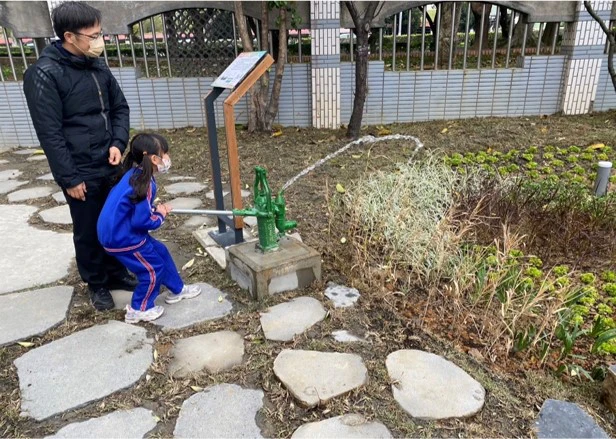
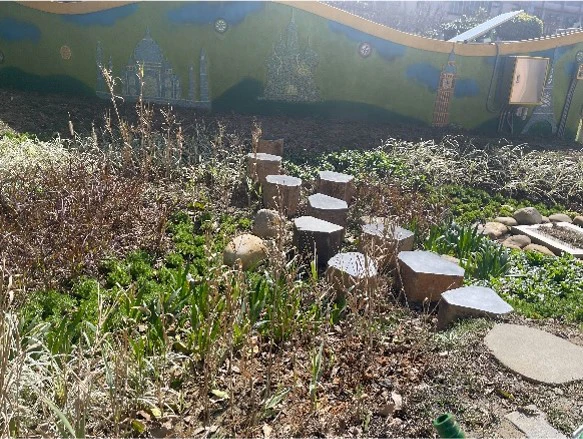
From flooded clearing to the campus’ ecological corner: environmental action in practice
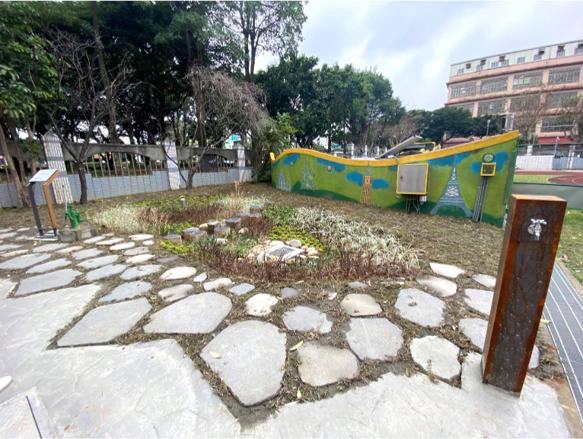
The north plaza of Jhong Fu Elementary School had been a low, impervious area that frequently flooded during rain. Surface glare and slippery conditions made it difficult for students to move safely. After the renovation, not only were drainage issues resolved, but the space was also transformed into a beloved site for education and recreation. Children now observe plants, operate pumps, listen to the rain, and explore the water cycle here.
The rain garden is more than an improved water management facility — it is an extension of environmental education. Through this transformation project, the school not only solved long-standing flooding problems but also created a sustainable learning environment. Students can now experience water cycles and ecological changes in daily life, learning how to adapt to extreme climates and coexist with nature — turning each day into a real-world lesson in environmental literacy.
Environmental Monitoring Data
Last updated 2024-12-16 13:59:25

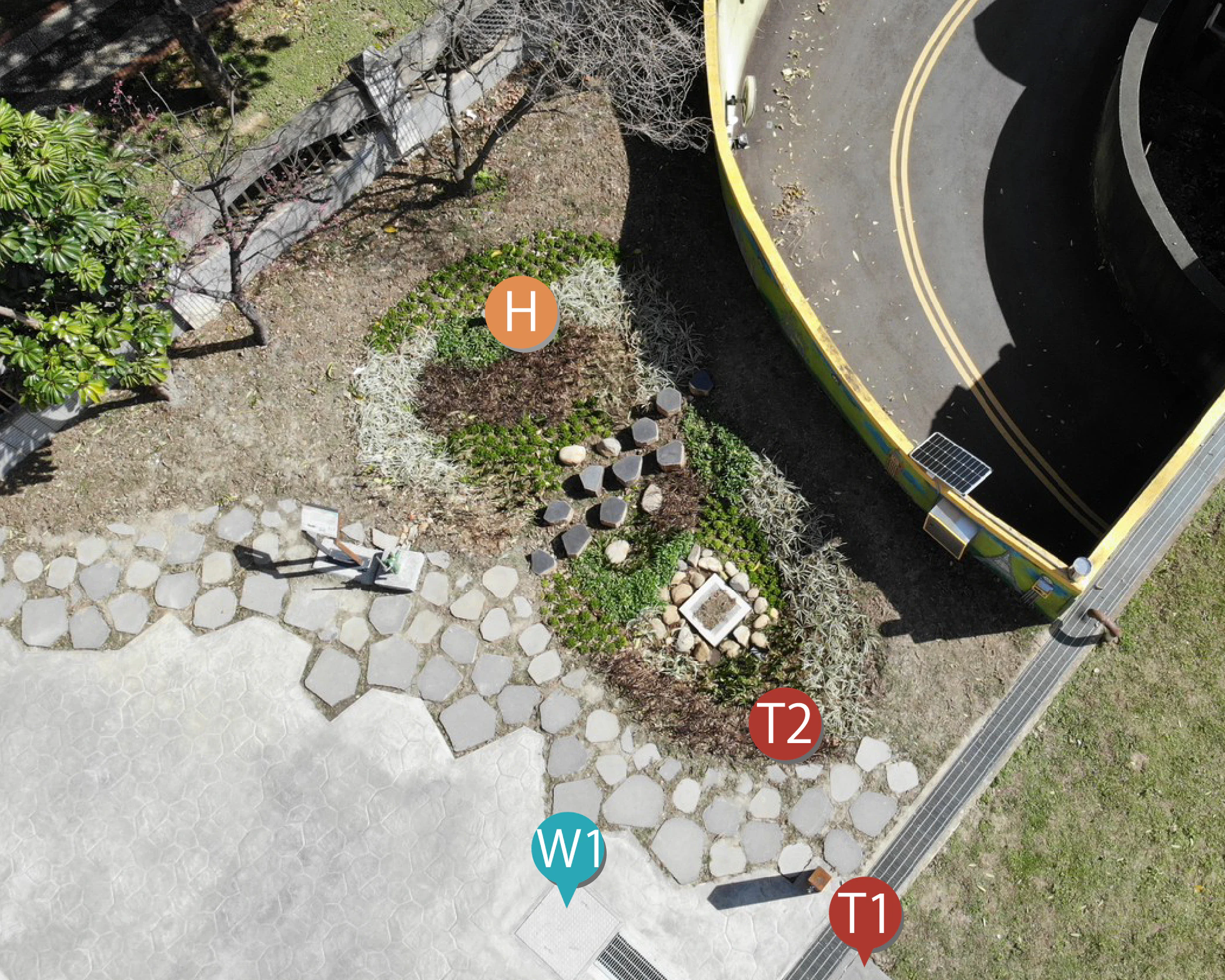
Last updated 2024-12-16 13:59:25
-
 Ambient Humidity
58.4 %
-
 Rainfall
0.0 mm
-
 Conventional Pavement
Temperature18.1 °C
-
 Rain Garden
Temperature17.1 °C
-
 Ambient Temperature
18.1 °C
-
 Underground Storage TankWater Depth0.69MStorage16.61884M³Flow0.00000CMS