Promoting school-based climate change adaptation: winners for rain garden teaching aids announced
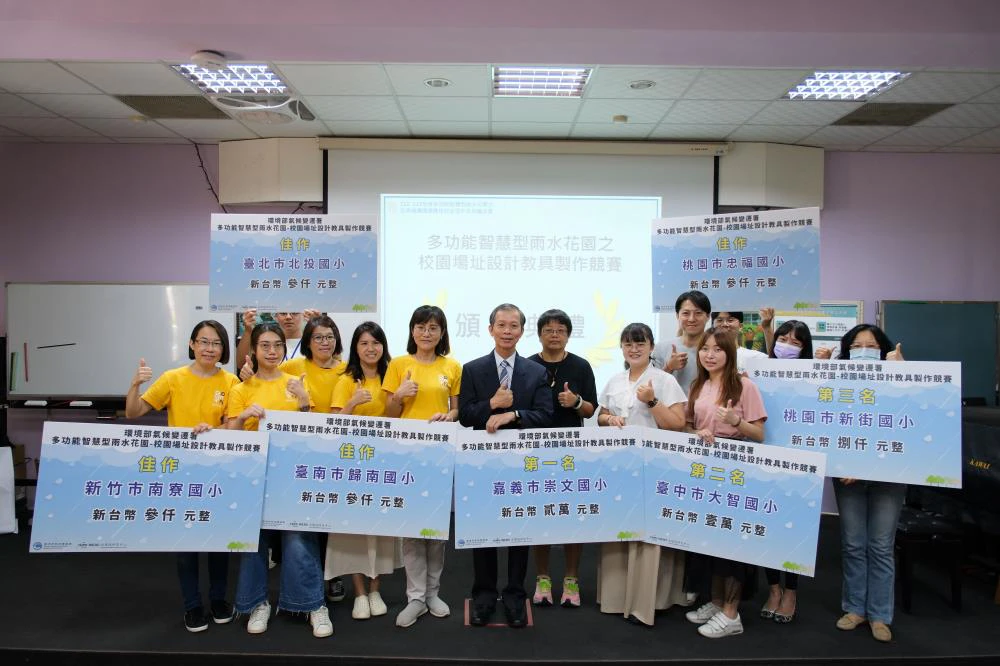
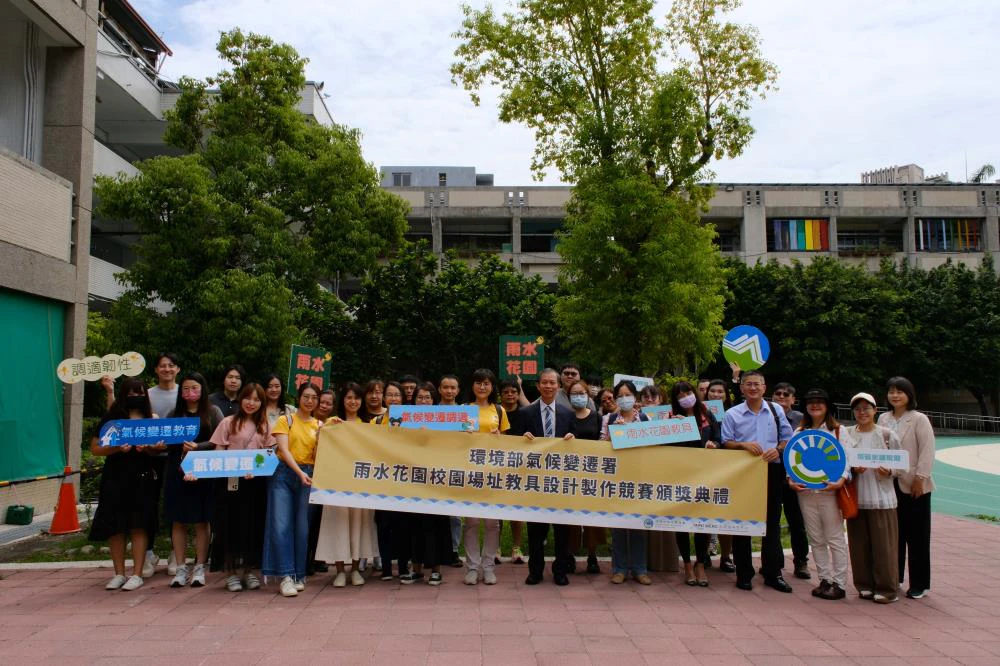
The Ministry of Environment (MOENV) held the award ceremony for the Rain Garden Teaching Aid Competition on Aug. 20 at Taichung’s Dazhi Elementary School with thanks to Taipei City’s Beitou Elementary School, Taoyuan City’s Shinjie Elementary School and Jhong Fu Elementary School, Hsinchu City’s Nan-Liao Primary School, Taichung City’s Dazhi Elementary School, Chiayi City’s Chung-Wen Elementary School, and Tainan City’s Gueinan Elementary School for cooperating to provide campus sites for building rain garden demonstration facilities, which have become large-scale climate change adaptation teaching aids. Furthermore, they also designed a variety of creative teaching aids and materials to teach students on water resource management, environmental protection, and climate change adaptation. Through this competition, the MOENV not only recognized these schools' efforts in educational innovation and environmental education but also promoted public understanding and interest in rain gardens, climate change, and environmental education.
In response to climate change, the MOENV has been promoting resilient adaptation facilities. From 2021 to 2023, 15 rain garden demonstration sites were established across eight counties and cities in Taiwan, including Taipei City, Taoyuan City, Hsinchu City, Hsinchu County, Taichung City, Chiayi City, Tainan City, and Kaohsiung City. Among them, 11 are located within junior high and elementary school campuses. Rain gardens not only conserves water, saves energy, retain water, and cools temperatures but also, they have become large-scale teaching aids integrated into campuses to convey the importance of environmental knowledge and climate change adaptation.
Each school has designed different teaching aids and materials for its on-campus rain garden, allowing for more systematic understanding of how rain gardens work and the importance of climate change adaptation. Therefore, the MOENV specially organized a creative teaching aid and material competition to further encourage schools to invest in teaching and research capacity. Experts and scholars selected three top winners and four honorable mentions. First place was awarded to Chung-Wen Elementary School, East District, Chiayi City; second place to Dazhi Elementary School, East District, Taichung City; and third place to Shinjie Elementary School, Zhongli District, Taoyuan City.
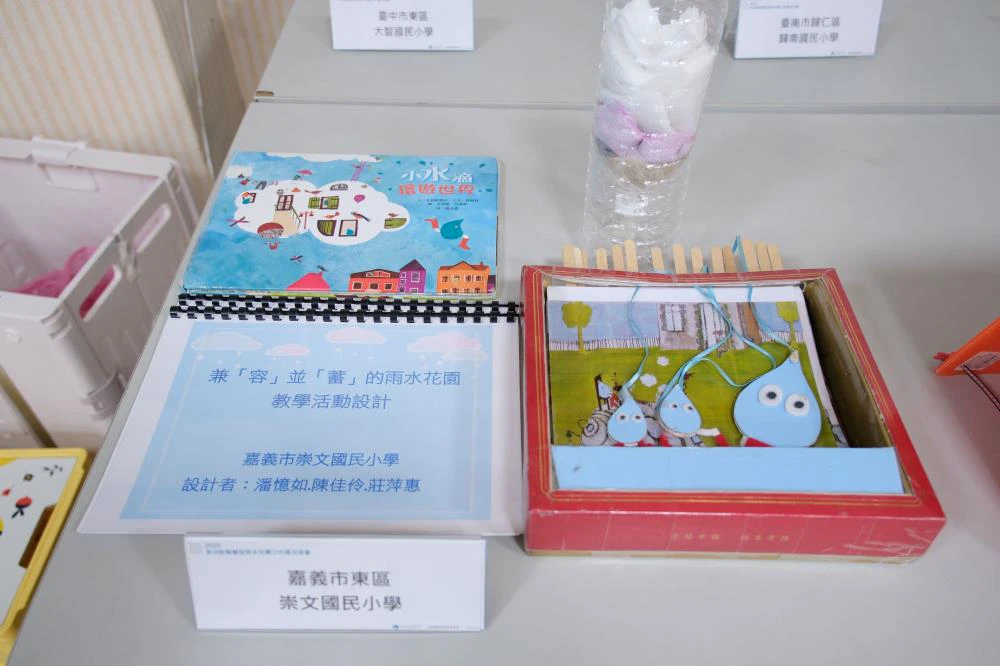
Chung-Wen Elementary School won first place with its "Inclusive Rain Garden Teaching Activity Design." The courses they designed were not only comprehensive and refined, but also allowed preschool children to participate in observing the process of rainwater forming and further explore the concepts of water purification and reuse, demonstrating a high level of interactivity.
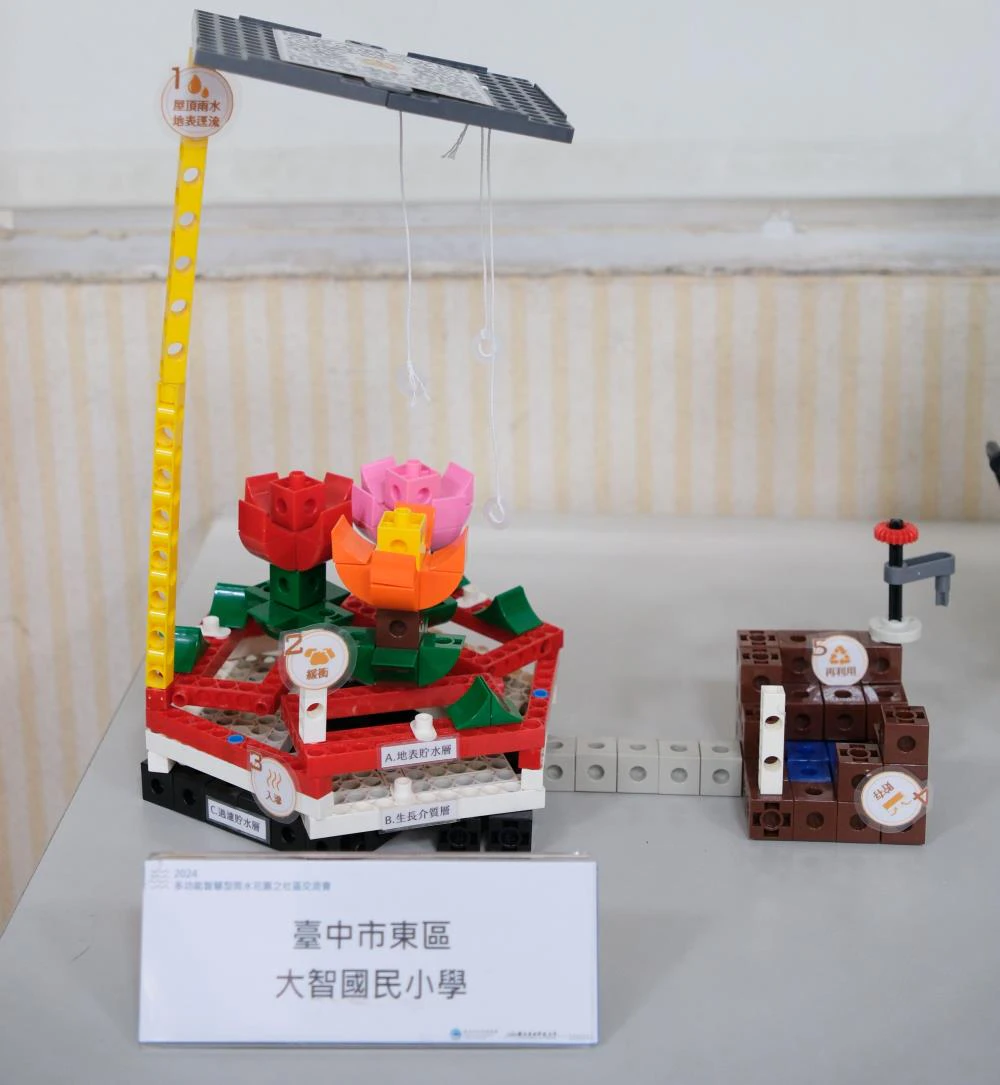
Second place was awarded to Dazhi Elementary School for its creative "Rain Garden Brick Model." This work used LEGO bricks to build a model of a rain garden. Not only is it easy to obtain and operate, its clear educational concept also allows students to understand the functions and structure of a rain garden through hands-on experience, offering a learning method that combines education and entertainment.
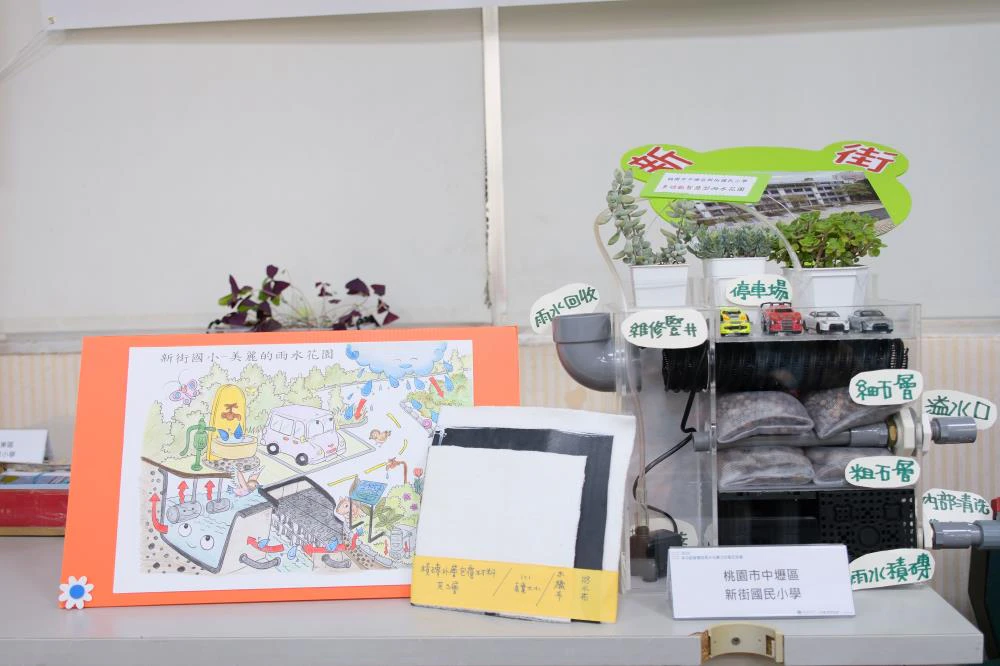
Third place went to Shinjie Elementary School, which proposed a multifunctional smart rain garden teaching aid module. The design covered teaching materials for different grades, including coloring sheets for first graders and the scientific toy "rainwater watering can" for third graders. The overall design concept was outstanding and provided an enriching learning experience for students of different age groups.
Additionally, several schools received honorable mentions, including Gueinan Elementary School, Gueiren District, Tainan City; -Liao Primary School, North District, Hsinchu City; Jhong Fu Elementary School, Zhongli District, Taoyuan City; and Beitou Elementary School, Beitou District, Taipei City. Their works included video productions, modules simulating the functions of rain gardens, 3D printing creations, and comprehensive semester teaching plans, which were not only practical and creative but also effectively conveyed essential knowledge and information.
In the face of increasingly severe climate change challenges, the focus is on utilizing natural ecosystems to help achieve climate change adaptation and ecological conservation goals. These sustainable management methods not only improve the vulnerability and exposure of local regions but also reduce the risks brought by climate change. The MOENV said that by building resilient rain garden facilities, the adaptability of local microclimates can be enhanced, and campuses are encouraged to proactively promote climate change adaptation efforts, developing diverse teaching aids with distinctive features and concepts. We look forward to the seeds of climate change adaptation sprouting all over the country, continuously strengthening the public's awareness of mitigating global climate change and guiding local governments to jointly promote relevant policies to collectively reduce greenhouse gas emissions.
Welcome to visit the「Rain Garden Monitoring Platform」to learn more about rain garden information and competition entries.