
Nan-Liao Primary School, Hsinchu City


Planning and design tailored to local conditions
This project focused on addressing campus water accumulation and disorganized pavement. It targeted runoff issues on both the outer wall to the south of Nan-Liao Primary School and the roadside ditches to the east. Adjustments were made to the rainwater flow and site paving. Through zoning analysis and potential simulations, new catchment zones were delineated to guide rainwater into underground storage facilities beneath the garden, achieving an integrated design for rainwater retention, infiltration, and landscape enhancement.
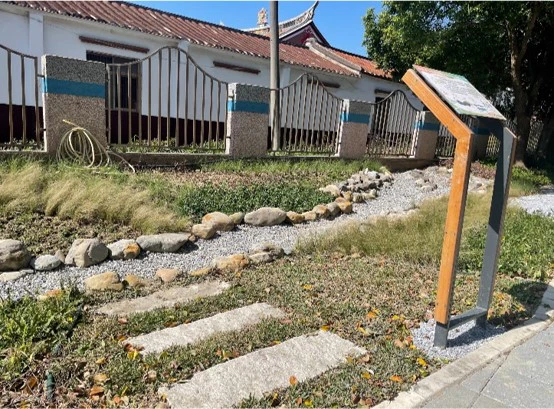
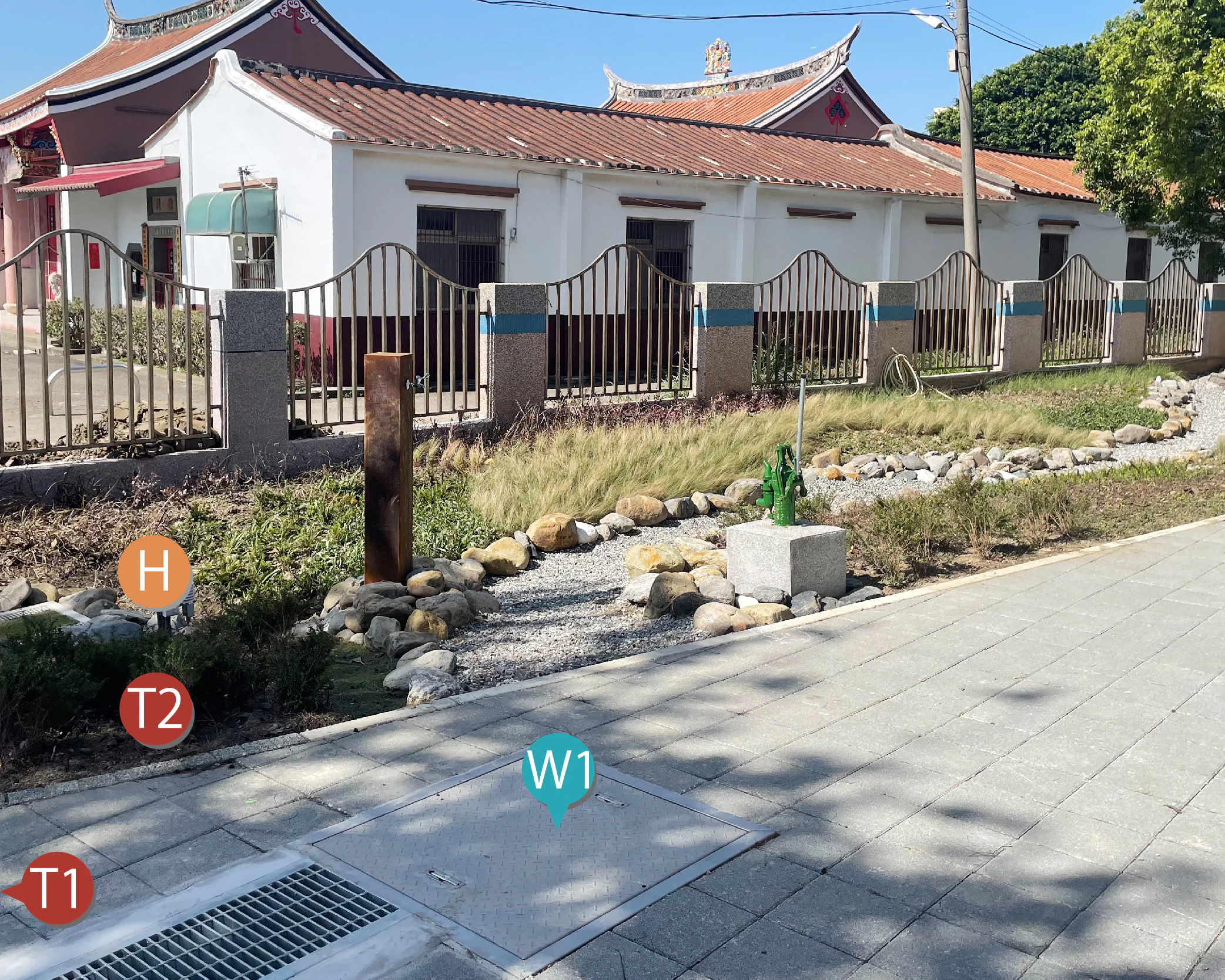
Previously exposed soil and impervious surfaces were entirely restructured. New permeable pavement and planting systems were added, and drainage channels and environmental aesthetics were enhanced. In terms of traffic flow, the paving style was unified and connected to the southern campus entrance walkway, resolving previous issues with elevation differences and mismatched paving materials, thereby improving overall visual coherence and pedestrian safety. In terms of system configuration, the rain garden combines permeable concrete pavement with subsurface water retention facilities. These are connected via pipes to the school building's downspouts. After rainfall, the water is accessible to students through a faucet and hand pump for hands-on experience. Explanatory signage is also provided to enhance environmental learning.
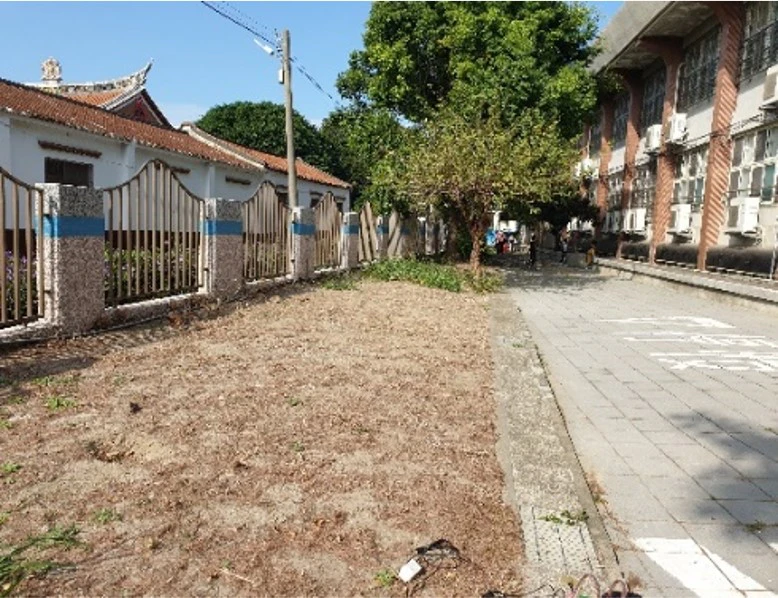
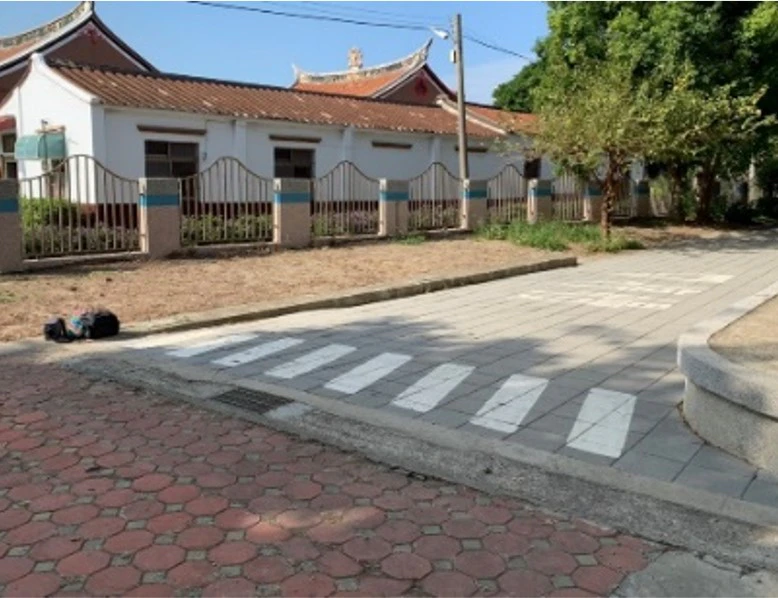
Challenges before renovation
Nan-Liao Primary School is located in the Hsinchu Harbor Specialized District, surrounded by dense residential areas. The terrain is flat but the paving is disorganized and water collection is disordered. The southeastern part of the campus consists of interspersed red brick paving and exposed soil, making it prone to flooding during rainfall. Drainage pathways were unclear. Vegetation in the planting areas was aged; some trees were withered, roots exposed or compressed by pavement, creating poor growing conditions.
According to potential analysis, both the site and its surroundings are high flood-risk areas. Under an estimated 6-hour, 350mm heavy rainfall event, water depths could reach 0.5 to 2 meters. The original side ditches were only about 30 cm wide limiting drainage capacity. The large number of impervious surfaces on site prevented effective infiltration or discharge. The paving lacked consistency: the main school entrance had flexible mats, while the side paths were a mix of high-pressure bricks and pebbles, creating a visually jarring and uncomfortable walking experience that posed safety risks.
A campus rain garden balancing landscape and education
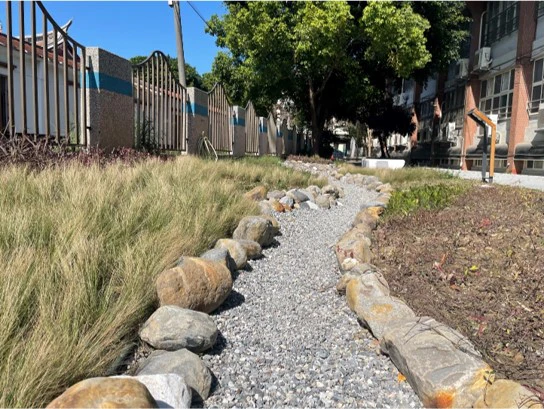
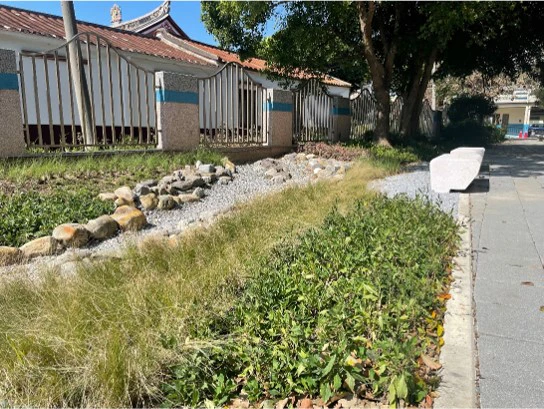
This renovation centered on a streamlined rain garden traversing the southeastern boundary of the campus, connecting existing buildings and student pathways. It functions both as a catchment area and an ecological landscape. Pavement was unified using permeable concrete, with varying terrain elevations introduced to enhance water retention and infiltration.
In the overall configuration, rainwater flows from both sides of the pavement into the garden's low points, where it is filtered through gravel and filtering materials before being stored in an underground tank for future irrigation or demonstration use. The system includes a faucet and hand pump for student interaction, allowing them to observe and experience the water cycle in action.
The planting design included drought-tolerant groundcovers and ornamental plants, such as Lessing feather grass, Chinese fountaingrass, and common lantana, chosen for their varied foliage and blooming seasons. These provide a layered and visually dynamic space. For easy, low-cost maintenance and sustainable landscaping, all plants were selected to thrive with minimal care under natural growth conditions.
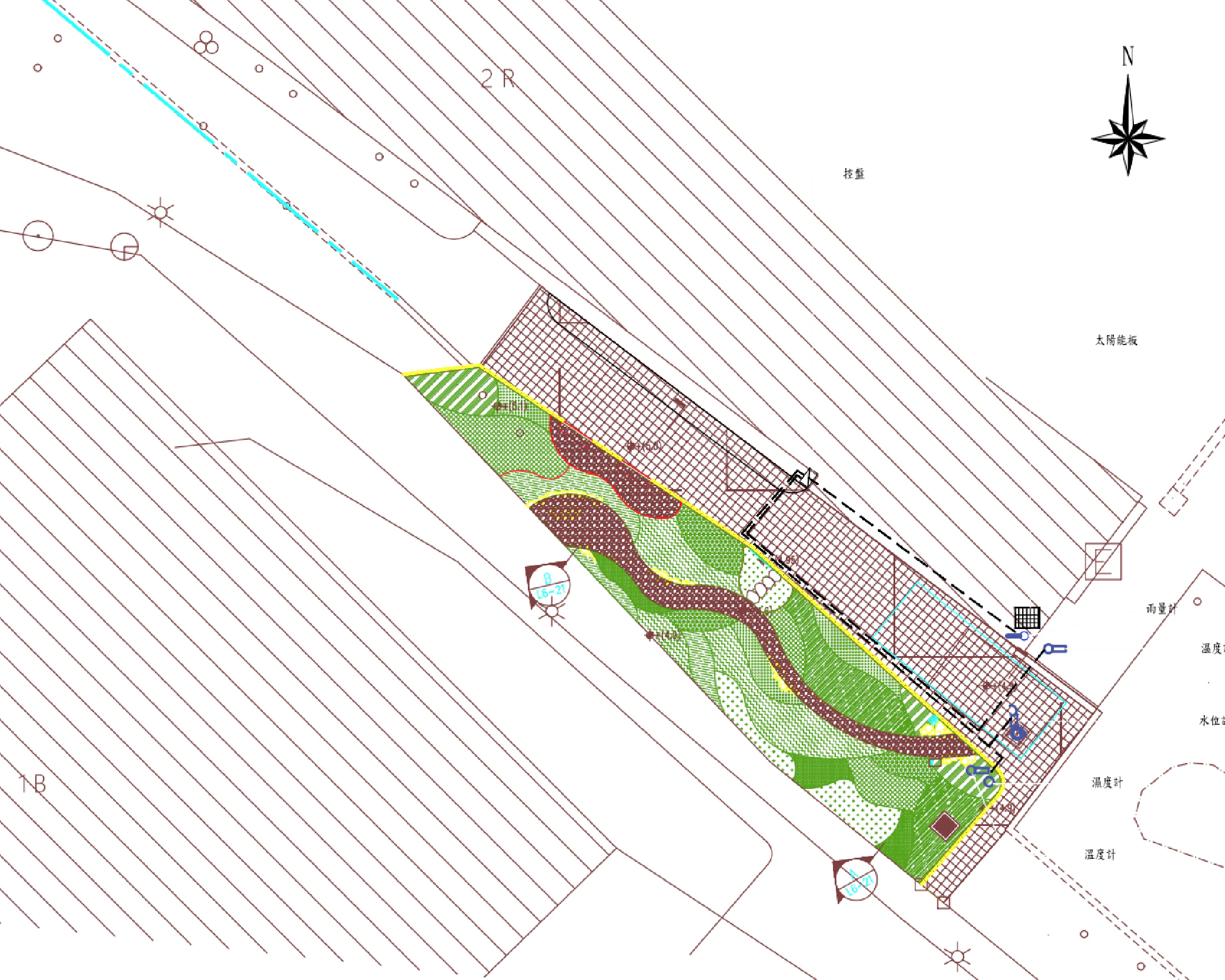
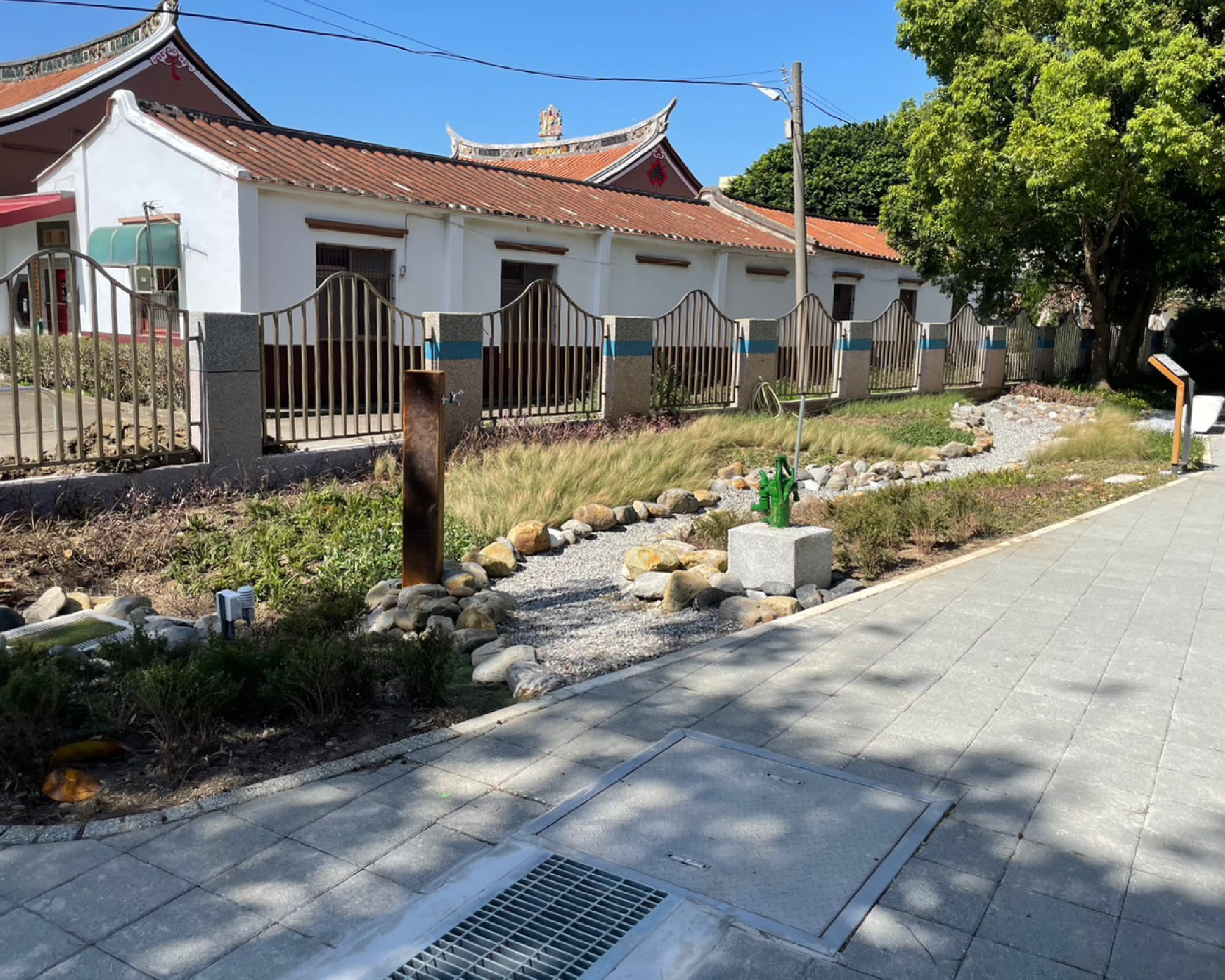
A regenerative transformation of the rain garden
What was once a cracked, exposed, and poorly drained corner of the school has been systematically renovated and transformed into a natural space that integrates function, aesthetics, and education. The garden is no longer just a pathway or overlooked corner — it has become a learning space where students pass by, observe, and engage with nature daily.
This rain garden not only solved drainage issues but also integrates practical environmental education. From plant selection and water flow design to hands-on interaction, it provides students a way to learn from nature and serves as a living example for the community of how rainwater can be transformed from a problem into a resource.
Environmental Monitoring Data
Last updated 2024-12-16 13:59:25

Last updated 2024-12-16 13:59:25
-
 Environmental Humidity
58.4 %
-
 Rainfall
0.0 mm
-
 General Pavement
Temperature18.1 °C
-
 Permeable Pavement
Temperature17.1 °C
-
 Environmental Temperature
18.1 °C
-
 Underground Water Storage TankWater Depth0.69MStorage16.61884M³Flow0.00000CMS